
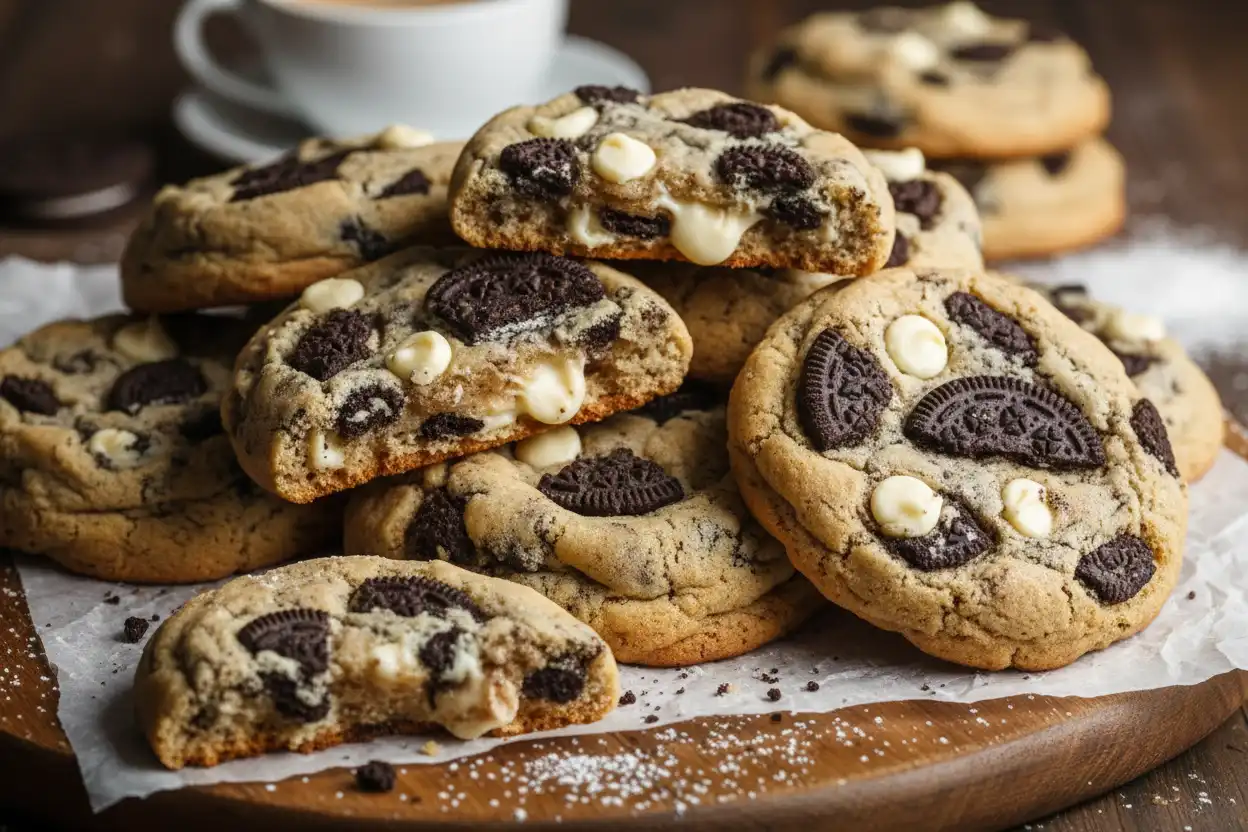
A great batch starts with one simple goal: a soft, buttery cookie packed with crunchy chocolate sandwich cookie pieces and creamy vanilla sweetness in every bite. The best cookies and cream cookies are not just sugar cookies with crushed cookies tossed in at the end. They need the right balance of fat, flour, chill time, and mix-ins so the dough bakes up thick, tender, and full of cookies-and-cream flavor.
This guide walks you through a reliable cookies cream recipe you can make at home with everyday ingredients. You’ll learn how to choose the right chocolate cream cookies, how to keep the dough from spreading too much, and how to customize the recipe into bars, ice cream sandwiches, or a café-style treat inspired by cookies and cream at Starbucks.
What Makes Cookies and Cream Taste “Perfect”?
Cookies and cream works because it combines contrast: dark cocoa cookie crumbs, sweet vanilla cream, buttery dough, and a little salt. To make that flavor stand out, you need more than a handful of crushed cookies.
The perfect batch should be:
- Soft in the center with slightly crisp edges
- Packed with visible cookie chunks, not just fine crumbs
- Balanced in sweetness so the sandwich cookie filling does not overpower the dough
- Thick enough to hold its shape after baking
- Creamy-tasting, usually from vanilla, white chocolate, or a touch of cream cheese-style richness
This is also why an oreo cookies recipe often needs small adjustments. Chocolate sandwich cookies already contain sugar and fat, so the base dough should be rich but not overly sweet.
Ingredients You’ll Need
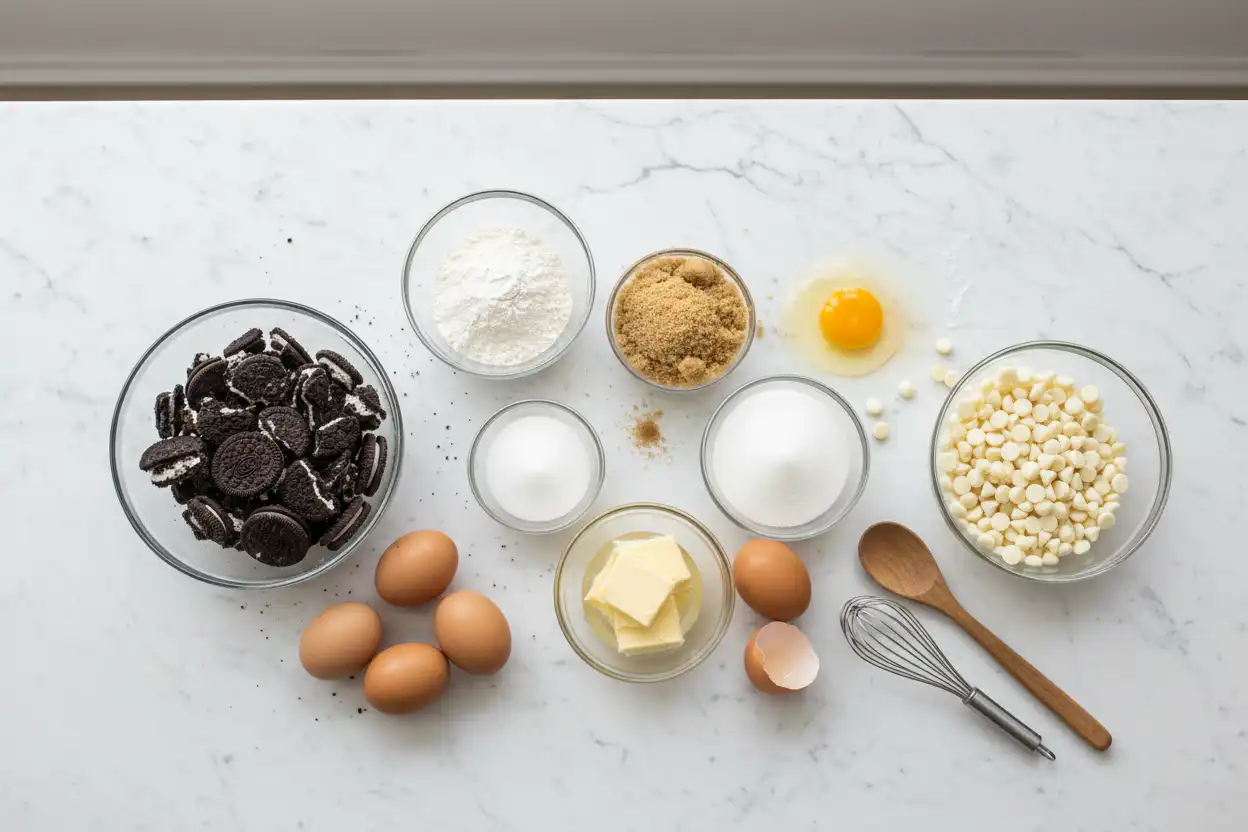
For a classic batch, gather the following:
- 1 cup unsalted butter, softened but still cool
- 3/4 cup light brown sugar, packed
- 1/2 cup granulated sugar
- 2 large eggs, room temperature
- 2 teaspoons vanilla extract
- 2 3/4 cups all-purpose flour
- 1 tablespoon cornstarch
- 1 teaspoon baking soda
- 1/2 teaspoon baking powder
- 3/4 teaspoon fine salt
- 18 to 22 chocolate cream cookies, roughly chopped
- 3/4 cup white chocolate chips or chopped white chocolate
The cornstarch is optional, but it helps create a softer texture. White chocolate is also optional, but it adds the creamy note that makes cookies and cream cookies taste more complete.
Choose the Right Chocolate Cream Cookies
Any classic chocolate sandwich cookie can work, but the best choice is one with a crisp cookie wafer and a vanilla cream center. You want a cookie that breaks into chunks without turning entirely into dust.
For the best texture:
- Chop the cookies with a knife instead of crushing them in a bag.
- Keep some pieces large, about the size of a dime or nickel.
- Save a few pretty pieces to press on top before baking.
- Avoid overmixing once the cookie pieces go into the dough.
If you want a darker, more chocolate-forward cookie, add two tablespoons of unsweetened cocoa powder to the dry ingredients and reduce the flour by two tablespoons. This gives the dough a cookies-and-cream look while keeping the base soft.
Step 1: Soften the Butter Correctly
Butter temperature matters more than most people think. If the butter is too cold, it will not cream smoothly with the sugar. If it is melted or greasy, the cookies may spread too much.
The ideal butter should be cool to the touch but soft enough to press with a finger. It should bend slightly without looking shiny or oily.
If you forgot to soften it, cut the butter into small cubes and let it sit at room temperature for 15 to 20 minutes. Avoid microwaving unless you use very short bursts, because melted spots can change the cookie texture.
Step 2: Cream the Butter and Sugars
Add the softened butter, brown sugar, and granulated sugar to a large mixing bowl. Beat for 2 to 3 minutes, until the mixture looks lighter and slightly fluffy.
This step creates tiny air pockets in the dough. Those air pockets help the cookies rise instead of baking into flat discs. Scrape down the bowl halfway through so everything mixes evenly.
Do not rush this step, but do not overdo it either. If you beat the mixture for too long, the dough can become overly aerated and collapse in the oven.
Step 3: Add Eggs and Vanilla
Add the eggs one at a time, mixing after each addition. Then add the vanilla extract. The dough may look slightly loose at this point, which is normal.
Vanilla is especially important in this cookies cream recipe because it echoes the flavor of the cream filling. If you want a bakery-style flavor, you can use part vanilla extract and part vanilla bean paste.
Step 4: Whisk the Dry Ingredients Separately
In a separate bowl, whisk together the flour, cornstarch, baking soda, baking powder, and salt.
Mixing the dry ingredients separately helps prevent uneven pockets of baking soda or salt. It also makes it easier to incorporate the flour without overworking the dough.
Salt is not just there to make the cookies less sweet. It sharpens the cocoa flavor in the chocolate cream cookies and keeps the white chocolate from tasting flat.
Step 5: Combine the Wet and Dry Mixtures
Add the dry ingredients to the butter mixture in two additions. Mix on low speed or stir by hand just until the flour disappears.
The dough should be thick, soft, and slightly sticky. If it looks very wet, let it sit for 5 minutes before adding more flour. Flour hydrates as it rests, and the dough often firms up naturally.
Avoid adding too much extra flour. A dry dough can produce crumbly cookies instead of soft, chewy centers.
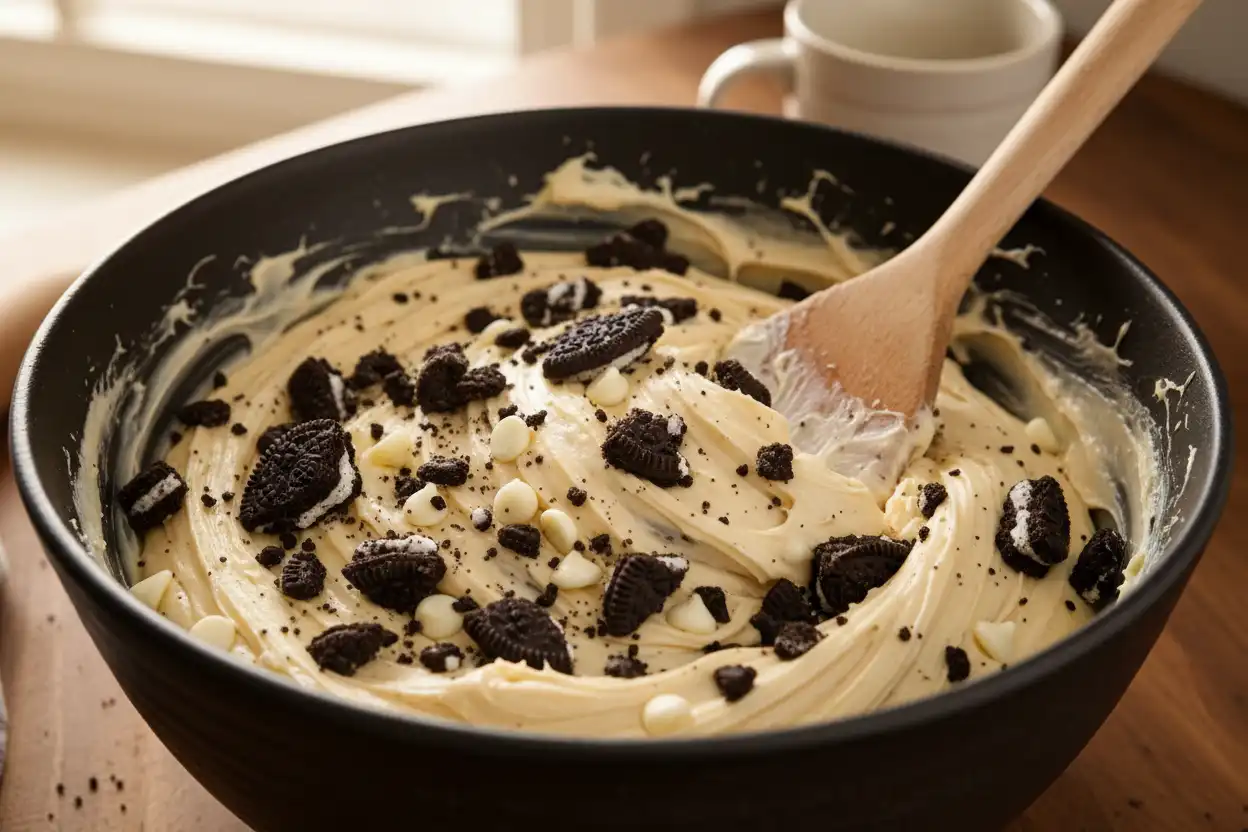
Step 6: Fold in Cookie Pieces and White Chocolate
Add the chopped chocolate cream cookies and white chocolate chips. Fold gently with a spatula until evenly distributed.
Try not to crush the cookie pieces as you mix. Fine crumbs will darken the dough and add flavor, but large chunks create the signature cookies-and-cream look.
If you want the cookies to look more polished, reserve a small handful of cookie chunks and white chocolate chips. You’ll press them onto the dough balls right before baking.
Step 7: Chill the Dough
Cover the bowl and chill the dough for at least 45 minutes. For even thicker cookies, chill it for 2 hours.
Chilling does three important things:
- It firms the butter so the cookies spread more slowly.
- It gives the flour time to absorb moisture.
- It deepens the vanilla, brown sugar, and cocoa flavors.
If you are short on time, scoop the dough first and chill the dough balls on a baking sheet. Smaller portions chill faster than one large bowl of dough.
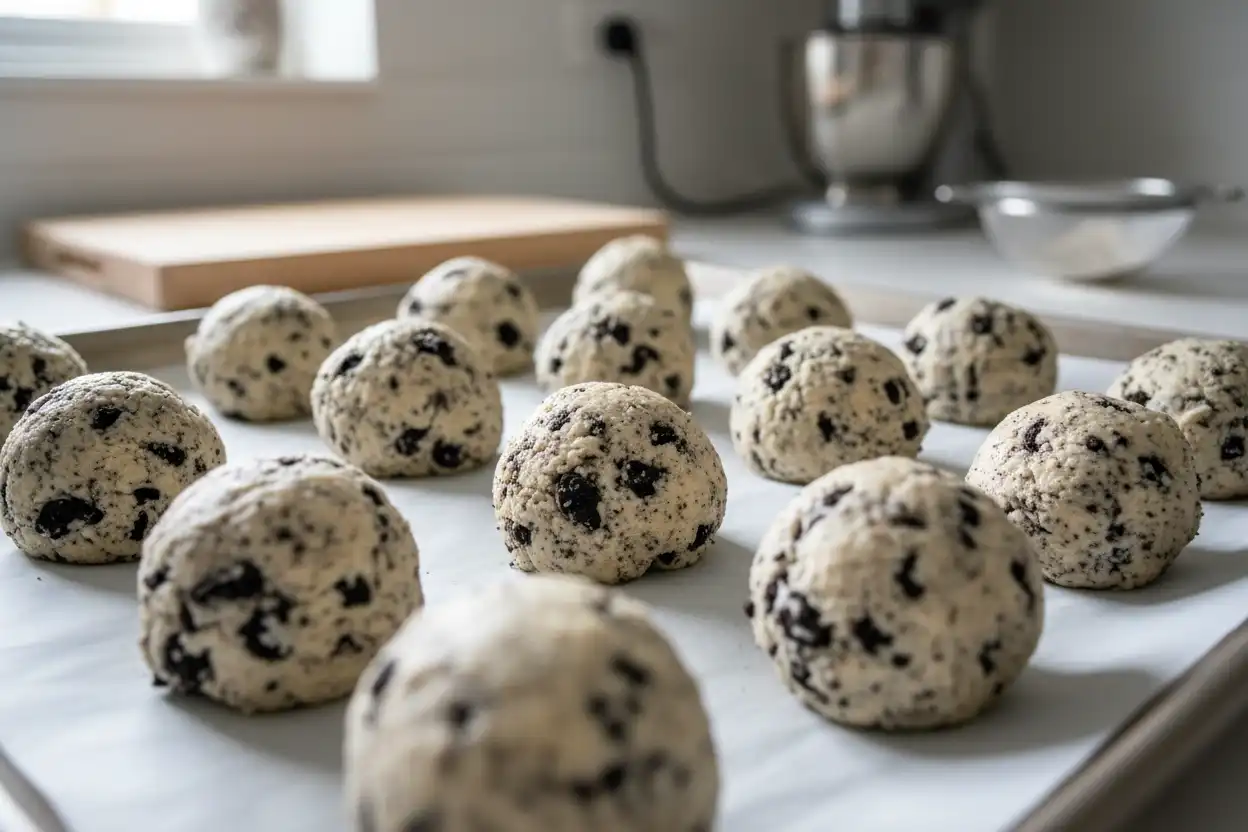
Step 8: Scoop and Shape
Line a baking sheet with parchment paper. Scoop the dough into balls, using about 2 tablespoons per cookie for medium cookies or 3 tablespoons for large bakery-style cookies.
For thicker cookies, shape the dough balls taller rather than wider. Think of a cylinder or slightly rounded mound instead of a flat ball.
Press a few reserved cookie chunks and white chocolate pieces onto the tops. This makes the finished cookies look full and intentional, not hidden or plain.
Step 9: Bake Until Just Set
Bake at 350°F until the edges look set and the centers still look slightly soft. Medium cookies usually take 10 to 12 minutes, while larger cookies may take 12 to 14 minutes.
The key is to pull them from the oven before they look fully done. Cookies continue to set on the hot baking sheet after baking. If you wait until the centers look firm in the oven, they may cool into a dry texture.
For perfectly round cookies, place a large round cutter or mug over each cookie right after baking and gently swirl it in a circular motion. This nudges the edges into a neat shape.
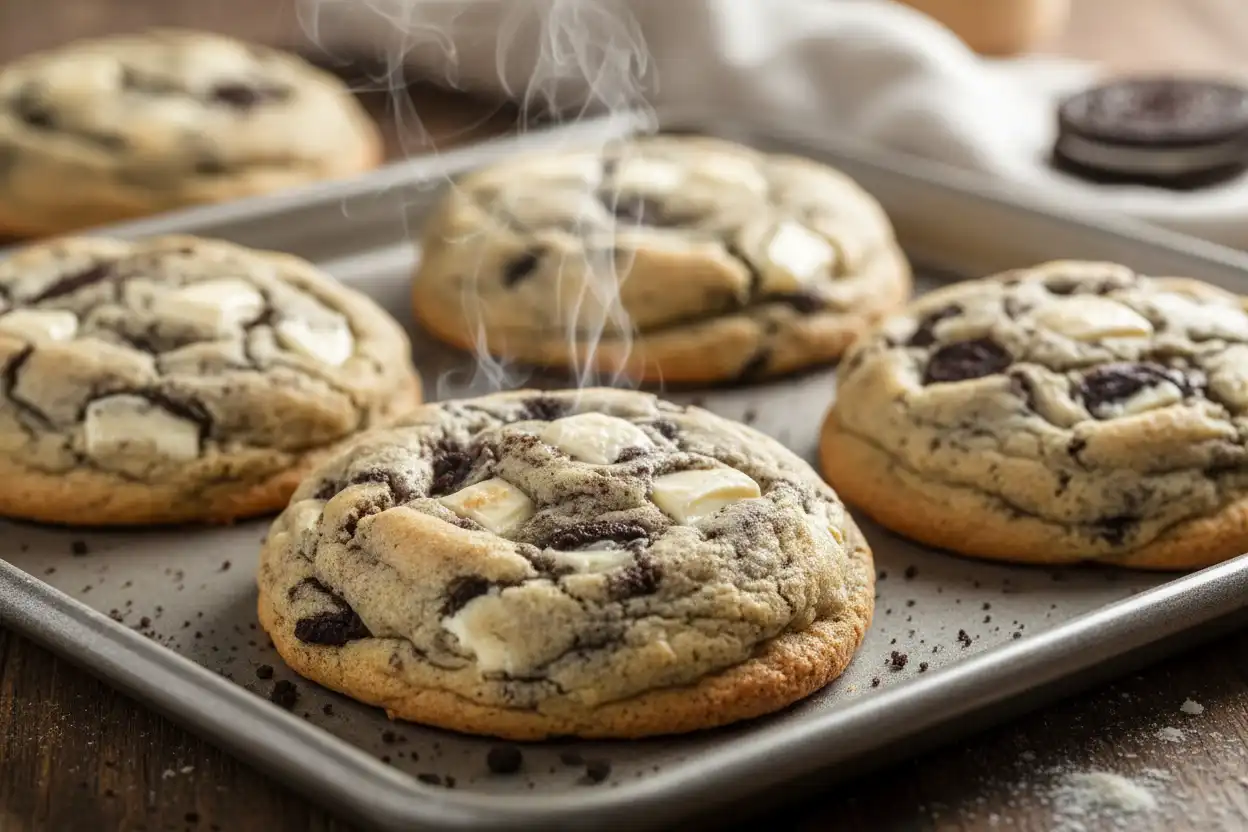
Step 10: Cool Before Serving
Let the cookies rest on the baking sheet for 10 minutes, then transfer them to a wire rack.
This waiting time helps the centers finish setting. If you move them too early, they can break apart because the cookie pieces and white chocolate are still soft.
Serve the cookies slightly warm for the best texture. The edges will be lightly crisp, the centers will be tender, and the cream-filled cookie chunks will taste rich and nostalgic.
Easy Variations to Try
Once you master the base recipe, you can adapt it in several ways.
Make Them Extra Creamy
Add 1/2 cup cream cheese chips, vanilla baking chips, or chopped cookies-and-cream candy. Keep the total mix-ins reasonable so the dough can still hold together.
Make a Chocolate Dough Version
For double chocolate cookies and cream cookies, replace 1/4 cup of flour with unsweetened cocoa powder. This creates a brownie-like base that pairs well with white chocolate.
Make Ice Cream Sandwiches
Bake slightly larger cookies and let them cool completely. Add a scoop of vanilla ice cream between two cookies, press gently, and freeze until firm.
Make Cookie Bars
Press the dough into a parchment-lined baking pan and bake until the edges are golden and the center is just set. Cool completely before slicing. This is a great option when you want the flavor of an oreo cookies recipe without scooping individual cookies.
Add a Protein-Inspired Twist
If you like the flavor of a cookies and cream protein bar, you can add a small amount of vanilla protein powder to the dough. Replace only a few tablespoons of flour with protein powder at first, because too much can make cookies dry or cakey. For better texture, pair it with extra cookie chunks or white chocolate.
How to Get a Café-Style Cookies and Cream Flavor
Many people love the idea of cookies and cream at Starbucks because it feels like a dessert and drink flavor in one: vanilla, chocolate cookie crumbs, creaminess, and a chilled or bakery-style finish.
To create that café-inspired flavor at home, serve your cookies with:
- Cold brew with vanilla cream
- A vanilla latte
- Iced milk with crushed cookie crumbs around the rim
- Hot chocolate topped with whipped cream and cookie pieces
- A simple vanilla milkshake
You can also crumble one cookie over whipped cream or ice cream for an easy dessert topping.
Troubleshooting Common Problems
My Cookies Spread Too Much
The butter was likely too warm, the dough was not chilled long enough, or the baking sheet was hot. Chill the dough longer and always place dough balls on a cool baking sheet.
My Cookies Are Dry
They may have been overbaked or measured with too much flour. Spoon flour into the measuring cup and level it off instead of packing it down. Pull the cookies from the oven while the centers still look slightly soft.
My Cookies Look Gray or Muddy
The sandwich cookies were probably crushed too finely or overmixed into the dough. Use larger chopped pieces and fold them in gently at the end.
My Cookies Are Too Sweet
Reduce the white chocolate slightly or add an extra pinch of salt. You can also use fewer cream-filled cookie pieces and more plain chopped dark chocolate.
My Cookies Fall Apart
Let them cool longer on the baking sheet. Cookies with large mix-ins need time to firm up before being moved.
Storage and Make-Ahead Tips
Store cooled cookies in an airtight container at room temperature for 3 to 4 days. Add a small piece of bread to the container if you want to help maintain softness.
To freeze the dough, scoop it into balls and freeze on a lined baking sheet until solid. Transfer the frozen dough balls to a freezer-safe bag or container. Bake from frozen, adding a few extra minutes as needed.
You can also freeze baked cookies. Let them cool completely, wrap well, and freeze. Thaw at room temperature or warm briefly before serving.
Final Tips for the Best Batch
For consistent results, remember these simple rules:
- Use softened, not melted, butter.
- Chop the cookies instead of crushing them completely.
- Chill the dough before baking.
- Do not overbake the centers.
- Press extra cookie pieces on top for a bakery-style finish.
And if you landed here while searching for something unrelated, such as cookies and cream strain, this guide is strictly about making a sweet homemade dessert. For edible treats, classic cookies and cream cookies are hard to beat: simple ingredients, big nostalgic flavor, and just enough crunch to make every bite satisfying.