

Quick Guide: How to Bake Perfect Gluten Free Christmas Cookies
Baking tender, structurally sound gluten-free cookies requires replacing wheat gluten with a balanced ratio of 60–70% whole grain flours (such as brown rice, sorghum, or oat flour) and 30–40% starches (tapioca, arrowroot, or potato starch). You must hydrate the dough thoroughly by resting it for at least 30 to 60 minutes before rolling or shaping.
Hydrocolloids like xanthan gum (1/4 teaspoon per cup of flour) or psyllium husk powder provide the tensile elasticity needed to prevent crumbling. Bake at temperatures between 325°F and 350°F (165°C–175°C) and let cookies cool completely on the baking sheet for 10 minutes to allow the delicate starches to set.
Core Rules: Weigh ingredients in grams, rest dough to eliminate graininess, chill cutouts before baking to prevent spreading, and verify that all sprinkles, extracts, and sugars are certified gluten-free.
Holiday cookie baking is an essential winter tradition, but baking without gluten introduces distinct structural challenges. When wheat flour is removed, recipes lose the cohesive protein network that holds fats, traps moisture, and creates chewiness.
Without proper adjustments, gluten-free cookies easily turn gritty, spread into thin puddles, or crumble when touched. This guide breaks down the food chemistry, tested formulas, and kitchen safety rules needed to produce festive treats that rival traditional bakeries.
Whether you manage celiac disease, accommodate a wheat-allergic family member, or host a gluten-free guest, this resource provides the technical precision required for holiday baking success.
The Science of Gluten-Free Cookie Dough Chemistry
Gluten is a composite protein formed by glutenin and gliadin. When hydrated and agitated, these proteins create an elastic matrix that traps expanding gases and holds fat droplets in suspension.
In traditional holiday cookies, gluten controls spread, preserves the sharp edges of cutout shapes, and provides tensile strength. Gluten-free baking requires reconstructing this physical matrix using an engineered blend of grains, starches, and hydrocolloids.
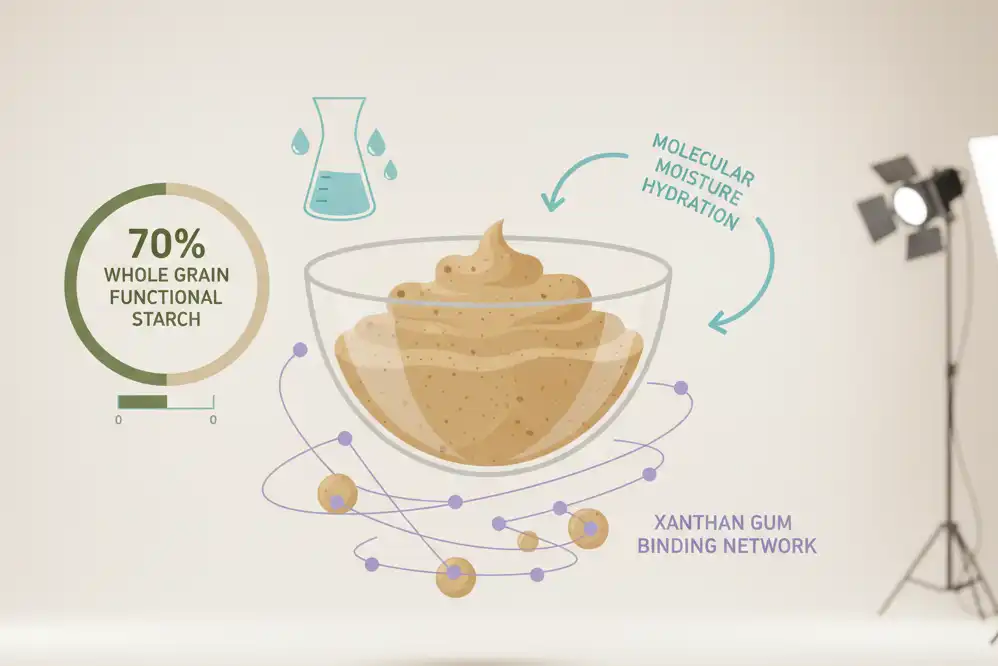
The primary hurdle in gluten-free dough is hydration kinetics. Rice flours absorb liquid at a much slower rate than wheat flour at room temperature. If you bake a batch immediately after mixing, unhydrated starch granules remain hard, producing a gritty, sandy mouthfeel.
Allowing mixed dough to rest at room temperature or in the refrigerator gives the milling starches time to absorb moisture from eggs, butter, and liquid sweeteners. This rest period eliminates graininess and creates clean edges when cutting festive shapes.
Commercial Blends, Custom Ratios, and Hydrocolloids
Not all commercial 1:1 gluten-free baking flours perform the same way in cookie recipes. Their performance depends heavily on the ratio of heavy grains to refined starches and the presence of pre-mixed binders.
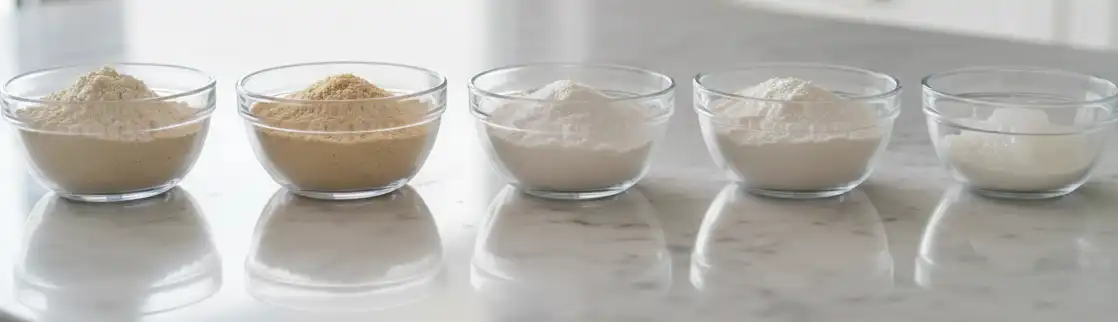
Commercial 1-to-1 Blends vs. Custom Formulations
Commercial blends generally fall into two categories: starch-heavy blends and grain-heavy blends. Starch-heavy formulas (high in white rice flour, tapioca starch, and cornstarch) yield crisp, fragile cookies like shortbread and wafers.
Grain-heavy blends (containing sorghum, brown rice, or millet) provide the structural density required for rolled sugar cookies and gingerbread men. For custom blending, the ideal baseline ratio for holiday cookies is 60% base flours to 40% functional starches.
- 60% Base Grains: 30% superfine brown rice flour, 20% sorghum flour, 10% blanched almond flour (or certified gluten-free oat flour).
- 40% Functional Starches: 25% tapioca starch (for chewiness and browning), 15% potato starch (for moisture retention).
The Role of Hydrocolloids: Xanthan Gum and Psyllium
Hydrocolloids act as structural substitutes for glutenin proteins. Xanthan gum forms a viscous gel when combined with water, which prevents fat separation and holds cookie dough together during rolling.
Use 1/4 teaspoon of xanthan gum per 120 grams (1 cup) of flour for soft cookies, and 1/2 teaspoon per cup for rolled cutout doughs. If you are sensitive to xanthan gum, powdered whole psyllium husk works at a 1:1 replacement ratio, providing natural elasticity and moisture retention.
Kitchen Safety, Cross-Contamination, and Hidden Gluten
Baking for an individual with celiac disease requires strict protocols that go beyond simply using wheat-free ingredients. Ingestion of microscopic amounts of gluten (as little as 20 parts per million) triggers an autoimmune reaction that damages the small intestine.
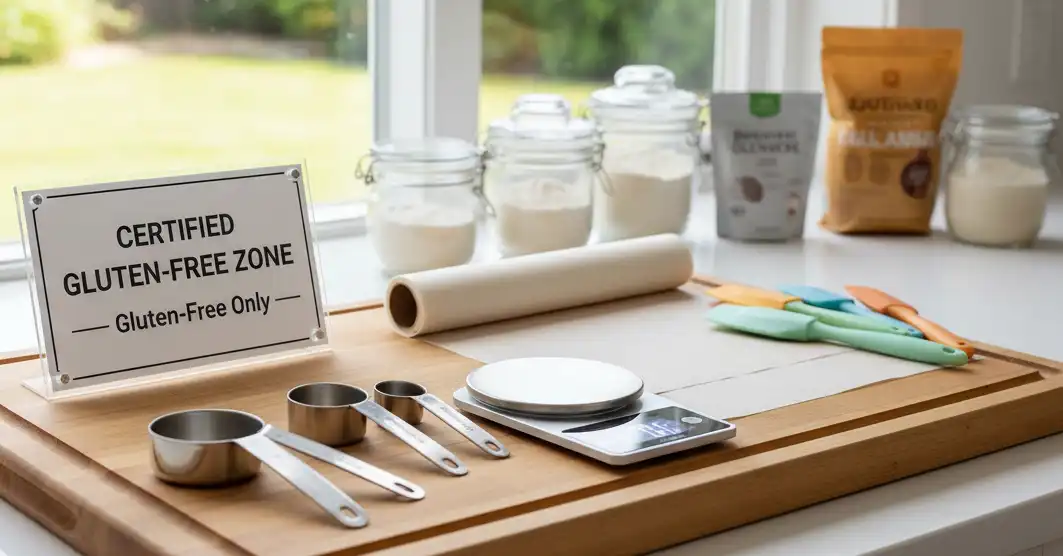
Shared Kitchen Protocols
Airborne wheat flour can remain suspended in the air for up to 24 hours after traditional baking. Never bake gluten-free cookies in a kitchen where conventional wheat flour was recently sifted or mixed.
Porous kitchen equipment traps gluten proteins permanently. Avoid using wooden rolling pins, scratched plastic cutting boards, seasoned cast iron, and wooden spoons for gluten-free preparation. Use stainless steel, glass, and silicone tools instead.
Auditing Hidden Sources of Gluten
Holiday decorating supplies often contain hidden wheat products or are manufactured on shared lines. Always audit the following items before beginning:
- Sprinkles and Nonpareils: Many decorative sprinkles use wheat starch as an anti-caking agent or flow conditioner.
- Powdered Sugar: While most brands use cornstarch, some regional brands utilize wheat starch. Verify gluten-free certification on the packaging.
- Extracts and Flavorings: Ensure pure vanilla, almond, and peppermint extracts use certified gluten-free alcohol bases.
- Baking Powder: Certain brands process baking powder on lines that handle wheat flour. Verify that your brand is certified gluten-free.
Step-by-Step Master Recipes
Gluten-Free Cut-Out Sugar Cookies
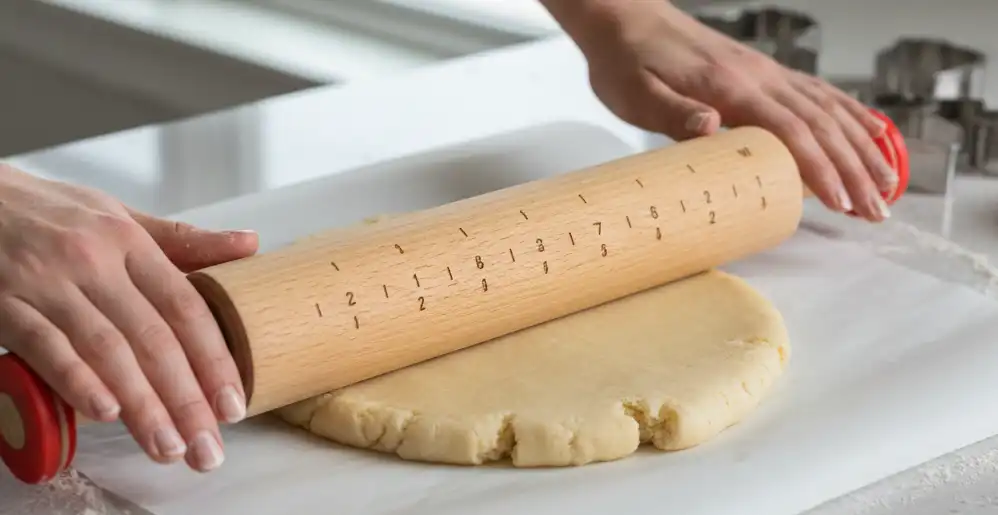
What: Crisp-edged, tender-centered cut-out cookies that hold sharp detail during baking without spreading.
Why: Chilling the dough solidifies the butterfat, while a higher starch content maintains sharp edges when cut with holiday cutters.
Ingredients (By Weight and Volume)
- 300g (2 1/2 cups) 1-to-1 Gluten-Free Baking Flour (must contain xanthan gum)
- 1/2 tsp Xanthan Gum (additional, for structural elasticity)
- 1/2 tsp Fine Sea Salt
- 1/2 tsp Gluten-Free Baking Powder
- 170g (3/4 cup) Unsalted Butter, softened to 65°F (18°C)
- 150g (3/4 cup) Granulated White Sugar
- 1 Large Egg (50g), room temperature
- 2 tsp Pure Vanilla Extract
- 1 tbsp Whole Milk or Unsweetened Almond Milk
How to Prepare
- Whisk the flour blend, extra xanthan gum, salt, and baking powder in a medium bowl until thoroughly combined.
- In a stand mixer fitted with the paddle attachment, cream the butter and sugar on medium speed for 2 to 3 minutes until smooth and pale.
- Add the egg, vanilla extract, and milk. Beat on medium-low speed until fully incorporated, scraping down the sides of the bowl.
- Add the dry ingredient mixture in two additions, mixing on low speed until a cohesive dough forms. If the dough feels slightly sticky, do not add more flour.
- Divide the dough into two equal portions. Place each portion between two large sheets of parchment paper and roll to an even 1/4-inch (6mm) thickness.
- Slide the rolled dough sheets onto baking trays and chill in the refrigerator for at least 60 minutes (or freeze for 20 minutes).
- Preheat oven to 350°F (175°C). Line two large baking sheets with fresh parchment paper.
- Peel off the top sheet of parchment. Cut shapes using floured metal cookie cutters. Transfer cutouts to the prepared baking sheets, leaving 1 inch of space between them.
- Bake at 350°F (175°C) for 9 to 11 minutes until the edges are just set and the bottoms are light golden. The tops should remain pale.
- Cool on the baking sheet for 10 minutes before transferring to a wire cooling rack. Allow to cool completely before applying royal icing.
Common Mistake: Rolling the dough with excess loose flour on the countertop. This dries out the dough, resulting in cracked edges and a brittle baked texture. Always roll between parchment paper sheets.
Pro Tip: Place your cut cookies in the freezer for 10 minutes immediately before baking. Entering the oven cold keeps the butter from melting faster than the starches can set, preserving sharp corners on star and snowflake shapes.
Chewy Gluten-Free Gingerbread Men

What: Spiced, molasses-rich cutout cookies with a firm exterior and a soft, chewy interior.
Why: Molasses provides natural invert sugars that attract and hold moisture, preventing the baked cookies from drying out over time.
Ingredients
- 360g (3 cups) Superfine Gluten-Free Measure-for-Measure Flour
- 1/2 tsp Xanthan Gum
- 1 tbsp Ground Ginger
- 2 tsp Ground Ceylon Cinnamon
- 1/2 tsp Ground Cloves
- 1/2 tsp Ground Nutmeg
- 3/4 tsp Baking Soda
- 1/2 tsp Fine Sea Salt
- 115g (1/2 cup) Unsalted Butter, softened
- 100g (1/2 cup) Dark Brown Sugar, packed
- 1 Large Egg, room temperature
- 120ml (1/2 cup) Dark Molasses (Unsulphured)
- 1 tsp Pure Vanilla Extract
How to Prepare
- Whisk the flour, xanthan gum, ginger, cinnamon, cloves, nutmeg, baking soda, and salt in a bowl.
- In a stand mixer, beat the butter and dark brown sugar on medium speed for 2 minutes until light and fluffy.
- Add the egg, dark molasses, and vanilla extract. Beat until smooth and glossy.
- Gradually add the dry ingredients with the mixer running on low speed until a thick, uniform dough forms.
- Divide dough in half, flatten each half into a 1-inch disc, wrap tightly in plastic wrap, and chill in the refrigerator for at least 2 hours (or up to 48 hours).
- Preheat oven to 350°F (175°C). Line two baking sheets with parchment paper.
- Roll the chilled dough between parchment sheets to a 1/4-inch thickness. Stamp out gingerbread shapes with cookie cutters.
- Arrange cutouts on the baking sheets with 1.5 inches of clearance between cookies.
- Bake for 8 to 10 minutes for soft, chewy cookies, or 11 to 12 minutes for crisper gingerbread edges.
- Let the cookies rest on the baking sheet for 10 minutes to stabilize before transferring to cooling racks.
Common Mistake: Using blackstrap molasses instead of unsulphured dark molasses. Blackstrap has a bitter, mineral profile and lower sugar content, which makes the cookies dry and overly dark.
Pro Tip: Re-roll your dough scraps only once. Each time you re-roll gluten-free dough, moisture evaporates, making subsequent batches drier and more fragile.
Classic Gluten-Free Raspberry Linzer Cookies
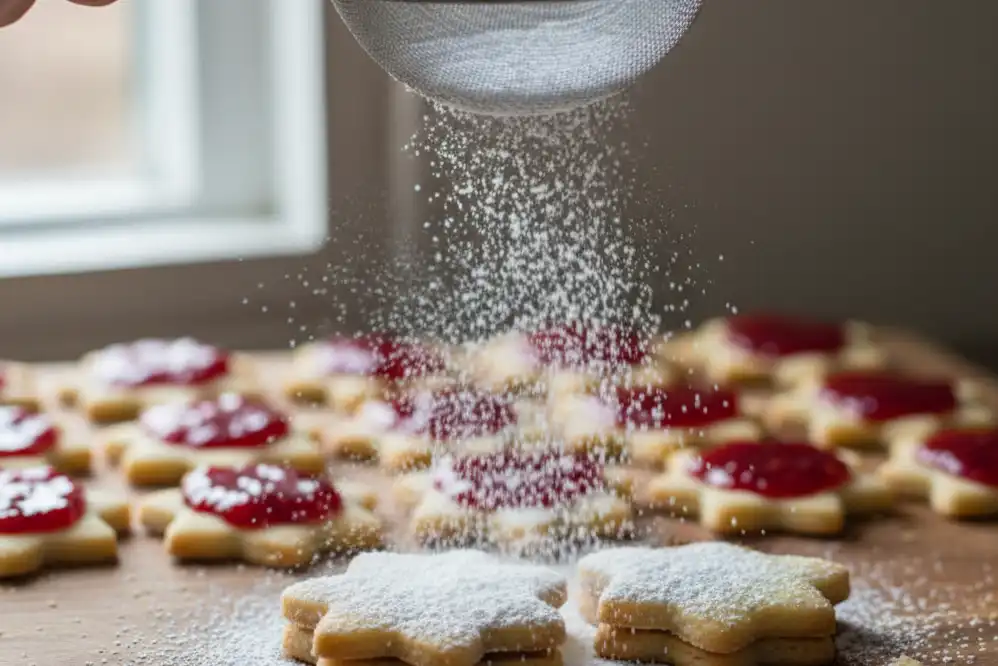
What: Tender almond shortbread sandwich cookies with a powdered sugar dusting and a tart raspberry preserve center.
Why: Incorporating finely ground blanched almond flour adds natural oils that replicate the tender, delicate crumb of traditional wheat shortbread.
Ingredients
- 200g (1 2/3 cups) 1-to-1 Gluten-Free Pastry Flour
- 100g (1 cup) Superfine Blanched Almond Flour
- 1/2 tsp Xanthan Gum
- 1/2 tsp Ground Cinnamon
- 1/4 tsp Fine Sea Salt
- 170g (3/4 cup) Unsalted Butter, cold and cut into small cubes
- 80g (2/3 cup) Sifted Powdered Sugar
- 1 Large Egg Yolk
- 1 tsp Almond Extract
- 1 tsp Lemon Zest, finely grated
- 160g (1/2 cup) Seedless Red Raspberry Jam (for assembly)
- Powdered Sugar (for dusting)
How to Prepare
- Combine the gluten-free flour, almond flour, xanthan gum, cinnamon, and salt in a food processor. Pulse three times to blend.
- Add the cold cubed butter and powdered sugar. Pulse until the mixture resembles coarse sand with pea-sized butter bits.
- Add the egg yolk, almond extract, and lemon zest. Pulse until the dough gathers into a cohesive mass.
- Divide dough into two flat discs, wrap in plastic wrap, and chill for 90 minutes.
- Preheat oven to 325°F (165°C). Line two baking sheets with parchment.
- Roll out dough between parchment sheets to an 1/8-inch (3mm) thickness. Cut an equal number of solid round bases and matching rounds with center window cutouts.
- Bake at 325°F (165°C) for 10 to 12 minutes until the edges are light golden. Cool completely on wire racks.
- Dust all windowed top cookies heavily with powdered sugar while they are separate.
- Warm the raspberry jam slightly, then spread 1 teaspoon onto each solid cookie base. Gently press a sugar-dusted window top onto each base to finish.
Common Mistake: Assembling the cookies before dusting them with powdered sugar. This covers the red jam window in white sugar and ruins the visual contrast.
Pro Tip: Warm the raspberry jam in a small saucepan with 1/2 teaspoon of lemon juice before spreading. The heat helps the jam adhere to the cookie base, preventing the layers from sliding apart in storage.
Fudgy Gluten-Free Chocolate Crinkle Cookies
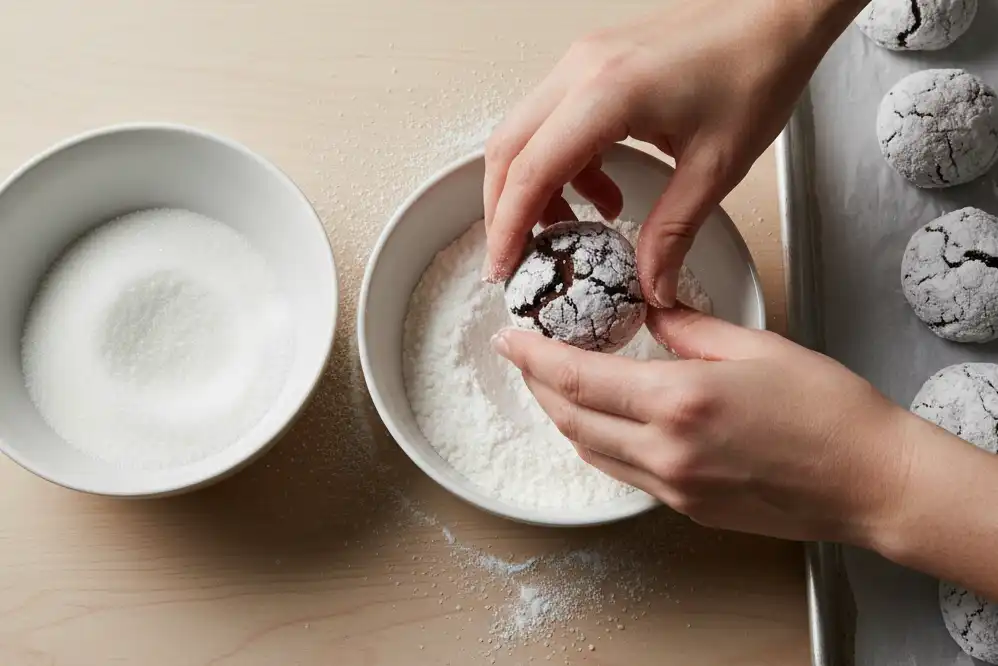
What: Rich, fudgy chocolate cookies coated in powdered sugar that crack open into stark black-and-white patterns during baking.
Why: The contrast between high-temperature surface drying and rapid inner thermal expansion creates signature deep cracks.
Ingredients
- 140g (1 1/6 cups) 1-to-1 Gluten-Free Baking Flour
- 60g (3/4 cup) Dutch-Processed Cocoa Powder, sifted
- 1 tsp Baking Powder
- 1/4 tsp Fine Sea Salt
- 200g (1 cup) Granulated White Sugar
- 60ml (1/4 cup) Neutral Vegetable Oil or Melted Coconut Oil
- 2 Large Eggs, room temperature
- 1 tsp Pure Vanilla Extract
- 50g (1/4 cup) Granulated Sugar (for initial rolling)
- 70g (1/2 cup) Powdered Sugar (for final coating)
How to Prepare
- Whisk the flour, cocoa powder, baking powder, and salt in a bowl.
- In a separate bowl, whisk the granulated sugar, vegetable oil, eggs, and vanilla extract until glossy and well combined.
- Fold the dry ingredients into the wet mixture using a spatula until a shiny, sticky batter forms.
- Cover the bowl with plastic wrap and chill for at least 4 hours (or overnight) until the batter hardens into a scoopable consistency.
- Preheat oven to 350°F (175°C). Line two baking sheets with parchment.
- Scoop 1-tablespoon portions of dough and roll them into smooth balls.
- Roll each ball first in granulated sugar, then immediately dredge heavily in powdered sugar until completely white.
- Place balls on baking sheets 2 inches apart. Bake at 350°F (175°C) for 10 to 12 minutes until cracked and puffed.
- Cool on the pan for 5 minutes, then transfer to a wire rack to set completely.
Common Mistake: Skipping the granulated sugar step. Rolling the balls in granulated sugar first creates a protective barrier that prevents the powdered sugar from absorbing moisture and dissolving during baking.
Pro Tip: Keep the dough chilled between batches. Warm dough flattens too quickly in the oven, which prevents the dramatic crinkle pattern from forming.
Buttery Gluten-Free Whipped Shortbread
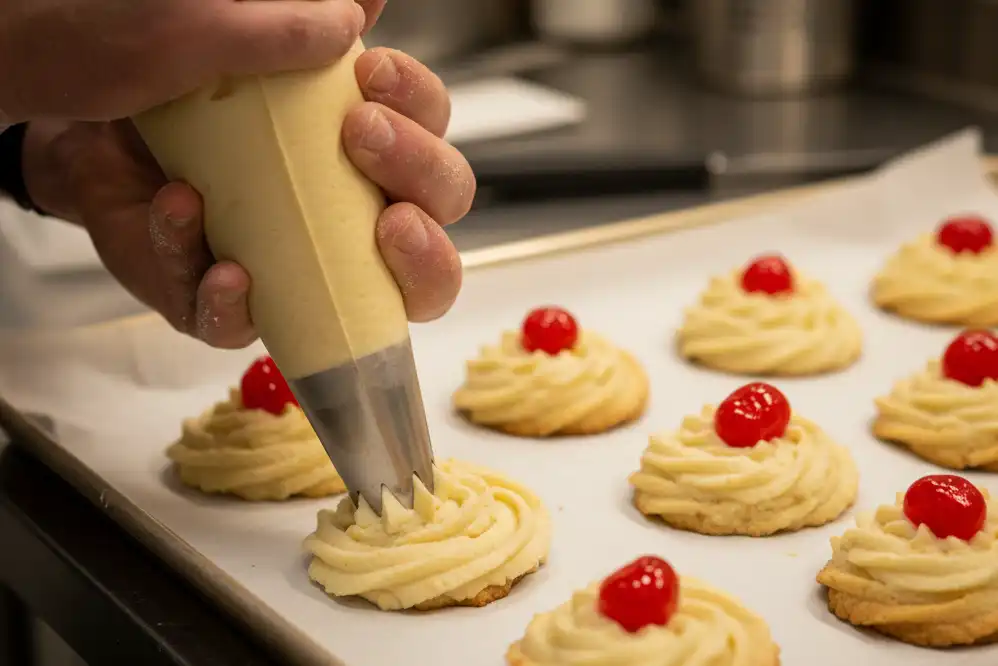
What: Light, melt-in-your-mouth Scottish-style shortbread cookies made with butter, cornstarch, and fine rice flour.
Why: Whipping the butter thoroughly incorporates microscopic air pockets, while pure starches give the cookies a tender, delicate texture without requiring gluten development.
Ingredients
- 225g (1 cup) High-Fat European Butter (82% butterfat), softened to 68°F (20°C)
- 60g (1/2 cup) Sifted Powdered Sugar
- 1 tsp Pure Vanilla Extract or Vanilla Bean Paste
- 150g (1 1/4 cups) Superfine White Rice Flour
- 60g (1/2 cup) Cornstarch (or Tapioca Starch)
- 1/4 tsp Fine Sea Salt
- Maraschino cherry halves or festive sprinkles for topping (optional)
How to Prepare
- In a stand mixer fitted with the whisk attachment, beat the softened butter and powdered sugar on high speed for a full 6 to 8 minutes until light, white, and airy.
- Add the vanilla extract and beat for an additional 30 seconds.
- Sift the white rice flour, cornstarch, and salt directly into the whipped butter mixture.
- Switch to the paddle attachment and mix on the lowest speed for 1 minute until the dry ingredients are just incorporated. Do not overmix.
- Preheat oven to 300°F (150°C). Line two baking sheets with parchment paper.
- Transfer the soft dough to a heavy pastry piping bag fitted with a large open star tip (such as an Ateco 828).
- Pipe 1.5-inch rosettes onto the prepared sheets, leaving 1.5 inches of space between cookies. Top each with a cherry half or sprinkles if desired.
- Chill the piped sheets in the refrigerator for 20 minutes to firm the butter before baking.
- Bake at 300°F (150°C) for 18 to 22 minutes. The cookies should be set and pale, with no browning on top.
- Cool completely on the baking sheet for 20 minutes before handling.
Common Mistake: Using cold, hard butter. Butter must be properly softened to 68°F (20°C) to whip air into the emulsion. If the butter is too cold, the dough will be too stiff to pipe.
Pro Tip: Bake these cookies at a low temperature of 300°F (150°C). Low heat gently dries the starches without caramelizing the butter sugars, preserving the traditional pale finish of Scottish shortbread.
Gluten-Free Flour and Binder Comparison Table
Selecting the right flour blend directly affects the moisture level, rise, and crumb of your holiday cookies. Use this comparison matrix to pick the right base for your recipes.
| Flour / Starch Type | Protein Content | Hydration Rate | Texture Profile | Best Holiday Application |
|---|---|---|---|---|
| Superfine Brown Rice Flour | 7–8% | Slow (Requires rest) | Structured, slightly nutty | Gingerbread, rolled sugar cookies |
| Tapioca Starch (Cassava) | 0% | Fast (High expansion) | Chewy, elastic, helps browning | Drop cookies, chocolate crinkles |
| Potato Starch | 0% | Moderate | Moist, delicate, crumbly | Shortbread, spritz cookies |
| Blanched Almond Flour | 21% | Low (Fat-dominant) | Tender, buttery, rich crumb | Linzer cookies, snowball crescents |
| Sorghum Flour | 10–11% | Moderate | Closest flavor to wheat | Spiced cookies, biscotti |
| Oat Flour (Certified GF) | 12–14% | High absorption | Soft, cakey, moist | Iced holiday drop cookies |
Advanced Baking Techniques and Edge Cases
Professional gluten-free baking requires managing variables that have little impact on standard wheat doughs. Use these techniques to tackle common edge cases during holiday prep.
Adapting Recipes for Dairy-Free and Vegan Diets
Many individuals with celiac disease also manage secondary dairy intolerances. When swapping butter, use solid block plant-based butters with an 80% fat content (such as Miyoko’s or Naturli’) rather than soft tub spreads, which contain excess water that causes dough to spread.
For egg-free holiday cookies, substitute 1 large egg with 1 tablespoon of finely ground golden flaxseed meal mixed with 3 tablespoons of warm water. Let the mixture gel for 10 minutes before using. This substitute works well in gingerbread and chocolate crinkles, though it should be avoided in pale sugar cookies.
High-Altitude Gluten-Free Baking Adjustments
At elevations above 3,500 feet, low atmospheric pressure causes gases to expand faster and liquids to evaporate more quickly. This often causes gluten-free cookies to spread excessively and dry out.
- Increase Oven Temperature: Raise the baking temperature by 15°F to 25°F (10°C) to set the starch structure before gases over-expand.
- Reduce Leaveners: Decrease baking powder or baking soda by 20% to 25% to prevent cookies from collapsing in the center.
- Increase Hydration: Add 1 to 2 tablespoons of extra liquid (milk or water) per recipe to balance rapid evaporation.
Troubleshooting Matrix: Common Mistakes and Solutions
Problem: The cookies have a gritty, sandy texture after baking.
Root Cause: The dough was baked immediately without allowing the coarsely milled rice flour to hydrate, or an inferior flour blend was used.
Solution: Rest mixed dough in the refrigerator for at least 45 minutes before baking, and make sure to use brands that mill to a superfine grind.
Problem: Cut-out cookies spread into a single sheet on the baking pan.
Root Cause: The butter was too warm when entering the oven, or the flour blend lacked sufficient starch and xanthan gum.
Solution: Add 1/4 teaspoon of xanthan gum to your flour blend and freeze cut shapes for 15 minutes immediately before baking.
Problem: Cookies crumble into small pieces when lifted off the pan.
Root Cause: The cookies were moved while still hot from the oven before the starches had time to cool and set.
Solution: Let the cookies cool on the hot baking sheet for 10 full minutes on a flat surface before using a thin spatula to transfer them to a wire rack.
Storage, Freezing, and Holiday Make-Ahead Logistics
Gluten-free cookies go stale faster than wheat-based treats because retrogradation—the crystallization of starch molecules—occurs more rapidly in rice and potato starches.
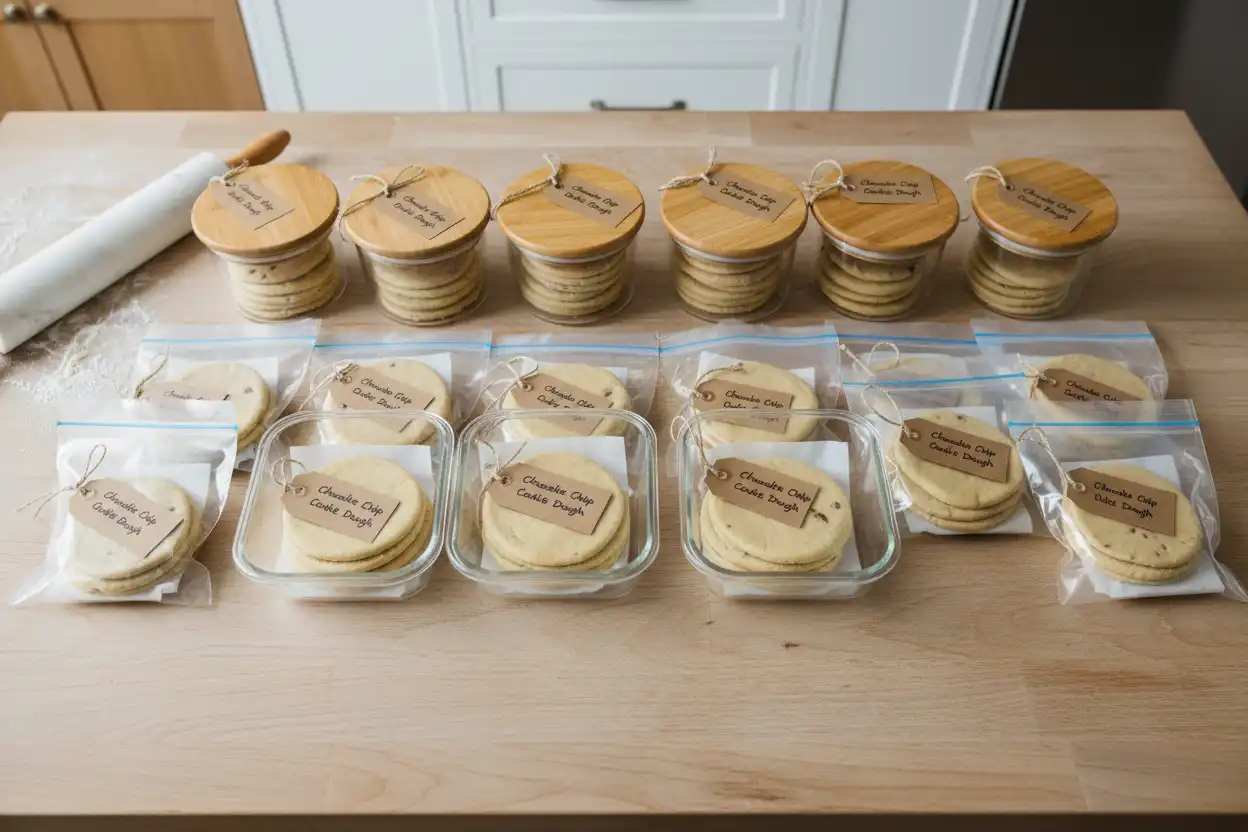
Freezing Raw Cookie Dough
Most gluten-free doughs freeze exceptionally well. For rolled cutout cookies, roll the dough flat between parchment sheets, wrap tightly in heavy-duty plastic wrap, and freeze flat for up to 3 months. Thaw in the refrigerator for 2 hours before cutting and baking.
For drop and crinkle cookies, scoop dough into individual balls and freeze on a baking sheet until firm. Transfer the frozen balls to an airtight container. You can bake them directly from frozen by adding 1 to 2 minutes to the total bake time.
Preserving Baked Cookies
Store baked gluten-free cookies in an airtight container at room temperature with a piece of parchment paper between each layer. Adding a single slice of gluten-free sandwich bread to the container helps maintain humidity and keeps cookies soft for up to 5 days without turning mushy.
Essential Equipment and Measurement Tools
- Digital Kitchen Gram Scale: Measuring flour by volume using cups can cause weight variations of up to 25%, which leads to dry dough. Always weigh your ingredients.
- Heavy Anodized Rimless Baking Sheets: Light-colored aluminum sheets distribute heat evenly and prevent the bottoms of delicate cookies from burning.
- Pre-Cut Unbleached Parchment Paper Sheets: Parchment paper prevents sticking, avoids the need for greasing pans, and makes rolling dough cleaner.
- Adjustable Rolling Pin with Guide Rings: Guide rings ensure your dough is rolled to an even thickness (1/4-inch or 1/8-inch), ensuring uniform bake times.
- Thin Stainless Steel Cookie Spatula: A flexible metal spatula slides cleanly under fragile unbaked cutouts without warping their shapes.
Recommended Internal Baking Guides
- The Ultimate Guide to Gluten-Free Flour Blends: How to Mix at Home
- How to Master Gluten-Free Royal Icing: Complete Decorating Guide
- Gluten-Free Holiday Fruitcake and Stollen: Traditional European Recipes
- Dairy-Free and Gluten-Free Holiday Desserts: A Host’s Guide
- Troubleshooting Gluten-Free Pastry: Avoiding Gummy and Crumbly Bakes
Authoritative Celiac and Baking Standards
- Celiac Disease Foundation (CDF): Safety guidelines on cross-contamination, safe manufacturing protocols, and dietary management.
- Beyond Celiac: Certified gluten-free standards and resources for navigating kitchen safety during shared holiday gatherings.
- FDA Food Labeling Regulations: Standards for gluten-free labeling definitions under 21 CFR 101.91 (maintaining less than 20 ppm gluten).
- Gluten-Free Certification Organization (GFCO): Third-party verification standards and testing methods for commercial baking ingredients.
Core Takeaways for Holiday Success
- Weigh Every Ingredient: Always use a digital scale in grams to preserve the delicate balance of fats, grains, and starches.
- Hydrate and Rest the Dough: Allow mixed dough to rest for at least 30 to 60 minutes to eliminate any gritty mouthfeel.
- Chill Cutout Dough: Keep your dough cold before cutting and baking to ensure cookies hold sharp holiday shapes.
- Let Starches Cool on the Pan: Give baked cookies 10 minutes on the warm sheet to allow the structural starch network to set.
- Audit Holiday Decorating Supplies: Always verify that sprinkles, food colorings, and extracts are certified gluten-free.
Start Your Gluten-Free Holiday Baking
Baking delicious gluten-free holiday cookies comes down to understanding flour ratios, hydration times, and temperature management. With these master recipes and techniques, you can make festive holiday platters that everyone at your table can safely enjoy.
Frequently Asked Questions (FAQ)
Why do my gluten-free Christmas cookies feel gritty?
Grittiness is caused by coarsely milled rice flour that has not fully absorbed moisture from the dough. To fix this, use superfine-milled flour blends and let your mixed dough rest in the refrigerator for at least 30 to 60 minutes before baking. This gives the starch granules time to hydrate completely.
Can I use regular 1-to-1 gluten-free flour for cut-out cookies?
Yes, provided the blend contains xanthan gum and has a balanced grain-to-starch ratio. For sharp cutout shapes that hold their edges in the oven, add an extra 1/4 teaspoon of xanthan gum per cup of flour and chill the rolled dough sheets thoroughly before cutting and baking.
How do I keep gluten-free cookies from crumbling when handled?
Gluten-free cookies crumble when they lack adequate binders or are moved while still hot. Always ensure your recipe includes a binder like xanthan gum or psyllium husk, and leave the cookies on the hot baking pan for 10 minutes after baking so the delicate starch matrix can set before transferring.
Are decorative sprinkles and royal icing naturally gluten-free?
Not always. Many commercial sprinkles use wheat starch to prevent clumping, and some powdered sugars or flavor extracts are processed on shared equipment with wheat. Always check ingredient labels for hidden wheat flour and choose products with certified gluten-free seals on the package.
Can I freeze gluten-free cookie dough ahead of time?
Yes. Gluten-free dough freezes very well. Roll cut-out dough flat between sheets of parchment paper, wrap tightly in plastic wrap, and freeze for up to 3 months. Drop cookie dough can be portioned into balls and frozen on a baking sheet before transferring to a sealed freezer bag.
What is the best way to keep gluten-free holiday cookies fresh?
Store baked cookies in an airtight metal or glass container with parchment paper between layers. Adding a single slice of gluten-free bread inside the container helps regulate moisture, keeping the cookies soft for up to five days without making them soggy.