
Quick Recipe Summary
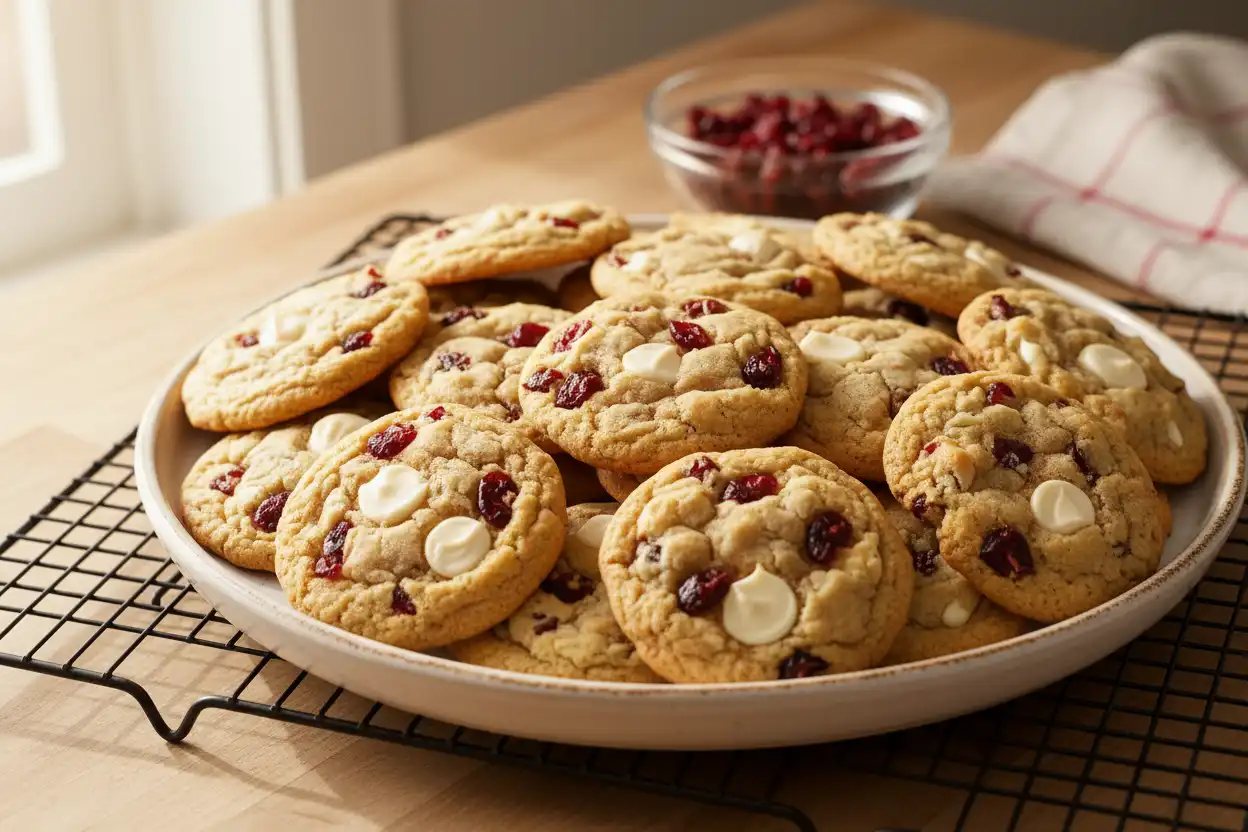
Cranberry white chocolate cookies combine rich creaminess with bright tartness. To achieve a soft center and golden edge, pair sweetened dried cranberries with high-quality white chocolate containing real cocoa butter.
Chilling your dough for at least 30 to 60 minutes prevents excessive spreading and deepens the butterscotch notes from the brown sugar. Bake at 350°F (177°C) for 10 to 12 minutes until the edges are lightly set while the centers remain soft.
Key Takeaways
- Use real white chocolate: Select chocolate bars or chips with cocoa butter rather than palm oil for smooth melting.
- Chill the dough: Chilling solidifies the fat, controlling cookie spread and producing a chewiers texture.
- Balance moisture: Dried cranberries provide optimal flavor and moisture control compared to fresh berries.
Why Cranberry White Chocolate Cookies Work
The combination of tart fruit and sweet white chocolate creates an ideal flavor profile for home bakers. White chocolate brings high sweetness and creamy fat, which benefits from the acidic contrast provided by cranberries.
This recipe suits holiday gatherings, cookie exchanges, and everyday baking. Simple steps allow beginner bakers to achieve professional bakery results using basic kitchen tools.
Understanding how flour structure, sugar hydration, and fat temperatures interact ensures consistent results every time you bake.
The Science of Flavor & Moisture Balance
White chocolate lacks cocoa solids and relies heavily on milk solids and cocoa butter. Because white chocolate is inherently sweet, pairing it with dark or plain doughs can sometimes feel unbalanced.
Dried cranberries introduce natural citric and malic acids. These acids cut through the milk fat, creating a balanced taste on the palate.
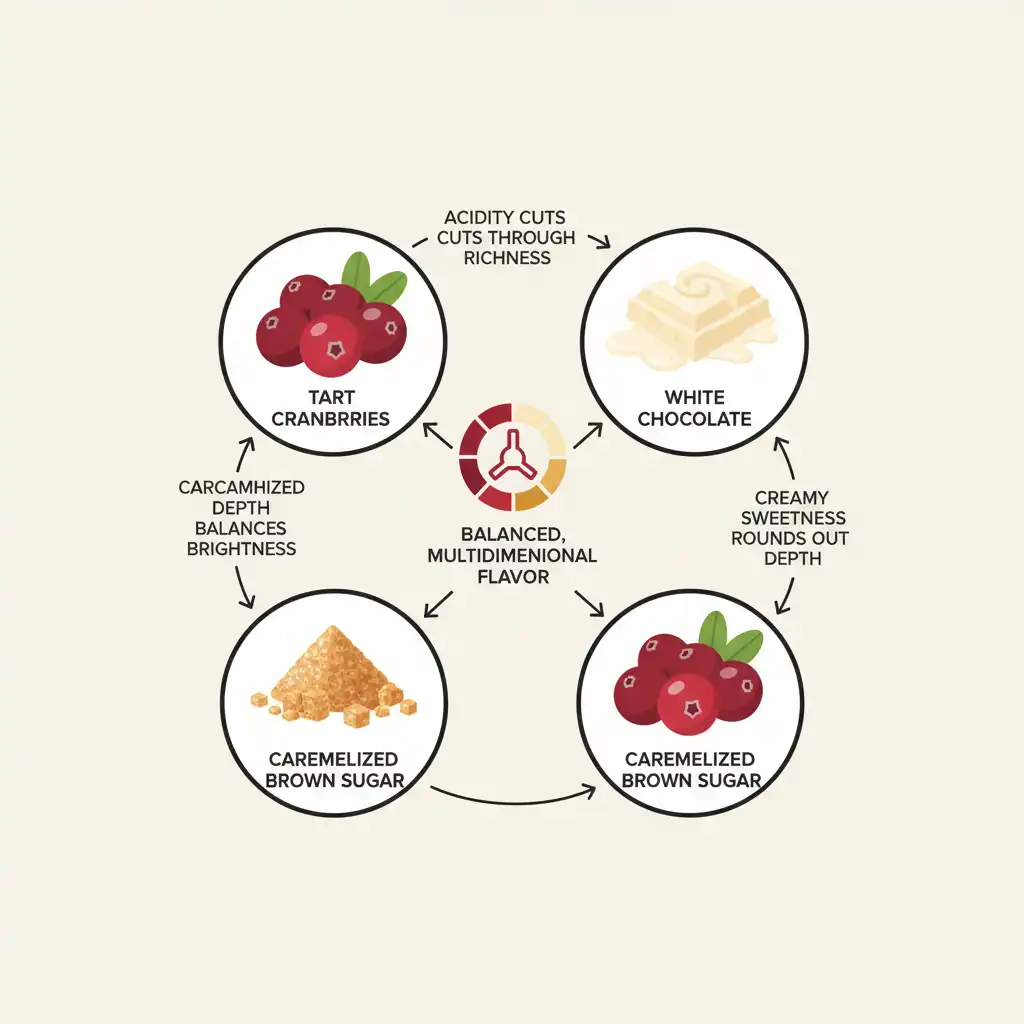
Moisture control is critical in drop cookie doughs. Fresh cranberries contain over 85% water, which releases steam during baking and creates a cakey, soggy texture. Dried cranberries retain approximately 15% moisture, preserving the signature chewy structure of a classic chocolate chip dough style.
Adding a small amount of orange zest enhances the fruit notes. The aromatic oils in citrus peel bond with the fats in the butter, elevating the overall aroma without adding extra liquid.
Essential Ingredients & Weight Ratios
Accurate measurements are vital for baking precision. Using a digital food scale yields more consistent results than volumetric measuring cups.
| Ingredient | Weight (Grams) | US Volume | Function in Dough |
|---|---|---|---|
| All-Purpose Flour | 280g | 2 1/4 cups | Provides structure and gluten network. |
| Unsalted Butter (Softened) | 170g | 3/4 cup (1.5 sticks) | Creates tender crumb and richness. |
| Light Brown Sugar (Packed) | 150g | 3/4 cup | Adds moisture, chewiness, and caramel notes. |
| Granulated White Sugar | 100g | 1/2 cup | Promotes crisp edges and surface browning. |
| Large Eggs (Room Temp) | 100g (2 items) | 2 large eggs | Binds ingredients and aids rising. |
| Cornstarch | 8g | 1 teaspoon | Softens gluten for extra tender centers. |
| Baking Soda | 5g | 1 teaspoon | Promotes browning and slight rise. |
| Fine Sea Salt | 3g | 1/2 teaspoon | Enhances flavor and balances sweetness. |
| Pure Vanilla Extract | 5ml | 1 teaspoon | Adds aromatic depth. |
| Sweetened Dried Cranberries | 120g | 1 cup | Provides chewy texture and tartness. |
| White Chocolate Chips/Chunks | 170g | 1 cup | Delivers creamy pockets of flavor. |
Step-by-Step Baking Guide
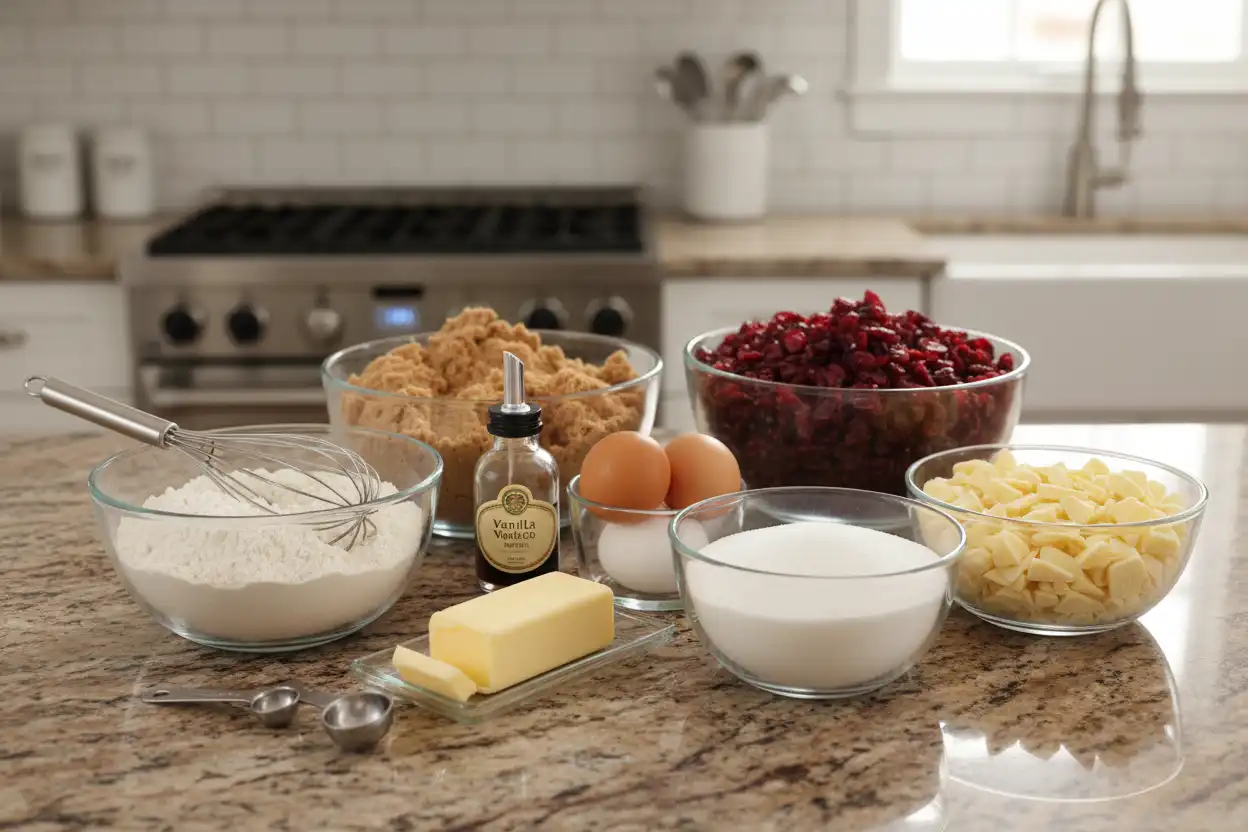
Step 1: Prep Equipment and Dry Ingredients
Preheat your oven to 350°F (177°C). Line two large baking sheets with parchment paper or silicone baking mats.
In a medium bowl, whisk together the all-purpose flour, cornstarch, baking soda, and fine sea salt until evenly distributed. Whisking aerates the dry mixture and breaks up any flour clumps.
Pro Tip: Cornstarch weakens gluten development slightly, ensuring your cookie centers stay soft for days.
Step 2: Cream Butter and Sugars
Place the softened unsalted butter, light brown sugar, and granulated sugar into a mixing bowl. Beat on medium speed for 2 minutes until lightened in color and smooth.
Avoid over-creaming the mixture. Excess air pockets cause cookies to puff up initially and then collapse into flat, thin discs during cooling.
Step 3: Emulsify Wet Ingredients
Add the room-temperature eggs one at a time, mixing thoroughly after each addition. Stir in the pure vanilla extract and optional orange zest.
Room-temperature eggs bond smoothly with emulsified fat. Cold eggs chill the butter, causing the batter to curdle and break apart.
Step 4: Combine Wet and Dry Mixtures
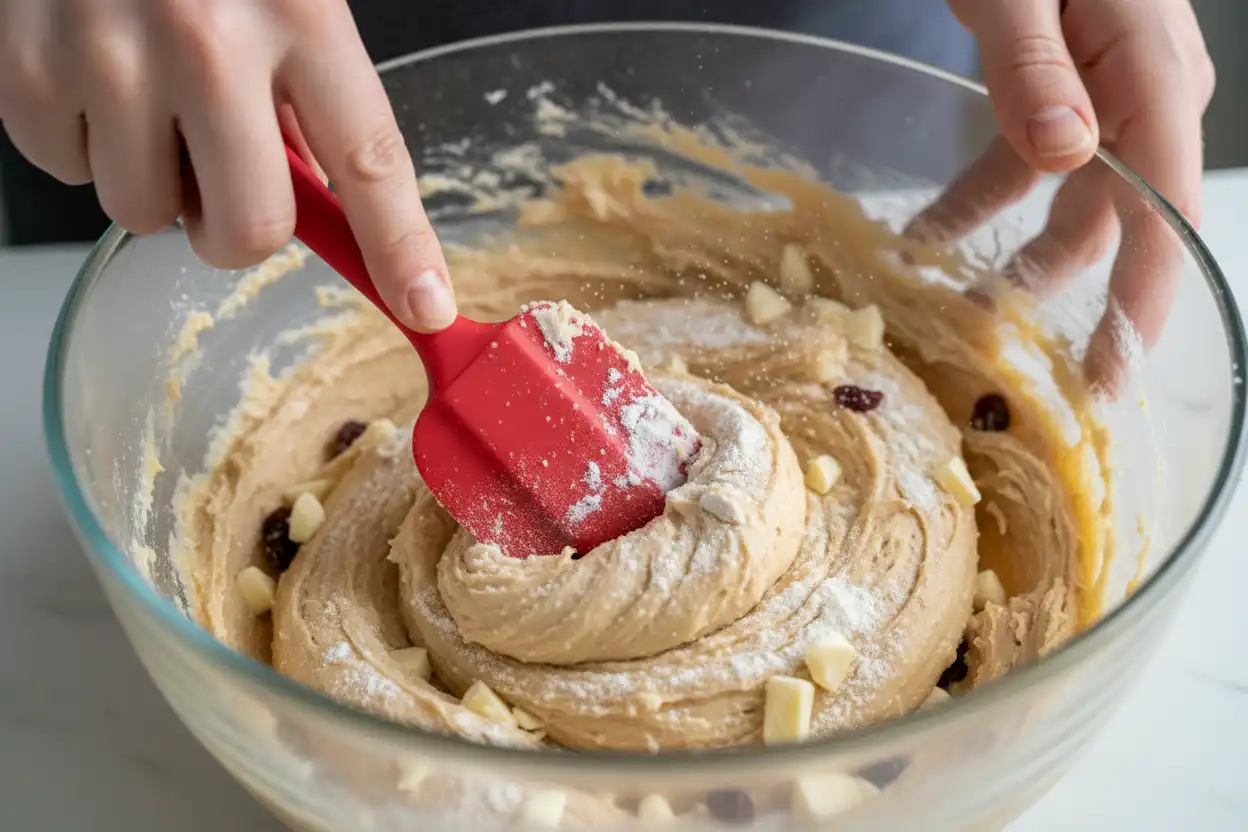
Turn the mixer to low speed and gradually add the dry ingredient mixture. Mix just until the flour streaks disappear.
Over-mixing activates gluten proteins, resulting in tough or rubbery cookies. Stop mixing as soon as the dough forms a cohesive shape.
Step 5: Fold in Add-Ins and Chill
Gently fold in the dried cranberries and white chocolate chunks using a rubber spatula. Reserve two tablespoons of each add-in for topping the dough balls later.
Cover the bowl with plastic wrap and chill in the refrigerator for 30 to 60 minutes. Chilling firms up the fat, which controls how much the dough spreads in the oven.
Step 6: Scoop and Shape
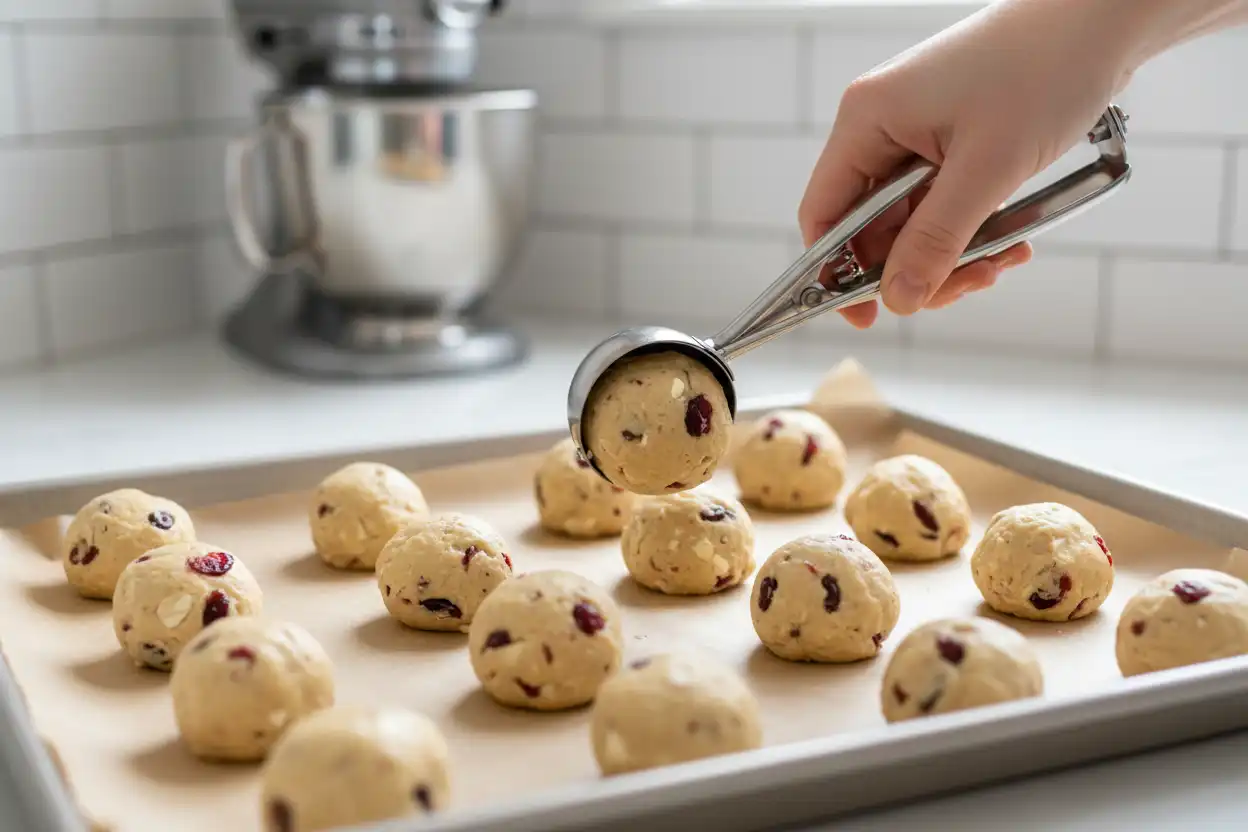
Use a 2-tablespoon cookie scoop to portion uniform dough balls onto prepared baking sheets, leaving 2 inches between each cookie. Press reserved cranberries and white chocolate pieces onto the tops of each dough ball for an attractive finish.
Step 7: Bake and Cool
Bake at 350°F (177°C) for 10 to 12 minutes. Remove when edges turn golden brown and centers appear soft and pale.
Allow cookies to rest on the hot baking sheet for 5 minutes. Transfer them to a wire rack to cool completely, allowing residual heat to finish cooking the centers.
Baking Variables Comparison Table
Small adjustments in technique yield noticeable changes in cookie texture and appearance. Refer to this chart to customize your results.
| Technique / Variable | Cookie Texture | Cookie Appearance | Best Suited For |
|---|---|---|---|
| Chilled Dough (1+ Hour) | Chewy center, thick, tender | Compact dome, minimal spread | Bakery-style thick cookies |
| Unchilled Dough | Thinner, crispier edges | Wide spread, flatter top | Crispy cookie lovers |
| Melted Butter (Cooled) | Dense, ultra-chewy | Smooth, glossy surface | Fudge-like texture preference |
| Chopped Chocolate Bar | Pockets of soft chocolate | Artisanal, irregular pools | Gourmet presentation |
Pro Tips for Bakery-Style Results
Elevate your homemade baking with these expert techniques gathered from professional bakeries.
Browning the Butter: Melt unsalted butter over medium heat until it foams and turns golden brown with a nutty aroma. Cool completely before creaming with sugars to add deeper, caramelized notes to your batch.
The Pan Bang Method: Tap the baking sheet firmly on the counter halfway through baking. This collapses air pockets, creating extra-chewy ripples along the edges of the cookies.
Use Quality White Chocolate: Inspect the label to ensure cocoa butter is listed as the primary fat source. Products labeled “white morsels” or “baking chips” often use hydrogenated palm oils, which melt poorly and leave a waxy residue.
Common Mistakes & How to Fix Them
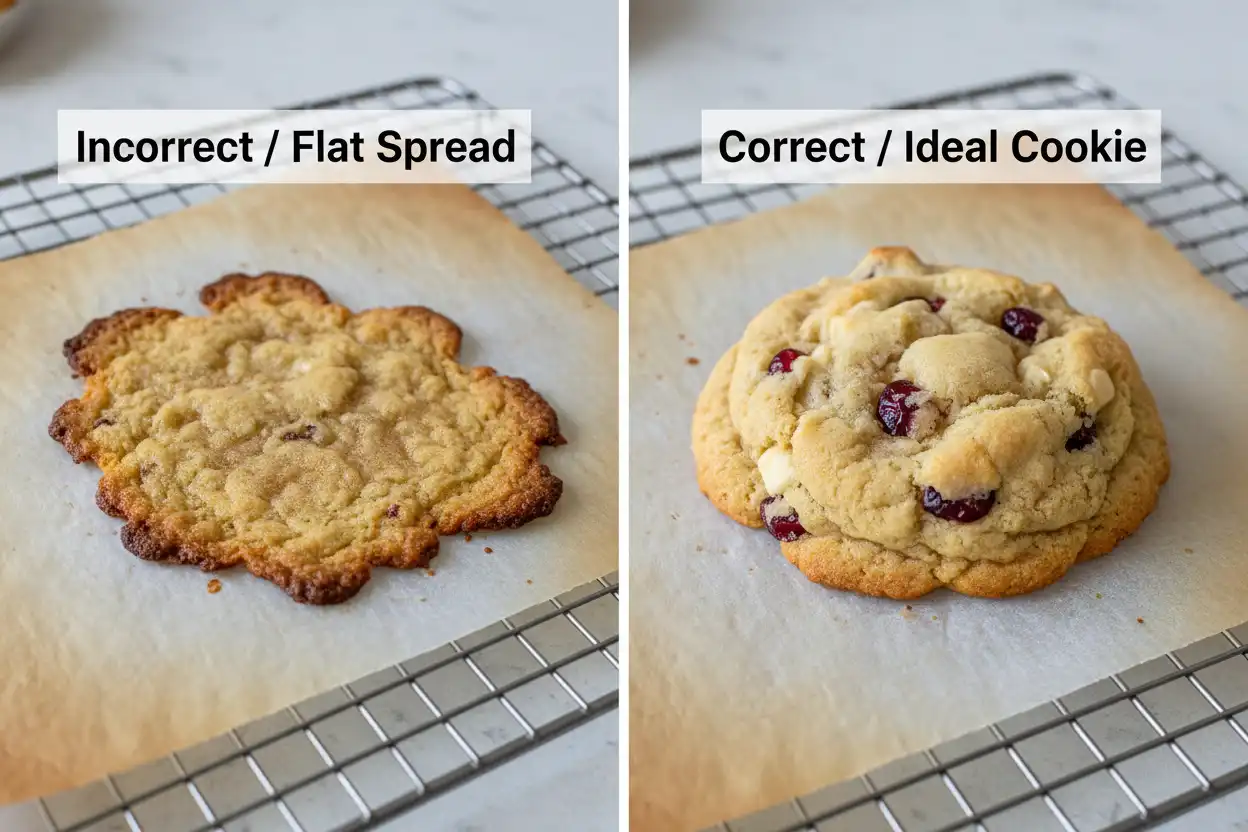
Problem: Cookies spread into a single flat sheet.
Cause: Butter was too warm or flour was under-measured.
Fix: Spoon and level flour into measuring cups, or use a scale. Chill dough balls thoroughly before baking.
Problem: Hard, dry, or cakey texture.
Cause: Over-baking or adding too much flour.
Fix: Remove cookies when centers still look slightly underdone. Residual heat on the baking pan finishes the cooking process during cooling.
Problem: Scorched white chocolate bits.
Cause: White chocolate contains high milk solids, which burn easily when exposed directly to pan heat.
Fix: Ensure chocolate chunks are tucked inside the dough rather than resting directly on the pan bottom.
Baking Best Practices Checklist
- Weigh ingredients with a digital scale for maximum accuracy.
- Use room-temperature eggs and butter soft enough to leave a thumb impression.
- Rotate baking sheets 180 degrees midway through baking for even browning.
- Line sheets with parchment paper instead of applying non-stick cooking spray.
- Allow baking sheets to cool completely before placing the next batch of dough onto them.
Recipe Variations & Dietary Adaptations
Gluten-Free Adaptation: Replace all-purpose flour with an equal weight of a 1:1 gluten-free baking flour blend containing xanthan gum. Rest dough for 30 minutes before baking to hydrate rice flours completely.
Citrus & Spice Twist: Add 1 teaspoon of freshly grated orange zest and 1/4 teaspoon of ground cardamom to the butter mixture to add warm aromatic notes.
Nutty Crunch: Incorporate 1/2 cup (60g) of toasted, chopped macadamia nuts or pecans into the dough along with the cranberries and white chocolate.
Storage, Freezing & Make-Ahead Instructions
Room Temperature Storage: Keep baked cookies in an airtight container for up to 5 days. Place a small slice of plain white bread inside the container to maintain softness.
Freezing Cookie Dough: Scoop portioned dough balls onto a parchment-lined tray and freeze for 1 hour. Transfer frozen balls into a sealed freezer bag for up to 3 months. Bake straight from frozen, adding 1 to 2 minutes to the total baking time.
Freezing Baked Cookies: Store fully cooled cookies in a single layer separated by parchment paper in airtight containers. Freeze for up to 2 months and thaw at room temperature before serving.
Recommended Baking Tools
- Digital Kitchen Scale: Ensures precise ratio accuracy for flour and sugars.
- Medium Cookie Scoop (#40 / 2-tbsp): Guarantees uniform cookie size and even baking.
- Heavy Aluminium Baking Sheets: Prevents hot spots and uneven bottom browning.
- Parchment Paper Sheets: Prevents sticking without adding extra grease or oils.
- Wire Cooling Racks: Allows air circulation underneath cookies to prevent soggy bases.
Related Recipe Ideas
Expand your home baking collection with these complementary recipe concepts:
- Chewy Dark Chocolate Chunk Sea Salt Cookies
- Classic Bakery-Style Oatmeal Raisin Cookies
- White Chocolate Macadamia Nut Cookies
- Soft-Baked Orange Zest Snickerdoodles
- Holiday Cookie Exchange Platter Planning Guide
External Educational Resources
- King Arthur Baking Company: Educational articles on flour protein content and starch hydration.
- USDA Food Safety Guide: Recommended guidelines on safe handling of raw flour and unbaked egg mixtures.
- Exploratorium Science of Food: Detailed chemistry explanations covering sugar caramelization and Maillard browning reactions.
Key Takeaways
- Dried cranberries offer the ideal moisture level to prevent cakey cookie textures.
- High-grade white chocolate containing cocoa butter melts smoothly without waxy residues.
- Chilling dough for 30 to 60 minutes prevents excessive spread and enhances flavor depth.
- Under-baking slightly ensures a soft, chewy bakery texture after cooling.
Final Thoughts
Baking exceptional cranberry white chocolate cookies comes down to balancing sweet and tart flavors with sound baking techniques. By measuring ingredients accurately and controlling dough temperatures, you can produce consistent, bakery-quality cookies every time.
Gather your baking sheets, prepare your ingredients, and enjoy baking a batch for family, friends, or special celebrations.
Frequently Asked Questions
Can I use fresh cranberries instead of dried cranberries?
Fresh cranberries contain excess moisture that releases during baking, making cookies soggy or cakey. Stick with sweetened dried cranberries for optimal chewiness and balanced moisture levels in drop cookies.
Why did my cranberry white chocolate cookies spread too flat?
Excessive spreading usually happens when butter is overly melted, dough is not chilled, or flour is under-measured. Ensure you chill your dough balls for at least 30 minutes before baking to solidify the fats.
What type of white chocolate works best for baking cookies?
Choose high-quality white chocolate bars or chips containing real cocoa butter rather than palm oils. Chopping pure white chocolate bars creates rich, melty pockets throughout the warm cookie.
How do I keep my cookies soft for several days?
Store baked cookies in an airtight container at room temperature with a slice of plain white bread. The cookies absorb moisture from the bread, keeping them soft for up to five days.
Can I freeze the raw cookie dough for baking later?
Yes, scoop dough into individual balls and freeze them on a baking sheet until firm. Store dough balls in a sealed freezer bag for up to three months, and bake directly from frozen by adding two extra minutes.
Should I bake these cookies on parchment paper or silicone mats?
Parchment paper is ideal because it promotes even browning on cookie bottoms. Silicone mats are also effective, though they may slightly increase cookie spread due to their slicker surface.