
How to Make Perfect Chocolate Marshmallow Cookies
To make gooey chocolate marshmallow cookies, prepare a rich cocoa dough using dark brown sugar, butter, and Dutch-processed cocoa powder. Freeze jumbo marshmallows or mini marshmallows for 30 minutes before wrapping them entirely inside a chilled portion of dough.
Bake at 350°F (177°C) for 10 to 12 minutes on parchment paper. Fully enclosing the marshmallow prevents it from leaking onto the baking sheet and burning, yielding a thick cookie with a molten center.
- Preparation Time: 20 minutes
- Chill Time: 1 hour (dough) + 30 minutes (marshmallows)
- Bake Time: 10–12 minutes
- Core Technique: Fully wrap frozen marshmallows in chilled cookie dough
Why You Will Love This Recipe
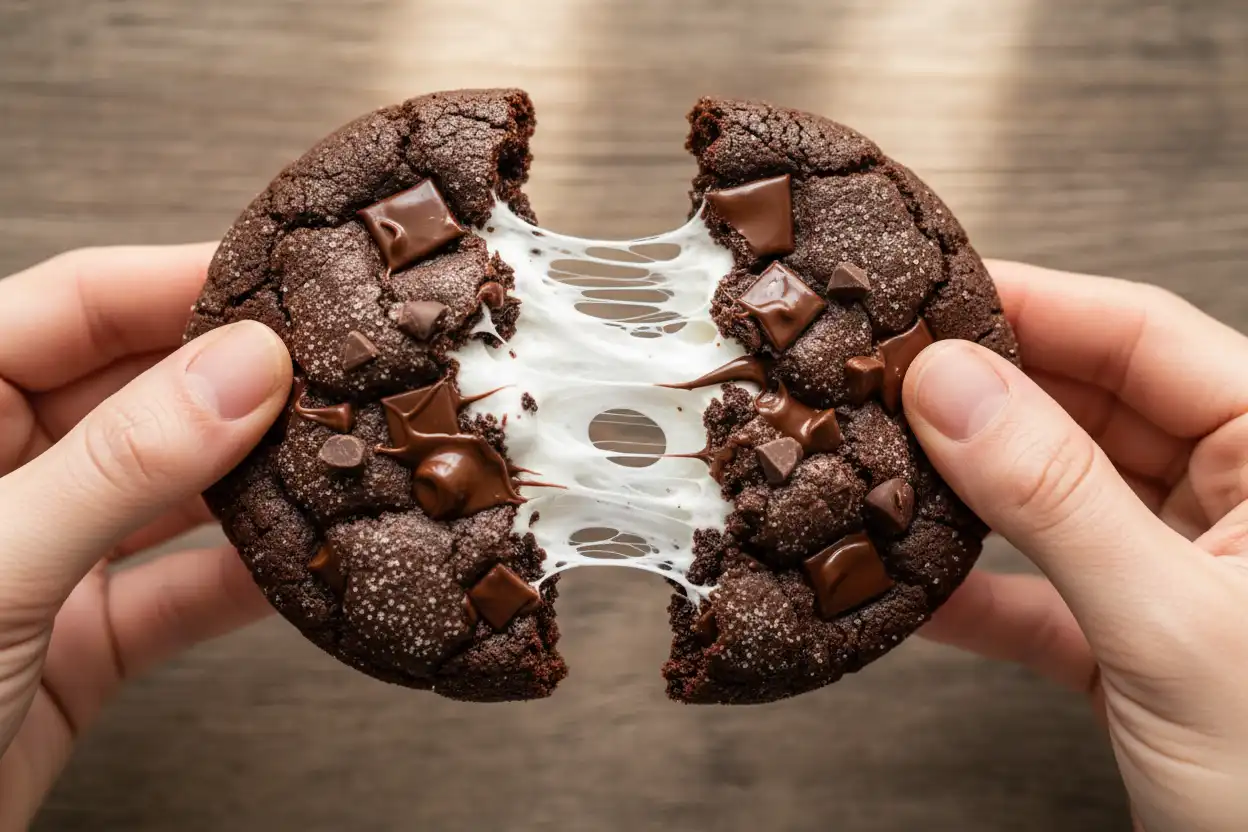
Chocolate marshmallow cookies combine the rich, fudge-like profile of a brownie with the elastic stretch of toasted marshmallow. Creating this treat at home requires an understanding of how sugar, protein, and fat react under oven heat.
This guide breaks down every step of the process for home bakers, holiday cooks, and dessert lovers. You will master dough containment, marshmallow stabilization, and thermal timing to eliminate flat, messy bake sheets forever.
Whether you want a cozy winter treat or a showstopping bake sale dessert, this masterclass equips you with exact weights, science-backed steps, and practical techniques.
The Science Behind Baking Marshmallow Cookies
Marshmallows present a unique structural challenge in baking. They consist primarily of whipped sugar syrup, gelatin, and air bubbles.
Gelatin melts at around 95°F (35°C), while sugar dissolves into liquid as temperature rises. When exposed directly to hot air or hot baking sheets, marshmallows liquefy and evaporate into burnt caramel puddles.
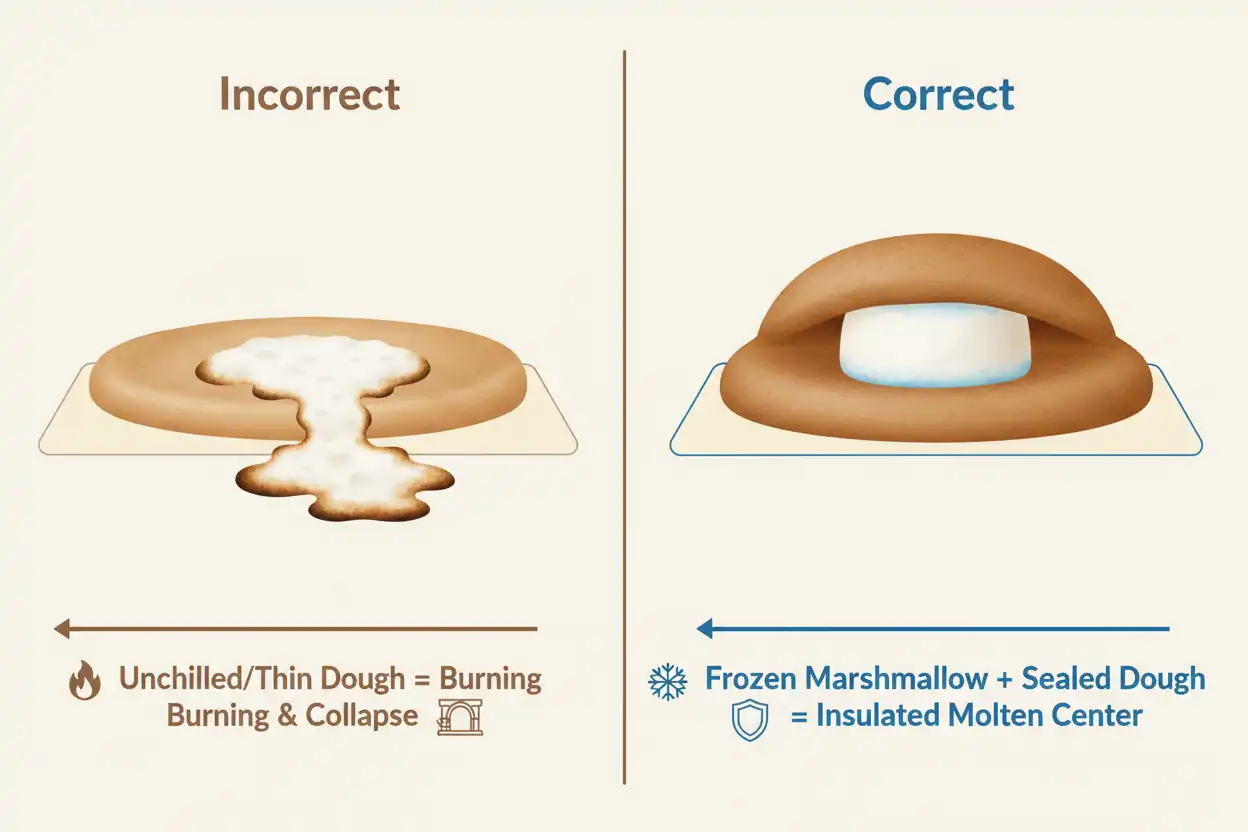
Encapsulating the marshmallow inside cold cookie dough insulates the gelatin matrix during the first five minutes of baking. As the outer cookie structure sets, the marshmallow gently warms and expands inside its cocoa shell.
Using Dutch-processed cocoa powder reduces overall acidity in the dough. This neutral environment stabilizes gluten structure while allowing dark chocolate notes to complement the sweet marshmallow core.
Choosing the Right Marshmallow Type
Selecting the correct marshmallow determines your final cookie’s texture, appearance, and ease of assembly. Each option behaves differently inside the oven.
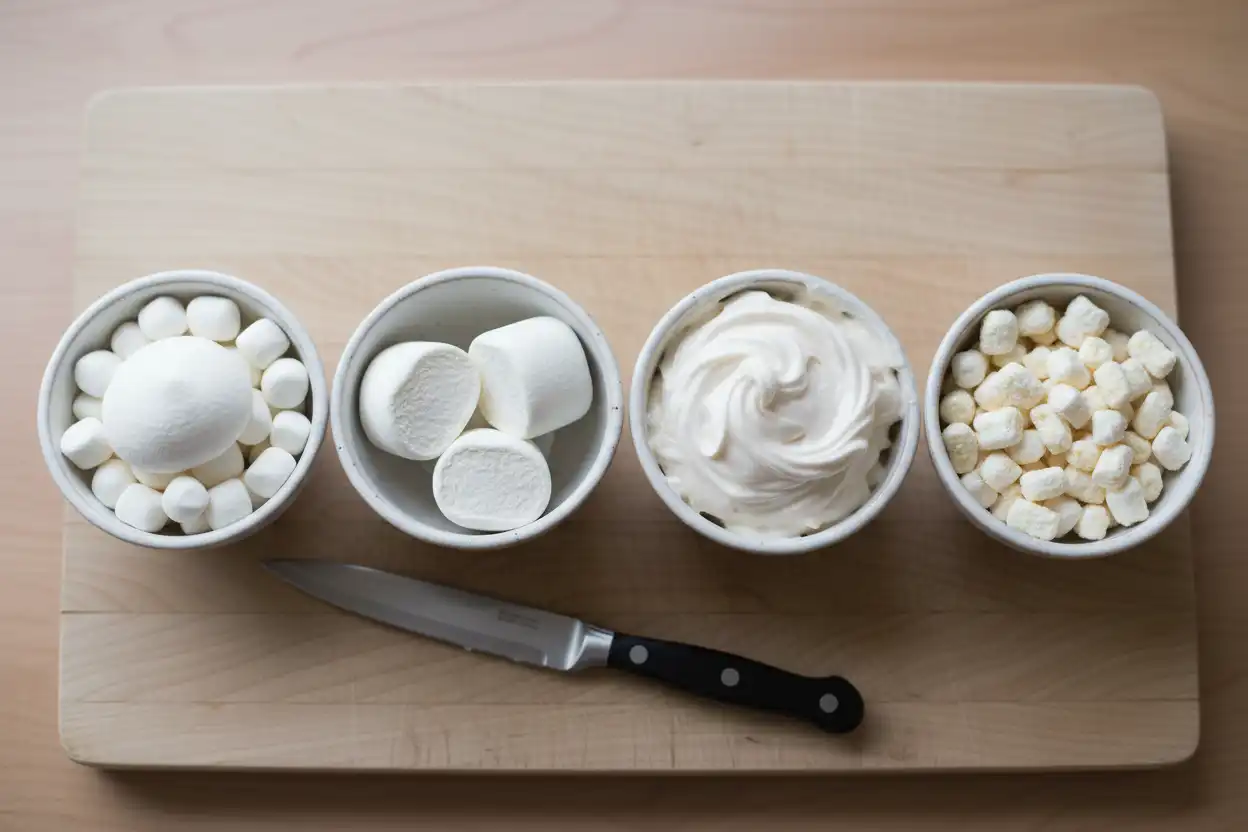
Mini Marshmallows
Mini marshmallows mix easily directly into dough. They offer distributed pockets of gooeyness throughout the cookie rather than one central burst.
Because they are small, exposed mini marshmallows melt quickly on top of cookies. Pressing them onto the dough ball during the final two minutes of baking produces decorative, clean spots.
Jumbo or Standard Marshmallows
Halved jumbo marshmallows create the classic molten center pull. Wrapping a 15-gram piece of marshmallow in 45 grams of chocolate dough ensures ideal proportions.
Marshmallow Fluff (Marshmallow Cream)
Marshmallow fluff lacks gelatin, relying instead on egg whites and corn syrup. It remains softer at room temperature than standard marshmallows.
Working with fluff requires freezing individual tablespoon-sized dollops on wax paper for at least two hours before stuffing. Unfrozen fluff dissolves into dough during baking.
Freeze-Dried Marshmallow Bits
Freeze-dried bits contain almost no moisture. They retain their exact shape and crunch unless hydrated by surrounding dough ingredients.
These bits work exceptionally well for stir-ins, offering a textured crunch similar to hot cereal toppings rather than a stretchy pull.
Ingredient Deep Dive & Substitutions
Quality ingredients directly dictate dough spread, moisture retention, and chocolate intensity. Use exact measurements for consistent baking results.
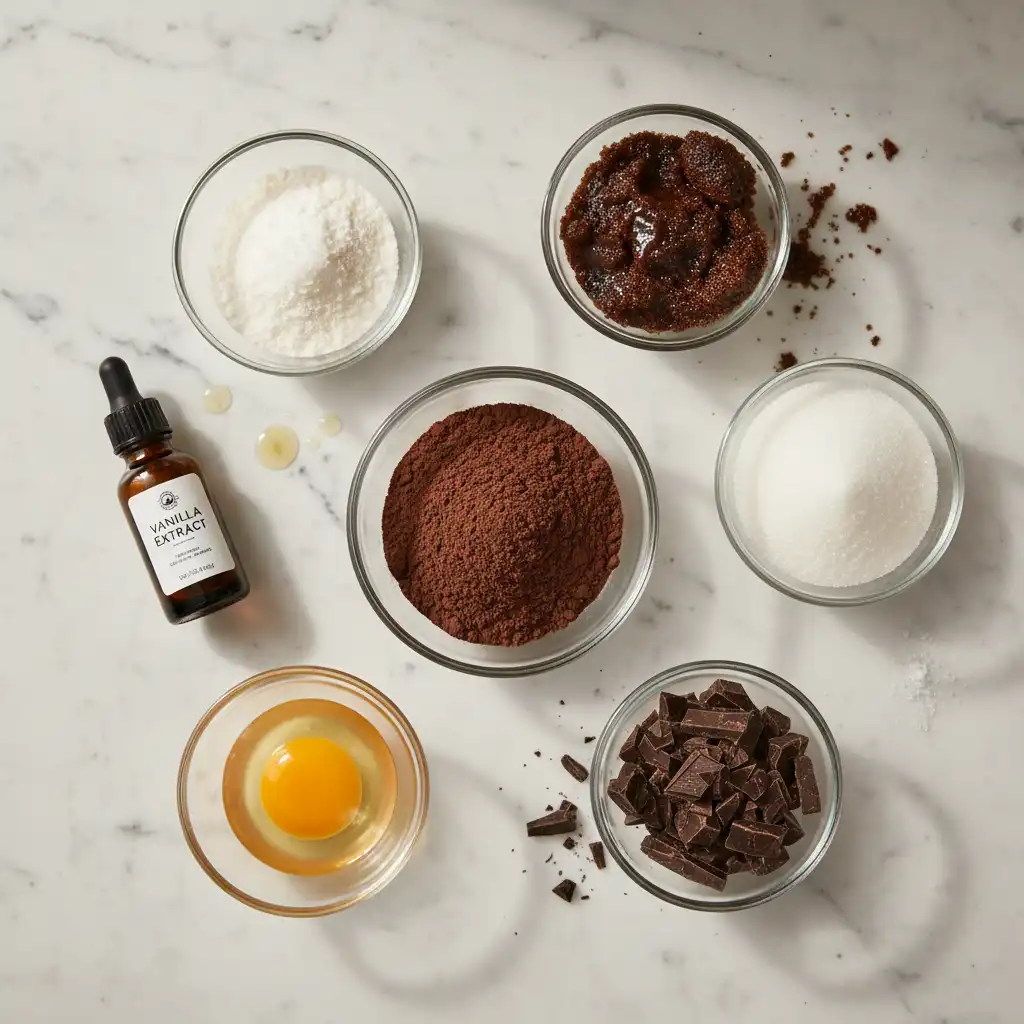
- Unsalted Butter: Softened butter at 65°F (18°C) creams effectively with sugars to trap micro-air pockets. Avoid melted butter unless you prefer dense, flat cookies.
- Dark Brown Sugar: Contains higher molasses content than light brown sugar, introducing essential moisture and caramel notes.
- Granulated White Sugar: Promotes crisp edges and proper surface cracking. A 2:1 brown-to-white sugar ratio keeps centers soft.
- Dutch-Processed Cocoa Powder: Treated with alkali to neutralize natural acidity, yielding a dark color and smooth chocolate profile.
- All-Purpose Flour: Protein content around 10–11% provides structure without making the cookie tough or bread-like.
- Eggs: One whole egg plus one additional egg yolk adds emulsifying lecithin for rich cohesion.
- Semi-Sweet Chocolate Chips: Chocolate chunks with 55% to 60% cacao balance the intense sweetness of the marshmallow core.
Step-by-Step Instructions
Follow these steps in precise order to achieve thick, soft cookies with intact marshmallow centers every time.
Step 1: Whip the Butter and Sugars
Combine 1/2 cup (113g) softened unsalted butter, 1/2 cup (100g) packed dark brown sugar, and 1/4 cup (50g) granulated sugar in a stand mixer bowl.
Beat on medium speed for two full minutes until the mixture turns pale and fluffy. Creaming creates the air structure needed to prevent dense, heavy dough.
Step 2: Incorporate Wet Ingredients
Add 1 large egg plus 1 egg yolk at room temperature, along with 1 teaspoon of pure vanilla extract. Mix on low speed until combined.
Scrape down the sides and bottom of the bowl using a flexible silicone spatula to ensure uniform moisture distribution.
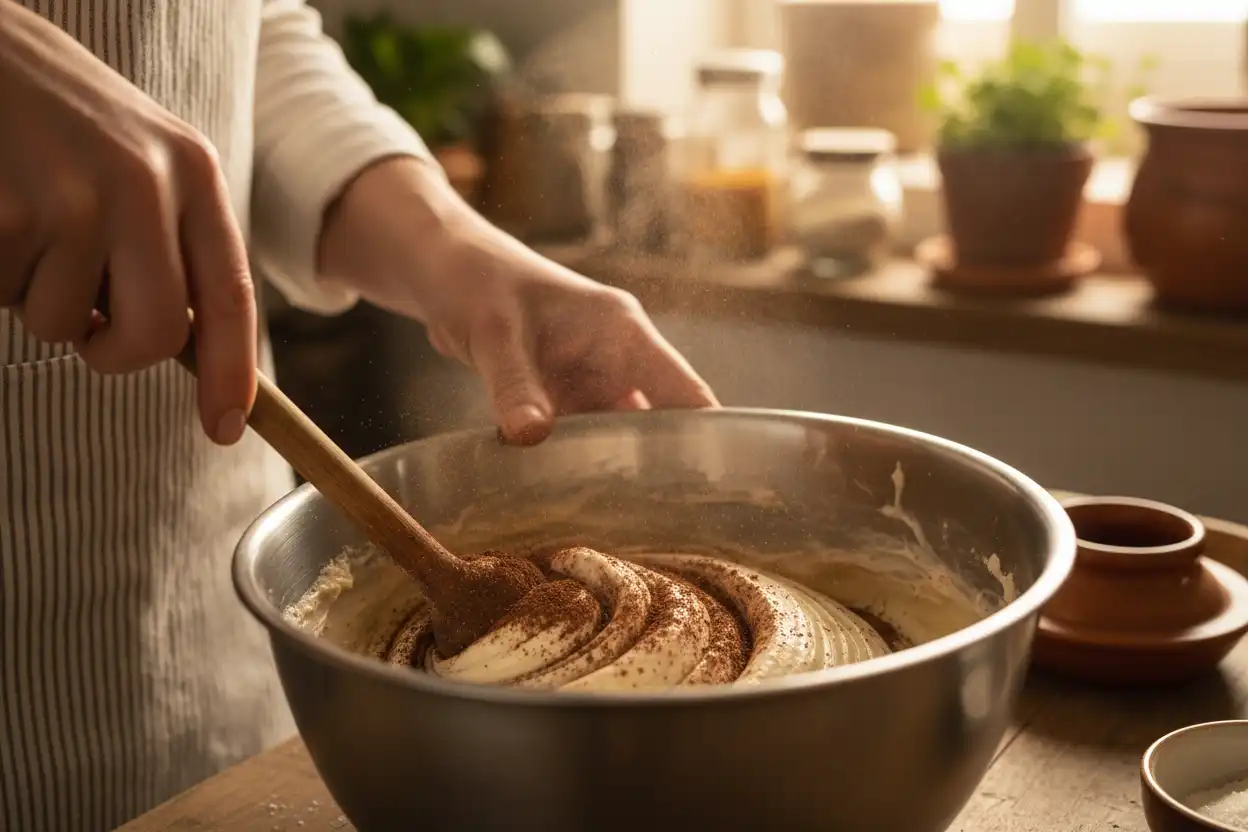
Step 3: Combine Dry Ingredients
Whisk together 1 cup (120g) all-purpose flour, 1/2 cup (45g) Dutch-processed cocoa powder, 1/2 teaspoon baking soda, and 1/4 teaspoon fine sea salt in a separate bowl.
Gradually add dry ingredients to wet ingredients on low speed. Mix just until flour streaks disappear. Overmixing develops excess gluten and toughens cookies.
Step 4: Fold in Chocolate Chunks
Gently fold in 3/4 cup (130g) semi-sweet chocolate chunks or chips using a spatula. Chill the completed dough in the refrigerator for at least 1 hour.
Step 5: Encapsulate the Marshmallows
Scoop 2 tablespoons (approx. 40g) of chilled dough and flatten it into a disk in your palm. Place one halved standard marshmallow (or 3 mini marshmallows) in the center.
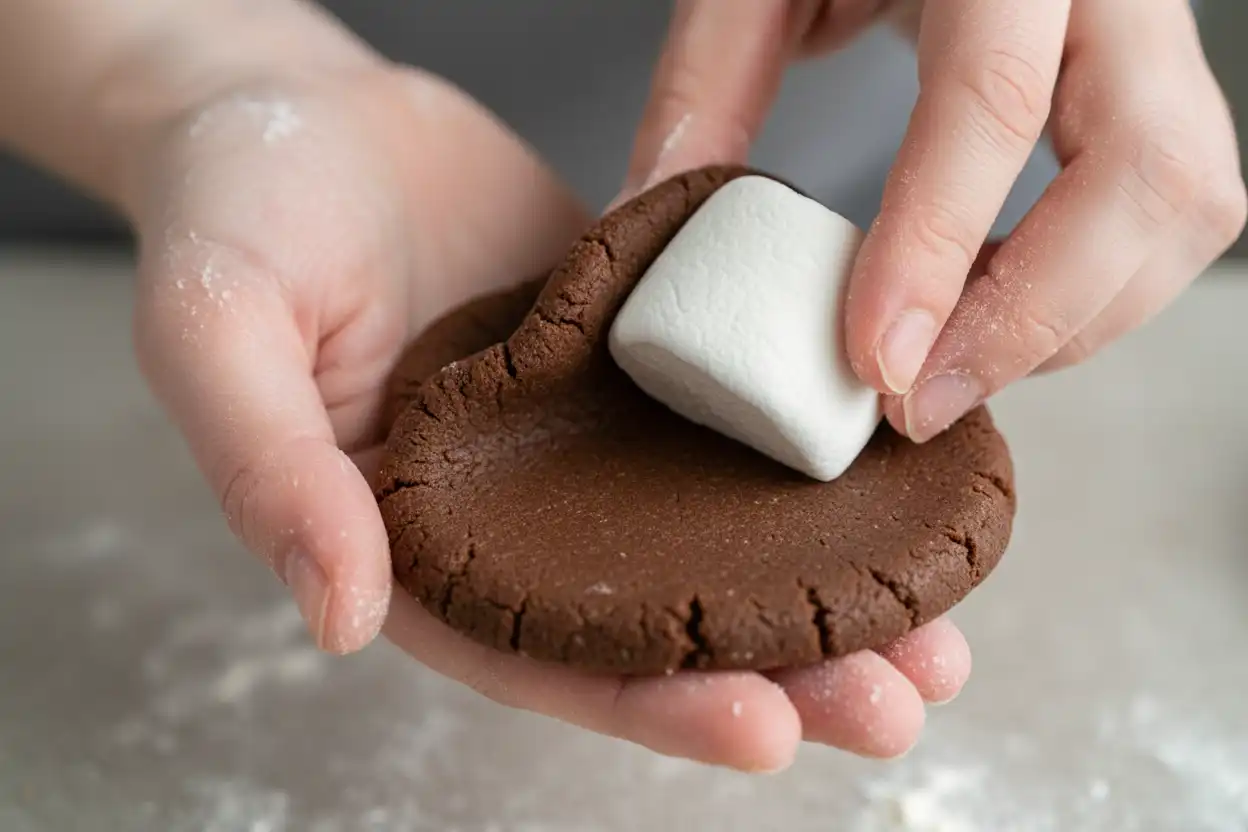
Fold the edges of dough up and over the marshmallow. Pinch all seams firmly so no white marshmallow surface remains visible.
Step 6: Bake to Perfection
Arrange dough balls 3 inches apart on a rimmed baking sheet lined with heavy parchment paper. Bake at 350°F (177°C) for 10 to 12 minutes.
The edges should look set while the center remains slightly soft and puffy. Rest cookies on the pan for 10 minutes before transferring to a wire cooling rack.
Marshmallow Performance Comparison Table
Review how different marshmallow varieties perform in terms of baking stability, texture, and prep requirements.
| Marshmallow Type | Blowout Risk | Gooeyness Factor | Preparation Required | Best Use Case |
|---|---|---|---|---|
| Halved Jumbo | Moderate | High (Molten Core) | Freeze 30 minutes | Classic center-burst cookies |
| Mini Marshmallows | Low | Medium | None (Mix directly) | Quick weeknight baking |
| Marshmallow Fluff | High | Very High | Freeze scoops 2 hours | Ultra-creamy stuffed centers |
| Freeze-Dried Bits | Zero | Low (Crunchy) | None | Crunchy s’mores variation |
Pro Tips for Bakery-Quality Cookies
Professional bakeries rely on specific structural controls to maintain uniform thickness and prevent blowouts during production runs.
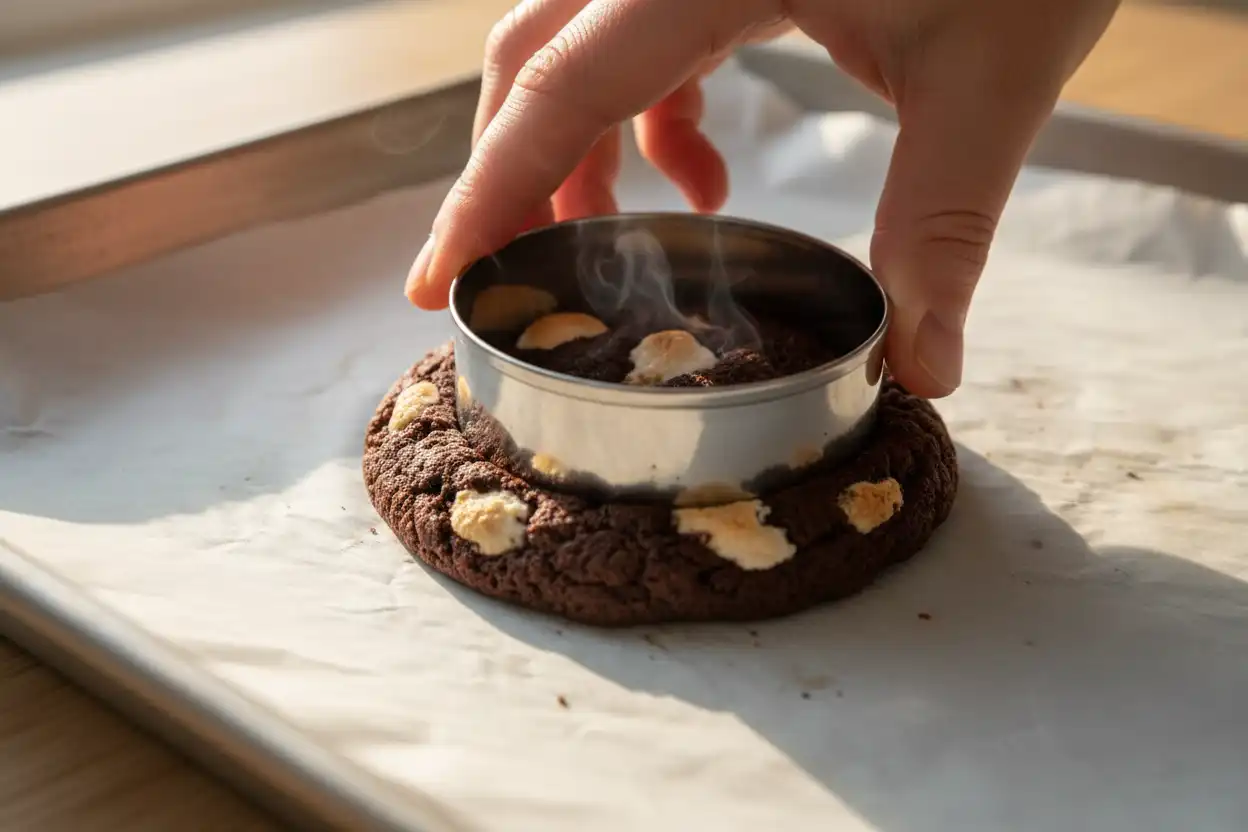
The Cookie Scoot Technique: Immediately after removing the pan from the oven, place a large round biscuit cutter or bowl over the hot cookie. Gently swirl it in circular motions against the baking sheet to pull wild edges into a perfect round circle.
Freeze Your Marshmallows: Place marshmallows on a plate in the freezer for 30 minutes before stuffing. Freezing delays the melting point, giving the surrounding dough time to form a protective wall.
High Altitude Adjustments: If baking above 3,000 feet, decrease baking soda by 1/8 teaspoon and increase oven temperature by 15°F (8°C). This compensates for faster leavening expansion and reduced air pressure.
Common Mistakes and Troubleshooting
Understanding why baking failures happen allows you to correct dough consistency before putting pans in the oven.
Problem: Marshmallows Blow Out and Melt onto the Pan
This happens when dough walls are too thin or seams are left unsealed. Moisture inside the marshmallow expands, finding small gaps in the dough shell.
Fix: Roll the stuffed dough ball thoroughly between your palms until smooth, making sure no marshmallow remains exposed before chilling.
Problem: Flat, Thin, and Greasy Cookies
Warm butter or warm dough causes fat to melt before the flour structure can set in the oven. This leads to wide spreading and thin edges.
Fix: Chill formed dough balls for at least 1 hour in the refrigerator prior to baking.
Problem: Dry or Cakey Texture
Adding too much flour or overbaking dries out cocoa dough quickly. Cocoa powder absorbs more liquid than standard flour.
Fix: Measure flour using a digital scale or spoon it gently into measuring cups without packing. Remove cookies from the oven when centers still appear soft.
Best Practices for Storage and Reheating
Proper storage prevents marshmallow centers from hardening and keeps the chocolate dough tender for days.
- Room Temperature: Store baked cookies in a single layer in an airtight container for up to 4 days. Add a single slice of white bread to the container to maintain soft moisture levels.
- Reheating: Microwave a single cookie on a paper towel for 8 to 10 seconds. This re-melts the marshmallow core back into a warm stretch.
- Freezing Dough: Freeze fully assembled, unbaked dough balls on a tray for 1 hour. Transfer to a sealed freezer bag for up to 3 months. Bake from frozen, adding 2 minutes to the total time.
Essential Kitchen Tools
Using accurate equipment reduces variables and guarantees consistent results across every batch.
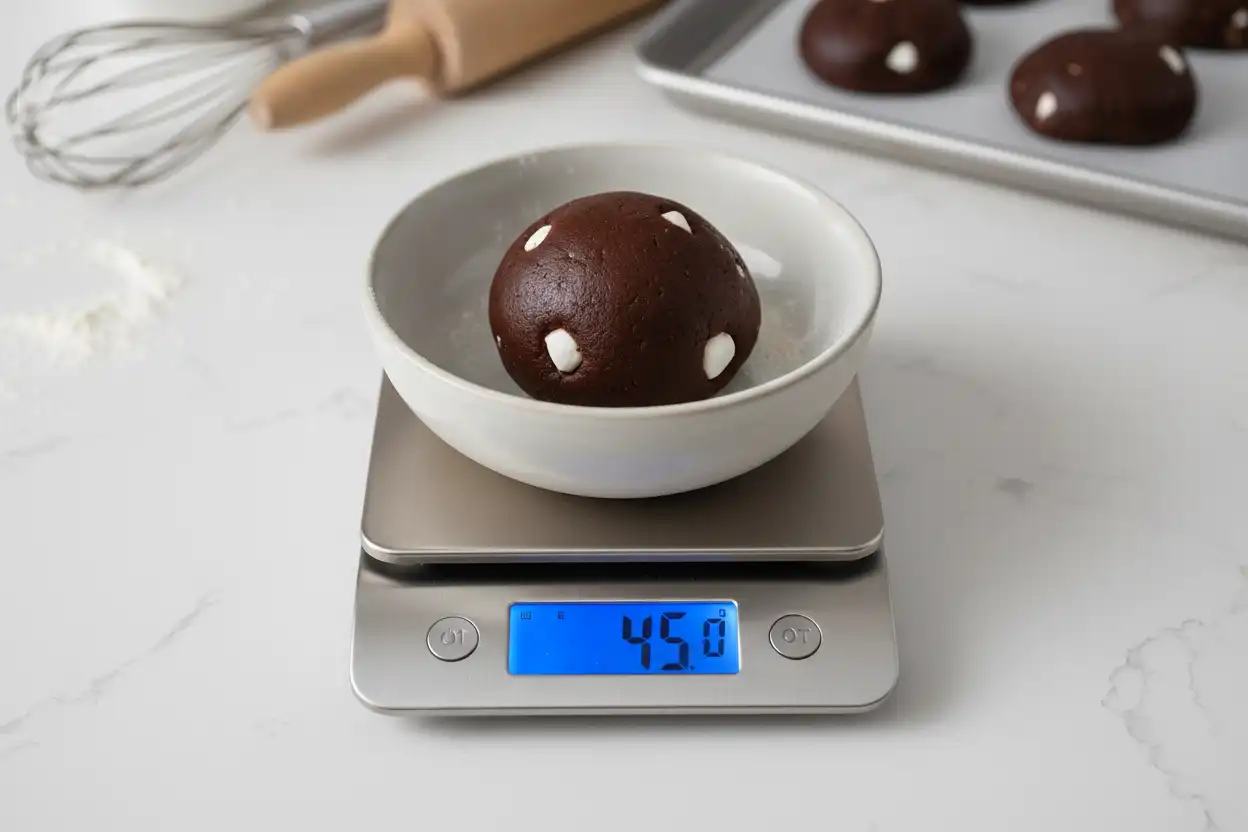
- Digital Kitchen Scale: Ensures precise measurement of flour, cocoa powder, and individual dough portions.
- Spring-Loaded Cookie Scoop: A #24 scoop yields uniform 40-gram portions for even baking.
- Heavy Pan with Parchment: Light-colored, heavy-gauge aluminum baking sheets distribute heat evenly without burning cookie bottoms. Avoid unlined silicone mats if seeking crispy bottom edges.
- Wire Cooling Racks: Allows air to circulate under warm cookies, preventing soggy bottoms from trapped steam.
Recommended Related Recipes
Expand your baking library with these complimentary recipes and technical guides:
- Ultimate Chewy Dark Chocolate Brownies Recipe
- Dutch-Processed vs. Natural Cocoa Powder: When to Use Which
- Classic S’mores Cookies with Graham Cracker Crust
- How to Keep Homemade Cookies Soft for Days
- Hot Cocoa Marshmallow Cookies with Chocolate Ganache
Authoritative Baking Resources
For further scientific exploration into pastry physics and ingredient functions, consult these educational references:
- King Arthur Baking — Official Ingredient Weight Chart
- USDA FoodData Central — Ingredient Nutritional Profiles
Key Takeaways
- Enclose marshmallows completely inside cold chocolate dough to prevent leakage during baking.
- Chill dough for at least 1 hour to control cookie spread and enhance chocolate flavors.
- Use Dutch-processed cocoa powder for smooth, dark chocolate taste without excessive acidity.
- Freeze standard marshmallows for 30 minutes before assembling cookies.
- Pull cookies from the oven when edges are set but centers look slightly soft.
Final Thoughts
Mastering chocolate marshmallow cookies comes down to controlling temperature and dough assembly. By insulating cold marshmallow cores inside cocoa dough, you get rich, bakery-style cookies right at home.
Gather your ingredients, weigh your dough portions carefully, and enjoy warm, molten centers hot from the oven.
Frequently Asked Questions
Why did my marshmallows dissolve into the cookie?
Marshmallows dissolve when exposed directly to pan heat or prolonged oven air. If the cookie dough shell has thin spots or unsealed seams, the marshmallow melts into sugar syrup. Ensure dough completely encapsulates the marshmallow center and chill the dough thoroughly before baking.
Can I freeze chocolate marshmallow cookie dough before baking?
Yes, you can freeze assembled dough balls. Place dough balls stuffed with marshmallows on a sheet tray until solid, then transfer to a freezer bag. Bake directly from frozen at 350°F (177°C), adding 2 minutes to the total baking time.
Is Dutch-processed cocoa powder necessary for this recipe?
Dutch-processed cocoa powder gives a deep color and smooth chocolate profile. Natural cocoa powder can be substituted, but it possesses higher acidity which may alter cookie spread and sharpen the cocoa flavor. If using natural cocoa, adjust baking soda slightly down.
How do I stop my cookies from spreading too flat?
Excessive spreading occurs when dough is too warm or butter is melted rather than softened. Always chill your shaped dough for at least 60 minutes before baking. Using parchment paper instead of greased pans also prevents unwanted grease spread in the oven.
Can I use marshmallow fluff instead of solid marshmallows?
Marshmallow fluff works well but requires careful prep. Dollop tablespoon-sized portions of fluff onto a parchment tray and freeze for 2 hours until firm. Wrap cold dough quickly around frozen fluff portions to keep them centered during baking.
How long do chocolate marshmallow cookies stay fresh?
Stored in an airtight container at room temperature, these cookies stay soft for up to 4 days. Storing them with a piece of white bread preserves moisture. Reheat in a microwave for 8 seconds to revive molten centers.