
Featured Snippet: How to Make Perfect Christmas Shortbread Cookies
Authentic Christmas shortbread relies on a classic 3:2:1 weight ratio: three parts all-purpose flour, two parts high-fat unsalted butter, and one part sugar. Unlike other holiday cookies, traditional shortbread contains no eggs and no chemical leavening agents like baking powder or baking soda.
To prevent spreading and achieve a delicate, melt-in-your-mouth crumb, cream the butter and sugar only until combined rather than whipping air into the base. Chill the cut dough shapes for at least 30 minutes before baking at a low temperature (300°F to 325°F / 150°C to 165°C) until firm and pale with lightly golden bases.
- Core Ratio by Weight: 300g flour : 200g high-fat butter : 100g sugar.
- Fat Benchmark: European-style butter with 82% to 84% butterfat yields superior texture.
- Oven Protocol: Low and slow heat prevents butter melting before structure sets.
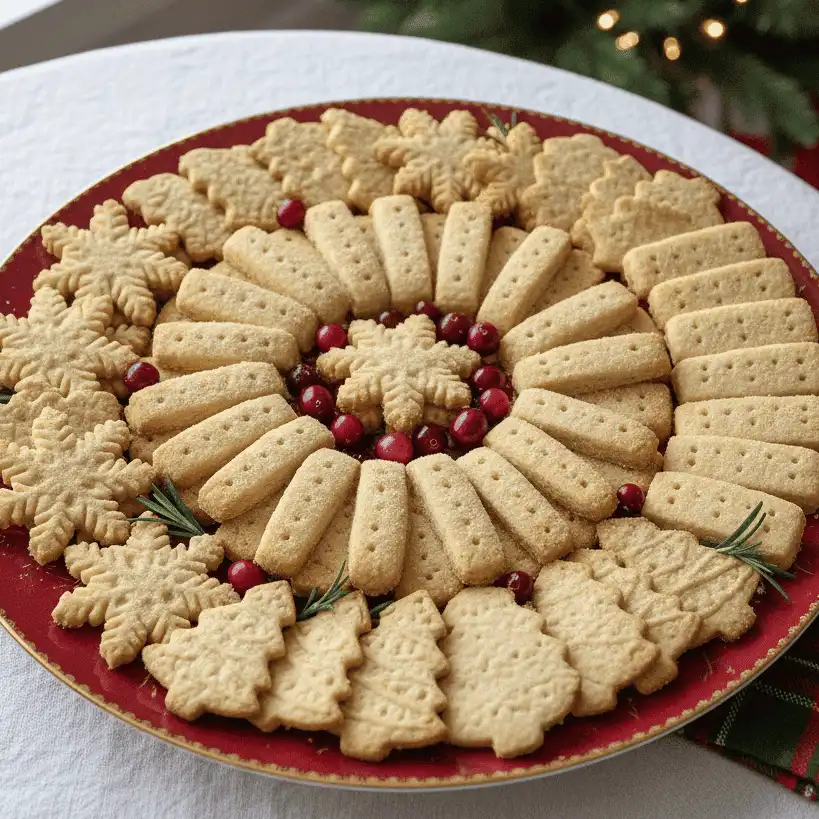
Why Perfect Shortbread Defines Holiday Baking
Shortbread is the cornerstone of traditional holiday dessert tables and festive cookie gift boxes. Its pure, rich flavor and tender, buttery snap provide an elegant contrast to overly sweet, heavily frosted confections.
This guide is engineered for home bakers, holiday hosts, and gift-givers who want consistent, bakery-quality results. You will learn the exact food chemistry behind crumb texture, how to eliminate cookie spreading, and how to execute flawless festive designs.
The Science of Shortbread: Ratios, Fat, and Starch
Shortbread earns its name from its historical texture. The exceptionally high ratio of fat “shortens” gluten strands in the wheat flour, preventing elastic protein bonds from developing. This produces a crumbly, tender bite rather than a chewy or bread-like structure.
The Classical 3:2:1 Weight Ratio
Traditional Scottish baking relies on a strict weight formula: three parts flour, two parts butter, and one part sugar. Deviating from this balance changes the identity of the cookie. Adding too much sugar causes excessive spreading and caramelization, while adding excess flour results in dry, sandy dough that refuses to bind.
Gluten Control and Aeration Physics
Standard drop cookies rely on creaming butter and sugar together at high speed to trap micro-pockets of air that expand with baking soda. Shortbread requires the opposite handling. Gentle mixing minimizes air incorporation, ensuring the cookie remains dense, flat, and sharp-edged after baking.
Minimizing mechanical mixing also keeps gluten proteins inactive. Handle the dough only until the flour hydrates to maintain a delicate, melt-in-mouth consistency.
The Role of Starch Additions
Substituting a portion of the all-purpose flour with cornstarch or fine white rice flour creates distinctive structural differences. Rice flour delivers the authentic, slightly sandy crunch characteristic of traditional Scottish shortbread. Cornstarch softens the overall protein load, producing a silky, melt-in-your-mouth bite.
Key Ingredients and Component Selection
Butter: The Flavor Carrier
Butter makes up roughly one-third of your dough by weight, making its quality critical to success. Standard American butter contains roughly 80% butterfat and 16% to 18% water. European-style butter contains 82% to 84% butterfat, which translates directly to less steam generation in the oven, crisper shapes, and deeper dairy flavor.
Always choose unsalted butter. This allows you to control the exact salt concentration in your dough without accounting for manufacturer variations.
Sugar Selection: Granulated, Caster, or Powdered
Granulated sugar yields a distinct, traditional grain and light crispness. Superfine caster sugar dissolves rapidly into the butter without aerating it, creating a uniform, silky dough. Confectioners’ (powdered) sugar contains a small percentage of cornstarch, which promotes a tight crumb and smooth surface ideal for decorative stamping.
Flour and Starch Foundations
Standard unbleached all-purpose flour with an 10% to 11.5% protein content provides sufficient structural strength while keeping the crumb tender. Avoid high-protein bread flours, which introduce chewiness, and pure cake flours, which can make the baked cookie fragile and difficult to transfer.
Salt and Pure Extracts
Fine sea salt cuts through the high butterfat content and balances the sweetness. Pure vanilla bean paste, ground spices, or citrus oils should always be suspended directly in the fat during mixing to carry the aromatics throughout the dough evenly.
Holiday Flavor Profiles and Festive Variations
Warm Winter Spices
Infuse your base dough with ground cardamom, ground cinnamon, nutmeg, and a pinch of ground clove. Pairing 1 teaspoon of ground cardamom with the finely grated zest of an orange creates a bright Scandinavian profile suited for winter gatherings.
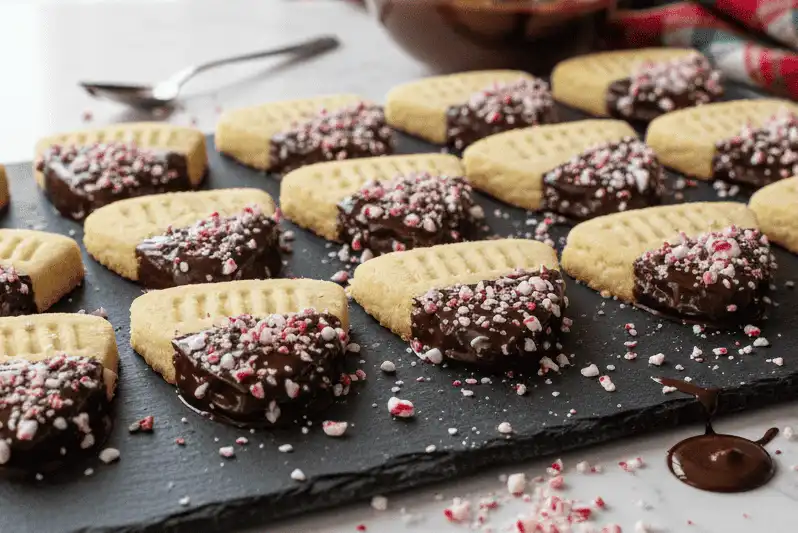
Chocolate-Dipped with Peppermint Crunch
Bake traditional shortbread rectangles or trees, let them cool completely, and dip half of each cookie into tempered 60% dark chocolate. Immediately sprinkle finely crushed candy canes over the wet chocolate before it sets.
Toasted Pecan and Brown Butter Shortbread
Brown half of your total butter allowance in a saucepan until nutty and amber-hued, then chill it back to a solid, room-temperature state. Blend it with finely chopped toasted pecans to add an earthy, rich holiday note.
Rosemary and Flaky Sea Salt Shortbread
Finely mince fresh rosemary needles and incorporate them alongside pure vanilla bean paste. Top each cut shape with a pinch of flaky Maldon sea salt immediately before baking for a balanced sweet-savory finish.
Step-by-Step Master Christmas Shortbread Method
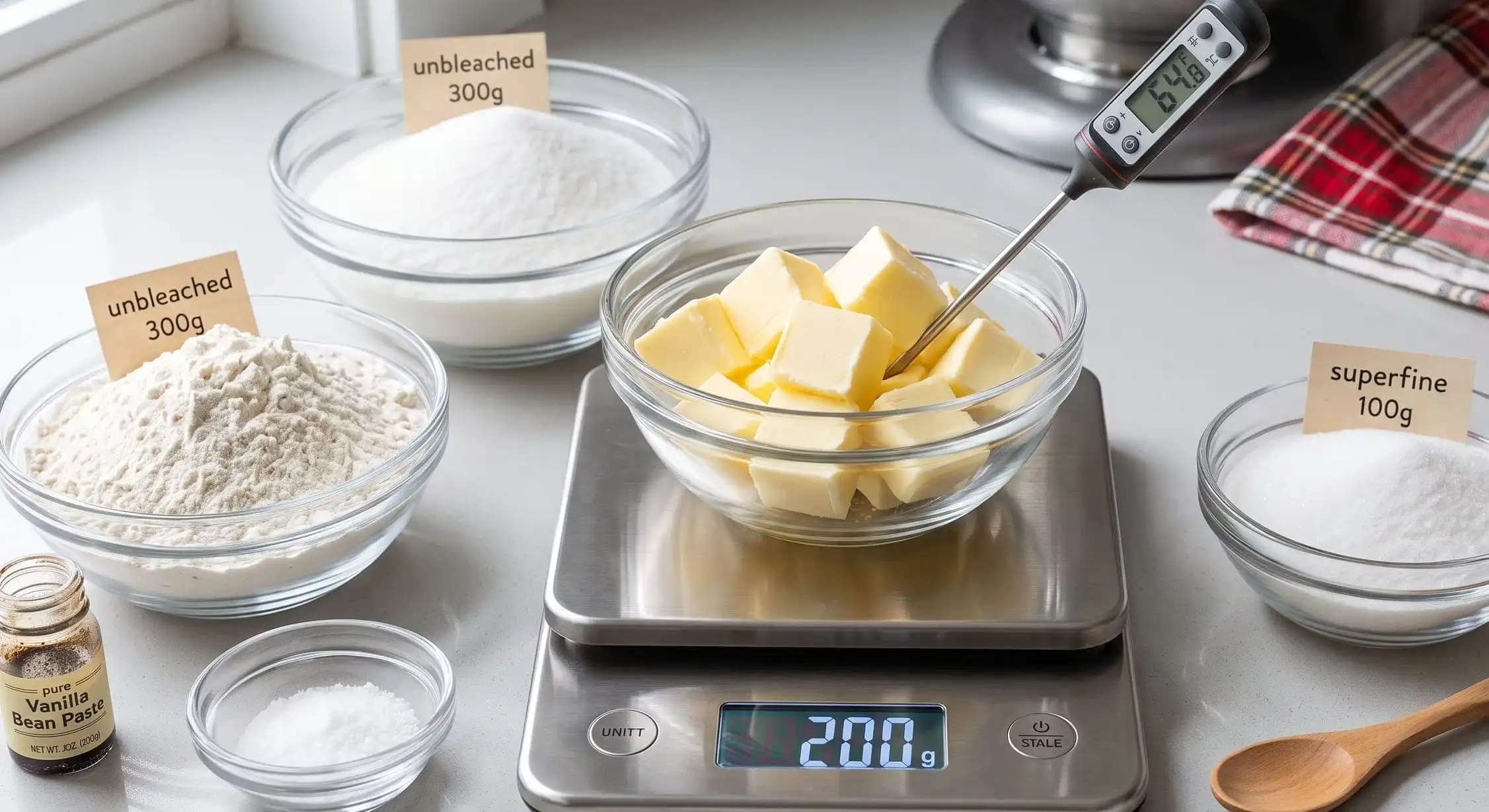
Stage 1: Ingredient Measurement and Temperature Preparation
What: Accurately weigh all ingredients using a digital kitchen scale and bring your butter to cool room temperature (65°F / 18°C).
Why: Volume measurements (cups) fluctuate up to 25% based on flour settling. Butter that is too warm will make the dough oily, while cold butter will not incorporate smoothly.
How: Cut butter into uniform cubes and allow it to rest on the counter for 20 minutes. It should yield slightly to firm finger pressure without feeling greasy.
Common Mistake: Microwaving butter to soften it, which liquefies the emulsion and guarantees greasy, spreading cookies.
Pro Tip: Keep dry ingredients at the same cool room temperature as the butter to maintain consistent dough temperature.
Stage 2: Blending the Fat and Sugar
What: Combine the softened butter, chosen sugar, salt, and extracts on low speed until homogeneous.
Why: You want to distribute the sugar crystals evenly through the fat without whipping air bubbles into the mixture.
How: Use a stand mixer fitted with the paddle attachment or a wooden spoon. Mix on low speed for 60 to 90 seconds until no distinct butter streaks remain.
Common Mistake: Running the mixer on medium-high for several minutes as if making a sponge cake.
Pro Tip: Scrape down the sides and base of the bowl with a silicone spatula halfway through mixing.
Stage 3: Incorporating Dry Ingredients
What: Sift the all-purpose flour (and optional starch) directly into the butter mixture.
Why: Sifting prevents clumps and allows the dry particles to hydrate evenly without requiring excessive mechanical mixing.
How: Mix on the lowest setting for 30 to 45 seconds until large, shaggy clumps form. Turn the mixture onto a clean countertop and press it together by hand until it forms a cohesive dough disc.
Common Mistake: Continuing to run the electric mixer until a tight ball forms, which overdevelops the gluten.
Pro Tip: If the dough feels dry, press it firmly with the heel of your hand rather than adding liquid.
Stage 4: Rolling and Shaping
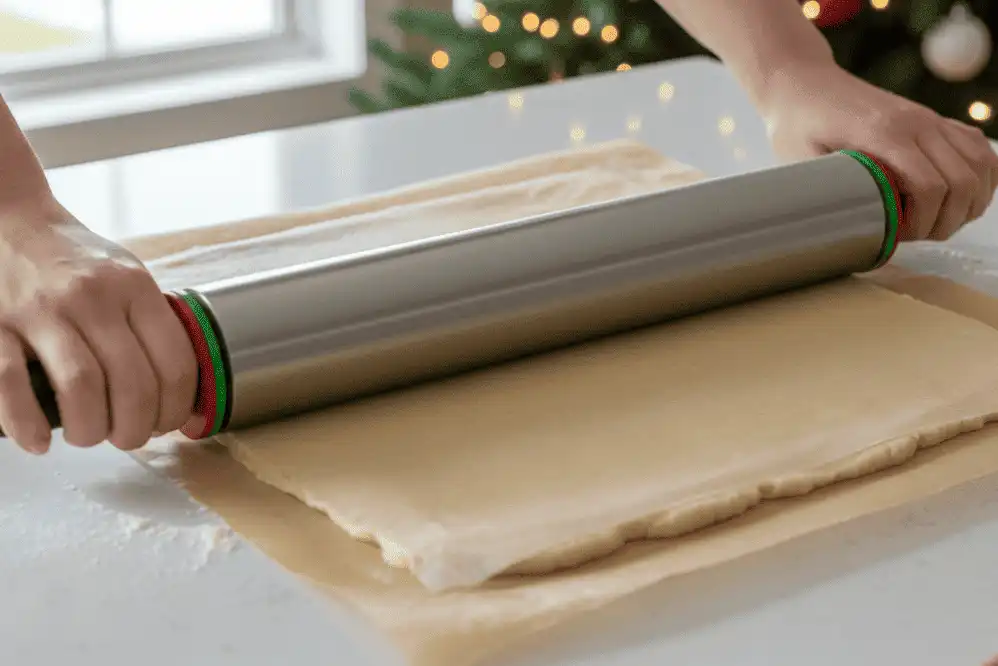
What: Roll the dough between two sheets of parchment paper to an even thickness of 1/3 inch (8mm) to 1/2 inch (12mm).
Why: Rolling between parchment avoids adding extra dry flour to the dough, keeping the fat-to-flour ratio intact.
How: Use a rolling pin equipped with adjustable guide rings to ensure uniform thickness across the entire slab.
Common Mistake: Rolling shortbread too thin (under 1/4 inch), which causes edges to burn before the center bakes through.
Pro Tip: Smooth out any top wrinkles in the parchment paper before transferring the dough sheet to the refrigerator.
Stage 5: Thermal Chilling and Structure Setting
What: Chill the rolled dough sheet on a flat baking pan in the refrigerator for at least 60 minutes.
Why: Chilling fully solidifies the butterfat and relaxes any latent gluten tension, locking cookie shapes in place.
How: Keep the rolled dough flat on a metal sheet pan. If short on time, place it in the freezer for 25 minutes.
Common Mistake: Cutting shapes from warm, unchilled dough, which leads to distorted outlines and spreading.
Pro Tip: Chill your metal cookie cutters in the refrigerator alongside the dough for sharper cuts.
Stage 6: Cutting, Stamping, and Docking
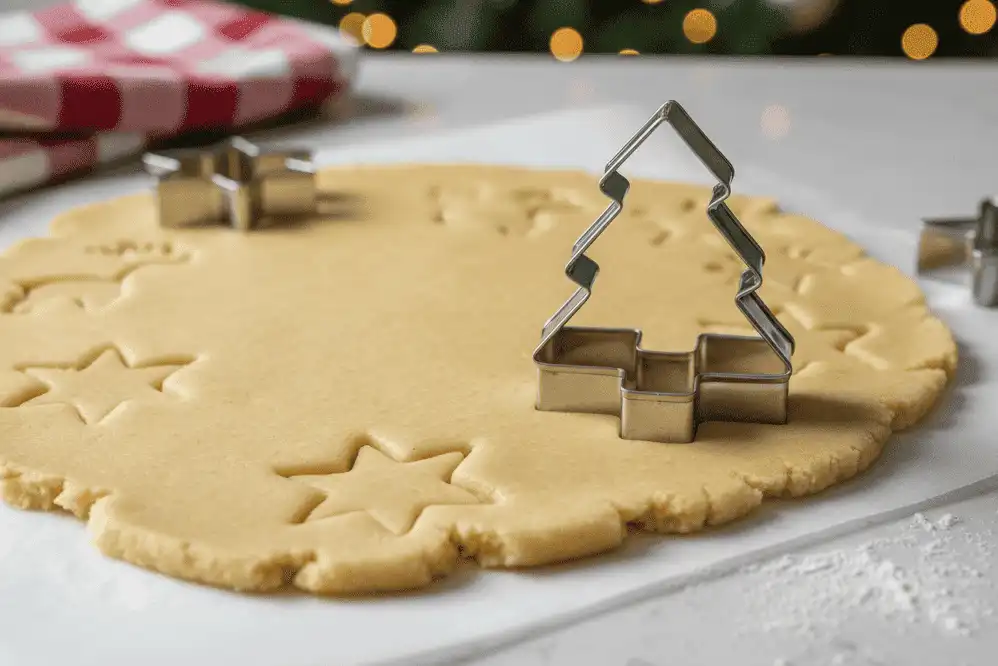
What: Stamp festive shapes using metal cutters, or slice clean geometric rectangles and dock the surface with a fork.
Why: Docking (piercing tiny holes through the dough) allows steam to vent evenly during baking, preventing bubbling.
How: Press the cutter straight down into the cold dough and lift vertically without twisting. Prick each cookie 2 to 3 times with a fork.
Common Mistake: Twisting cookie cutters during use, which seals and warps the raw edges.
Pro Tip: Place cut shapes back into the freezer for 10 minutes immediately before sliding them into the oven.
Stage 7: Low and Slow Baking
What: Bake on parchment-lined heavy baking pans at 300°F to 325°F (150°C to 165°C) for 20 to 30 minutes depending on thickness.
Why: Low temperatures gently evaporate moisture and set the starch structure without over-browning the delicate butterfat.
How: Position the oven rack in the center. Bake until the tops look completely matte and dry, and the undersides show a light golden rim.
Common Mistake: Baking at standard cookie temperatures (375°F / 190°C), which burns edges and melts details.
Pro Tip: Rotate the sheet pan 180 degrees at the 15-minute mark for uniform heat distribution.
Stage 8: Cooling and Setting
What: Allow the baked shortbread to rest on the hot baking sheet for 10 minutes before moving it to a wire cooling rack.
Why: Warm shortbread is fragile due to melted butterfat and will break if moved immediately.
How: Slide a thin metal spatula under each cookie only after the initial 10-minute rest, then transfer to a cooling rack to cool to room temperature.
Common Mistake: Handling hot cookies right out of the oven, causing them to crack and crumble.
Pro Tip: Dust with superfine sugar or cinnamon sugar while the cookies are still slightly warm to help it adhere.
Shortbread Styles and Formula Comparison
| Shortbread Style | Core Flour Base | Sugar Type | Texture Profile | Best Holiday Use Case |
|---|---|---|---|---|
| Traditional Scottish | All-Purpose + Rice Flour (3:1) | Caster / Granulated | Crisp, crumbly, lightly sandy | Classic petticoat tails, docked fingers |
| Whipped Shortbread | All-Purpose + Cornstarch | Powdered (Confectioners’) | Melt-in-your-mouth, airy | Piped rosettes topped with candied cherries |
| Cut-Out Holiday Shortbread | 100% Unbleached All-Purpose | Powdered Sugar | Dense, smooth, stable edges | Stamped trees, stars, snowflakes |
| Slice-and-Bake Shortbread | All-Purpose + Nut Flour | Granulated / Raw Cane | Buttery, crunchy exterior rim | Sparkling sugar-rimmed holiday rounds |
| Gluten-Free Festive Shortbread | 1:1 GF Flour Blend + Tapioca | Powdered Sugar | Tender, delicate crumb | Gluten-conscious holiday cookie gift tins |
Festive Decorating and Stamping Techniques
Embossed Rolling Pins and Cookie Stamps
To retain clear impressions from carved wooden rollers or ceramic cookie stamps, chill your stamped dough shapes in the freezer for 15 minutes before baking. Lightly dust your stamp with cornstarch rather than flour to keep the indentations clean and sharp.
Royal Icing Accents vs. Simple Sugar Glaze
Heavy flood-icing can overwhelm shortbread’s delicate butter flavor. Instead, use fine piping details with royal icing, or brush a light glaze made from powdered sugar, milk, and clear vanilla over cooled cookies.
Natural Botanicals and Holiday Embellishments
Press edible dried rose petals, small fresh rosemary leaves, or candied orange peel strips into the tops of cut dough shapes right before chilling. Lightly brush the surface with egg white to help delicate botanicals stay in place during baking.
Expert Tips for Clean Shapes and Razor-Sharp Edges
- Keep Metal Cutters Cold: Store your cookie cutters in the freezer before stamping. Cold metal cuts through solid butterfat cleanly without dragging the edges.
- Use Perforated Silicone Baking Mats: Perforated mats allow air to circulate under the cookies, preventing center puffing and keeping bottoms flat and even.
- Avoid Dark Non-Stick Pans: Dark metal absorbs radiant heat too quickly, causing the bottom butterfat to scorch before the interior is baked. Use heavy-gauge, light-colored aluminum half-sheet pans.
- Adjust for High Altitudes: At elevations above 3,500 feet, reduce your sugar by 1 to 2 tablespoons per batch and increase the oven temperature by 15°F (8°C) to help structural starches set faster.
- Re-Roll Dough Only Once: Re-rolling dough scraps warms the butter and builds gluten. Gather your scraps, press them gently together, chill for 20 minutes, and cut a final round.
Troubleshooting Common Shortbread Mistakes
Problem: Cookies Spread and Lost Their Shape
Cause: The butter was over-creamed with sugar, the dough was too warm when it went into the oven, or the butterfat content was too low (meaning excess water steam expanded the dough).
Solution: Mix the butter and sugar only until combined. Always chill cut shapes until they feel firm to the touch before placing them into a fully preheated oven.
Problem: Shortbread Feels Tough and Chewy Instead of Tender
Cause: The dough was over-kneaded after the flour was added, or you used a high-protein bread flour.
Solution: Use unbleached all-purpose flour, and stop mixing as soon as the flour is incorporated. Turn the mixer off while small flour streaks remain and finish combining by hand.
Problem: The Underside is Greasy and Has Dark Spots
Cause: The butter melted while handling, causing fat separation before baking, or you used an overly greased pan.
Solution: Never grease baking sheets for shortbread; the dough contains plenty of butterfat. Always line pans with unbleached parchment paper.
Problem: Cookies Are Pale on Top but Burnt on the Bottom
Cause: The baking pan was placed on the lowest oven rack, or you baked on a thin, dark metal tray.
Solution: Move your baking rack to the middle position. Stack two light aluminum sheet pans together (double panning) to insulate the bottoms of delicate cookies.
Storage, Make-Ahead Freezing, and Holiday Gifting
Room Temperature Storage
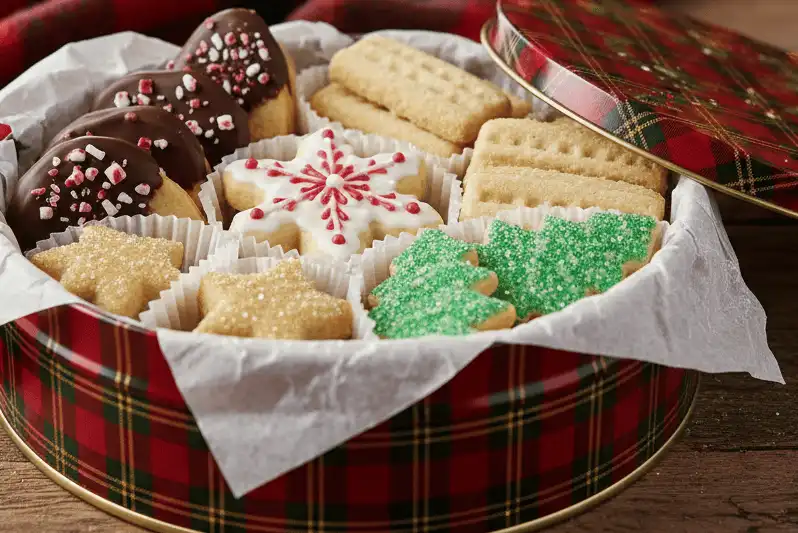
Shortbread has an exceptionally long shelf life thanks to its low moisture content and lack of eggs. Store fully cooled cookies in an airtight metal tin between layers of wax paper. They will remain fresh, buttery, and crisp at room temperature for up to four weeks.
Freezing Raw Dough vs. Baked Cookies
You can freeze rolled slabs of raw dough or pre-cut shapes between sheets of parchment paper for up to three months. Bake frozen cut shapes straight from the freezer, adding 2 to 3 minutes to the total baking time.
To freeze baked cookies, cool them completely and store them in an airtight container for up to six months. Thaw at room temperature inside the closed container to prevent condensation from softening the crisp crust.
Packing Shortbread for Holiday Shipping
Pack cookies snugly in sturdy metal tins or rigid boxes. Place crumpled parchment paper in all empty spaces to keep the cookies from shifting. Shortbread’s sturdy structure makes it an ideal choice for holiday mailing.
Essential Tools and Kitchen Equipment
- Digital Kitchen Scale: Ensures precise gram-weight ratios for consistent results every time.
- Heavy Aluminum Half-Sheet Pans: Light-colored aluminum distributes heat evenly and prevents hot spots.
- Adjustable Rolling Pin: Removable guide rings ensure your dough is rolled to an exact, uniform thickness.
- Stainless Steel Cookie Cutters: Sharp metal edges cut cleaner shapes than dull plastic molds.
- Unbleached Parchment Sheets: Prevents sticking, keeps baking pans clean, and simplifies dough rolling.
Recommended Holiday Baking Recipes
- Classic Royal Icing for Holiday Cookie Decorating
- Old-Fashioned Gingerbread Men with Spiced Molasses
- Chewy White Chocolate Cranberry Cookies
- How to Assemble and Ship Holiday Cookie Boxes
- Traditional Scottish Petticoat Tails Recipe
Authoritative References and Standards
- USDA Butter Grades and Standards: Outlines butterfat requirements (80% minimum) and moisture thresholds for commercial butter grading.
- Scottish Traditional Shortbread Standards: Historical culinary specifications outlining the 3:2:1 ratio and heritage baking methods.
- King Arthur Baking Flour Guidelines: Technical flour protein content metrics and their structural impact on home-baked cookies.
Key Takeaways
- Rely on the traditional 3:2:1 weight ratio (flour to butter to sugar) for authentic shortbread texture.
- Use European-style unsalted butter with 82% or higher butterfat for richer flavor and cleaner edges.
- Do not over-cream butter and sugar; mix only until combined to keep excess air out of the dough.
- Roll your dough to a uniform 1/3-inch thickness using an adjustable rolling pin.
- Always chill stamped dough shapes for at least 30 minutes before baking to lock in sharp outlines.
- Bake low and slow at 300°F to 325°F (150°C to 165°C) on light-colored aluminum pans.
Final Thoughts
Baking exceptional Christmas shortbread comes down to quality butter, accurate weight measurements, and proper temperature control. Once you master the basic dough, you can explore limitless holiday flavor combinations and decorative styles.
Set aside an afternoon, measure your ingredients with a digital scale, and enjoy filling your kitchen with the rich, comforting aroma of fresh holiday shortbread.
Frequently Asked Questions
Why did my Christmas shortbread cookies spread and lose their shape in the oven?
Shortbread spreads when the butter is whipped too long with sugar, incorporating excess air that collapses during baking. It also happens when the dough is too warm going into the oven. Always mix the dough gently and chill your cut shapes until firm before baking.
Which type of butter works best for holiday shortbread cookies?
European-style unsalted butter containing 82% to 84% butterfat delivers the best results. The higher fat and lower water content reduce steam expansion, helping cookies keep crisp edges while delivering rich, clean dairy flavor.
Can I make shortbread cookie dough ahead of time and freeze it?
Yes. Raw shortbread dough freezes exceptionally well for up to three months. Roll the dough flat between sheets of parchment paper, wrap tightly in plastic wrap, and freeze. You can cut and bake shapes directly from frozen, adding 2 to 3 minutes to the total bake time.
Why do recipes recommend adding cornstarch or rice flour to shortbread?
Cornstarch lowers the overall gluten protein content in the dough, producing an exceptionally tender, melt-in-your-mouth bite. Fine rice flour adds a subtle, crisp crunch that is characteristic of traditional Scottish shortbread.
How long do baked Christmas shortbread cookies stay fresh?
Because shortbread contains no eggs and very little moisture, baked cookies stay fresh for up to four weeks when stored at room temperature in an airtight metal tin. For longer storage, freeze baked cookies in sealed containers for up to six months.
Should shortbread cookies be browned on top when finished baking?
No. Authentic shortbread should remain pale and matte across the top surface, with only light golden browning along the bottom edges. If the tops turn golden brown, the oven temperature is too high, which can make the texture dry and brittle.