
A successful Christmas cookie box balances visual contrast, textural variety, moisture compatibility, and structural stability. Rather than baking dozens of random cookies, professional bakers curate 5 to 7 complementary varieties that hold up at room temperature without flavor transfer or texture loss.
Key elements include separating high-moisture cookies from crisp shortbreads, isolating intense aromatics like peppermint, and packing tightly with food-safe barriers to prevent movement during transit.
- Ideal Assortment: 5–7 distinct varieties with varying shapes, colors, and textures.
- Moisture Rule: Never pack soft, chewy cookies directly against crisp, dry cookies.
- Pacing: Freeze portioned dough weeks in advance; bake and pack within 48 hours of gifting.
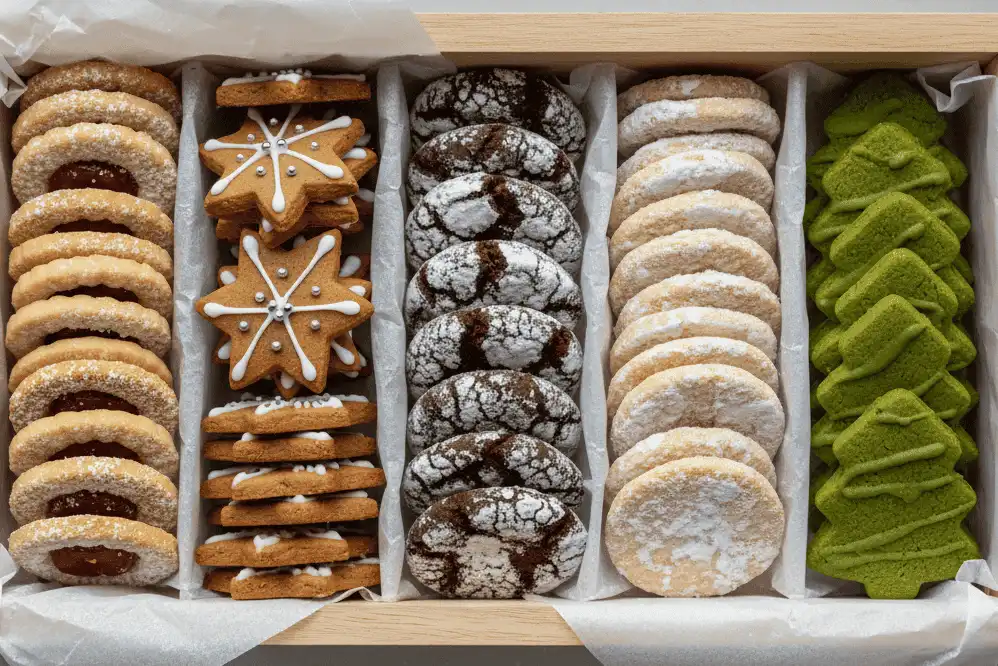
Introduction: The Art of the Holiday Cookie Assortment
Holiday cookie boxes have evolved from simple tins of sugar cookies into curated culinary gifts. A well-designed box showcases baking technical skills, aesthetic balance, and thoughtful presentation.
Whether you are a home baker gifting neighbors and teachers, a small bakery producing holiday inventory, or a host assembling party favors, the assembly process requires strategic planning. Great cookie boxes do not happen by accident on a frantic Sunday afternoon.
This comprehensive guide details the exact formulas, baking timelines, food science principles, and packaging methods required to build bakery-grade holiday cookie boxes that stay fresh, intact, and stunning.
The Architecture of a Balanced Cookie Box
A classic mistake is baking five varieties of drop cookies that share identical circular shapes, golden-brown colors, and chewy textures. A professional box relies on conscious contrast across four core dimensions.
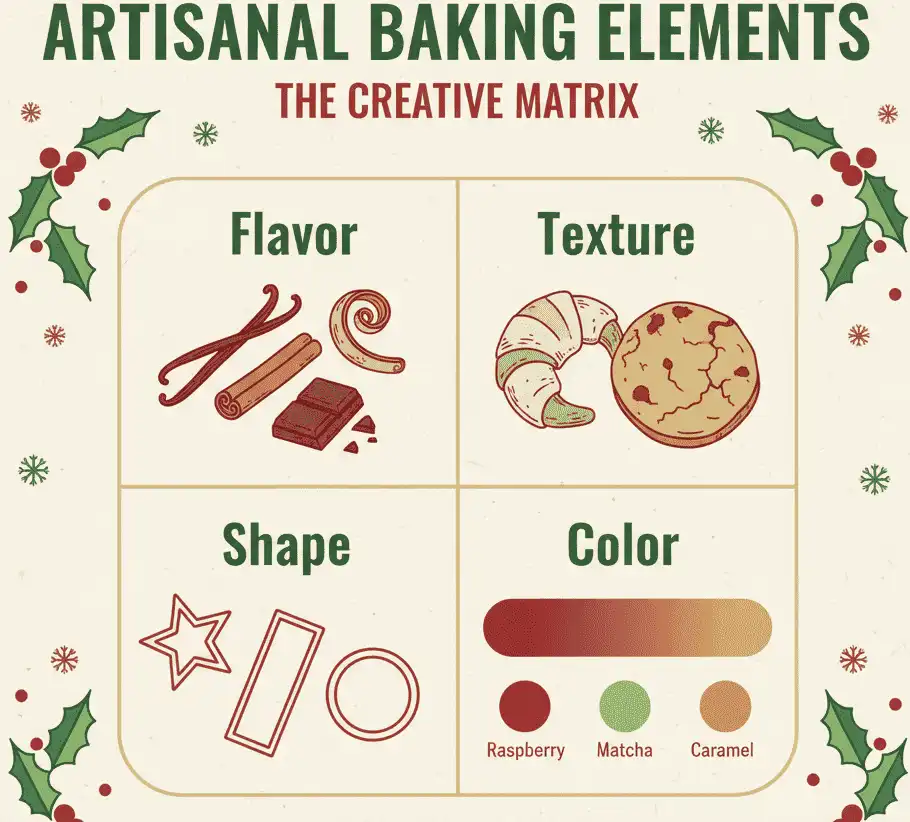
1. Flavor Diversity
Your assortment should satisfy different flavor profiles without overwhelming the palate. Aim for a deliberate balance across the following categories:
- Rich & Buttery: Traditional Scottish shortbread, piped spritz cookies, or sablés.
- Spiced & Warm: Soft molasses chews, speculoos, or traditional lebkuchen.
- Tart & Fruity: Raspberry linzer cookies, cranberry-orange pinwheels, or lemon crinkles.
- Chocolate & Nutty: Chocolate espresso crinkles, pecan meltaways, or pistachio biscotti.
- Festive Accent: Crushed candy cane bark, candied ginger rounds, or matcha shortbread trees.
2. Textural Contrast
A great eating experience moves between delicate, crisp, chewy, and dense textures. Include at least one snappy cookie (like biscotti or gingerbread tiles), one melt-in-your-mouth option (like Mexican wedding cakes), and one soft-baked variety.
Textural variety keeps the box engaging to eat. It also prevents the assortment from feeling heavy or monotonous.
3. Shape and Geometric Layout
Boxes look visually dynamic when shapes interlock neatly. Round drop cookies alone create awkward negative space and shift during transit.
Incorporate geometric variety using fluted round linzers, rectangular biscotti sticks, triangular shortbread wedges, diamond-cut fudge, and piped rosettes. This structural approach allows you to pack compartments tightly with minimal void space.
4. Color Palette and Visual Anchors
Break up uniform golden-brown tones with vibrant visual anchors. Natural colors create the most appetizing presentation.
Use ruby fruit preserves, deep green matcha powders, stark white powdered sugar, dark chocolate coatings, and freeze-dried raspberry dust to create an eye-catching presentation across the box grid.
Food Science: Moisture, Flavor Bleed, and Freshness
Baking delicious cookies is only half the battle. Understanding food chemistry ensures your cookies arrive in the same condition they left your cooling racks.

Moisture Migration (Water Activity $a_w$)
Moisture naturally moves from areas of high water activity to low water activity. When you place a soft, high-moisture gingerbread cookie directly beside a low-moisture crisp shortbread, the shortbread absorbs ambient moisture from the gingerbread.
Within 24 hours, your crisp shortbread turns limp and stale, while the soft cookie turns dry and leathery. To preserve individual textures, always isolate soft-baked cookies using glassine paper wraps or individual greaseproof fluted liners.
Volatile Flavor Migration
Certain ingredients release powerful volatile organic compounds that readily absorb into high-fat baked goods. Peppermint, culinary lavender, anise, and strong spices like ground clove will permeate neighboring butter cookies within 48 hours.
Package strongly scented items (especially peppermint bark and anise cookies) in heat-sealed cellophane wrappers or distinct metal compartments before nesting them into the main box.
Fat Oxidation and Shelf Life
Butter-heavy cookies are susceptible to fat oxidation when exposed to light and air. High-fat cookies like shortbread and pecan balls stay fresh for up to two weeks when protected from air circulation.
Cookies with fresh dairy fillings, cream cheese frostings, or underbaked centers have short shelf lives of 2 to 3 days at room temperature. Keep your assortment focused on stable, room-temperature cookies that rely on egg glazes, royal icing, or chocolate coatings.
The 5 Core Cookie Types to Include
An efficient production run uses standardized base doughs and complementary styles. These five essential cookie categories create a dependable, visually balanced assortment.
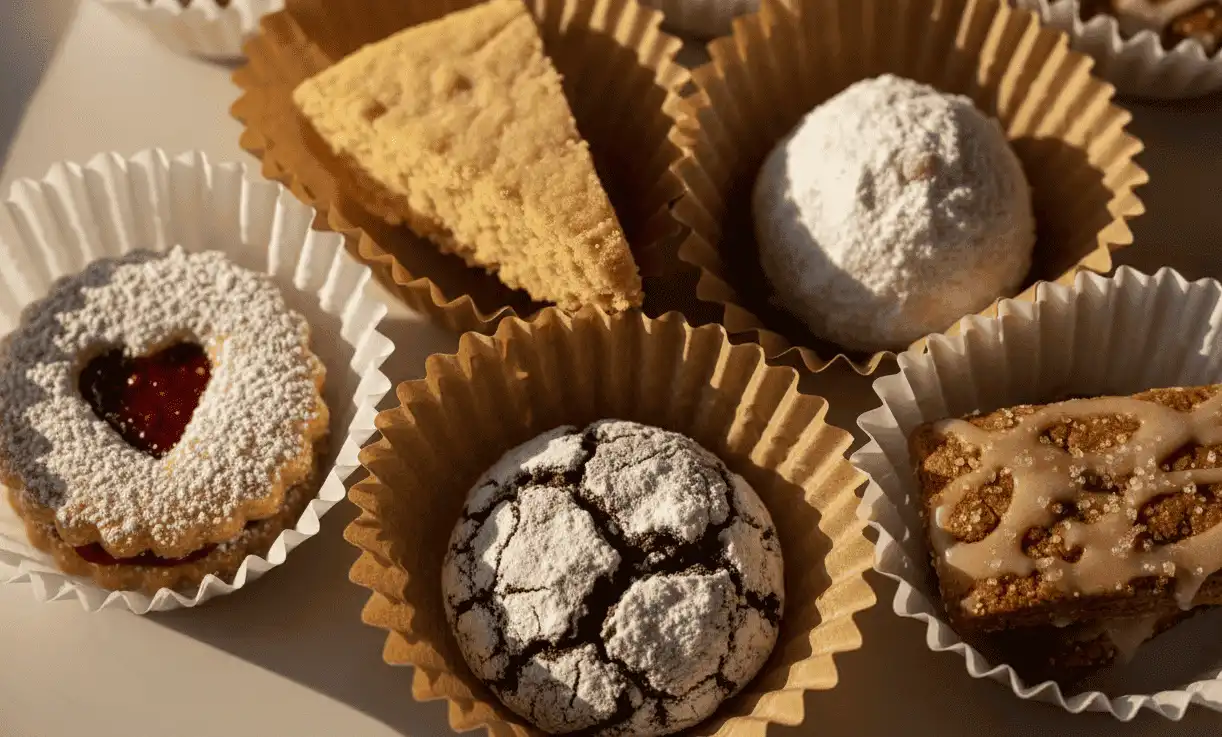
1. The Foundation: Cultured Butter Shortbread
Shortbread is the ultimate anchor cookie. It offers a dense, crisp snap, exceptionally long shelf life, and high durability during transit.
Enhance a classic 1-2-3 shortbread dough (one part sugar, two parts butter, three parts flour) with Earl Grey tea leaves, vanilla bean paste, or espresso powder. Slice into clean geometric rectangles or score into triangular petticoat tails.
2. The Showstopper: Raspberry Hazelnut Linzers
Linzer cookies provide bright color and an intricate, artisanal appearance. Ground toasted hazelnuts or almonds in the dough add structural stability and warm, nutty depth.
Dust the top cutouts with powdered sugar before assembling them over seeded raspberry or blackcurrant jam. This prevents sugar from dulling the jewel-like jam window.
3. The Spiced Anchor: Glazed Lebkuchen or Molasses Tiles
Deep molasses, honey, cinnamon, ginger, and cardamom bring essential holiday warmth. Rolled and stamped ginger cookies hold precise embossed patterns that look striking in a box.
A thin sugar glaze brushed on warm spiced cookies seals in core moisture while creating a crisp outer shell that prevents external moisture transfer.
4. The Textural Contrast: Pecan Snowballs (Mexican Wedding Cakes)
These eggless, nut-dense cookies provide a crumbly, melt-in-your-mouth contrast to crisp cookies. Toasted pecans or walnuts provide earthy, rich fats.
Roll the baked cookies in powdered sugar while warm to create a binding base layer, then dust them a second time once completely cooled to achieve an opaque, snowy exterior.
5. The Gap Filler: Dark Chocolate Peppermint Bark or Slice-and-Bake Pinwheels
Every box needs smaller, irregular items to fill corner gaps and secure larger components. High-quality tempered dark chocolate layered with white chocolate and crushed peppermint candy provides bold contrast.
Alternatively, two-tone chocolate and vanilla slice-and-bake checkerboard cookies add geometric precision without complex rolling or decorating steps.
The 4-Week Master Production Schedule
Executing five or six cookie recipes at scale requires structured staging. Spreading tasks across four weeks eliminates holiday kitchen burnout and preserves cookie quality.
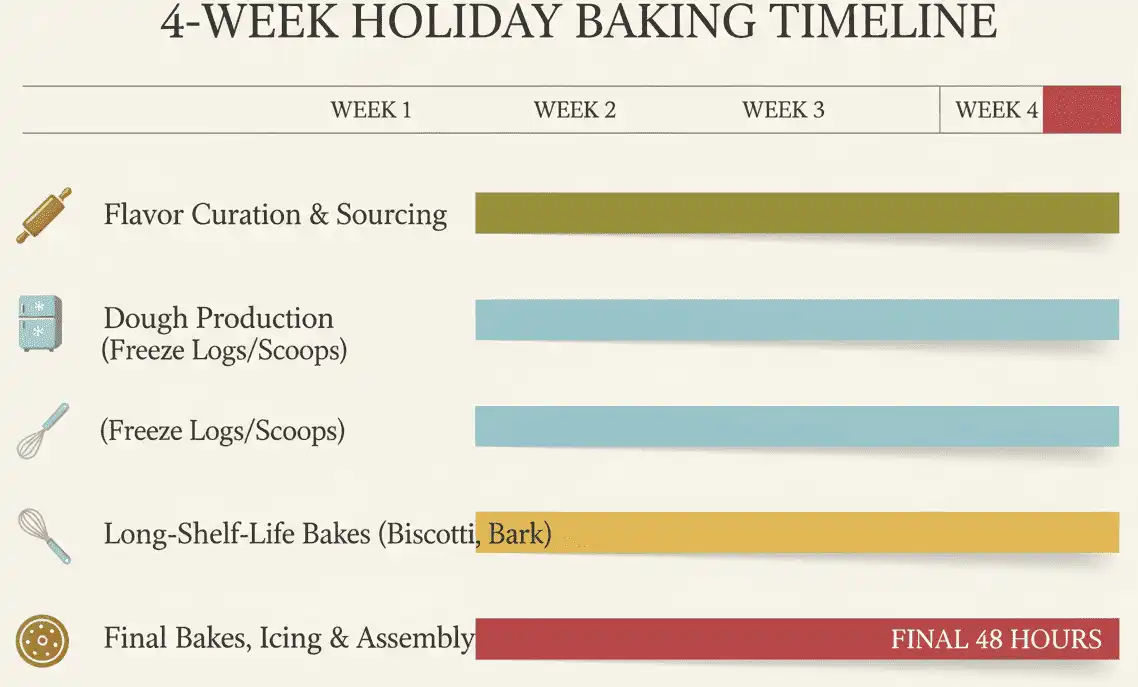
Week 1: Planning and Non-Perishable Sourcing
- Finalize your cookie box menu and calculate ingredient yields across all recipes.
- Order packaging materials: boxes, glassine liners, food-grade tissue, ribbons, and fluted baking cups.
- Stock up on pantry staples: unbleached all-purpose flour, cultured unsalted butter, spices, vanilla beans, and nuts.
- Toast and finely grind nuts; store them in airtight freezer bags to prevent oils from turning rancid.
Week 2: Dough Production and Freezer Storage
- Prepare shortbread doughs, slice-and-bake logs, and gingerbread bases.
- Shape slice-and-bake logs, wrap tightly in parchment paper followed by plastic wrap, and freeze.
- Portion drop cookie doughs using a mechanical scoop (#50 or #60), flash-freeze on sheet pans, and transfer to labeled airtight freezer containers.
- Prepare royal icing sugar cookie dough; roll flat between parchment sheets and freeze flat in stacks.
Week 3: Long-Shelf-Life Baking and Candy Making
- Bake dry, durable items: biscotti (first and second bake), speculoos, and dry meringues.
- Store baked, un-iced items in airtight metal tins or airtight containers with parchment between layers.
- Make confections: chocolate bark, toffee, spiced candied pecans, and fudge. Seal separately.
Week 4: Final Bakes, Icing, and Assembly (The Final 48 Hours)
- 48 Hours Before Gifting: Bake all frozen drop cookies, shortbread, and Linzer rounds. Allow to cool completely on wire racks for at least 4 hours.
- 24 Hours Before Gifting: Apply royal icing, fill Linzer cookies with jam, glaze gingerbread tiles, and temper chocolate dips. Allow all glazes and icings to cure for 12 to 18 hours at room temperature.
- 12 Hours Before Gifting: Assemble, partition, seal, and ribbon-tie all cookie gift boxes. Deliver or ship promptly.
Step-by-Step Assembly and Packaging Guide
Proper box assembly protects delicate decorations, isolates aromas, and delivers an exceptional unboxing experience.
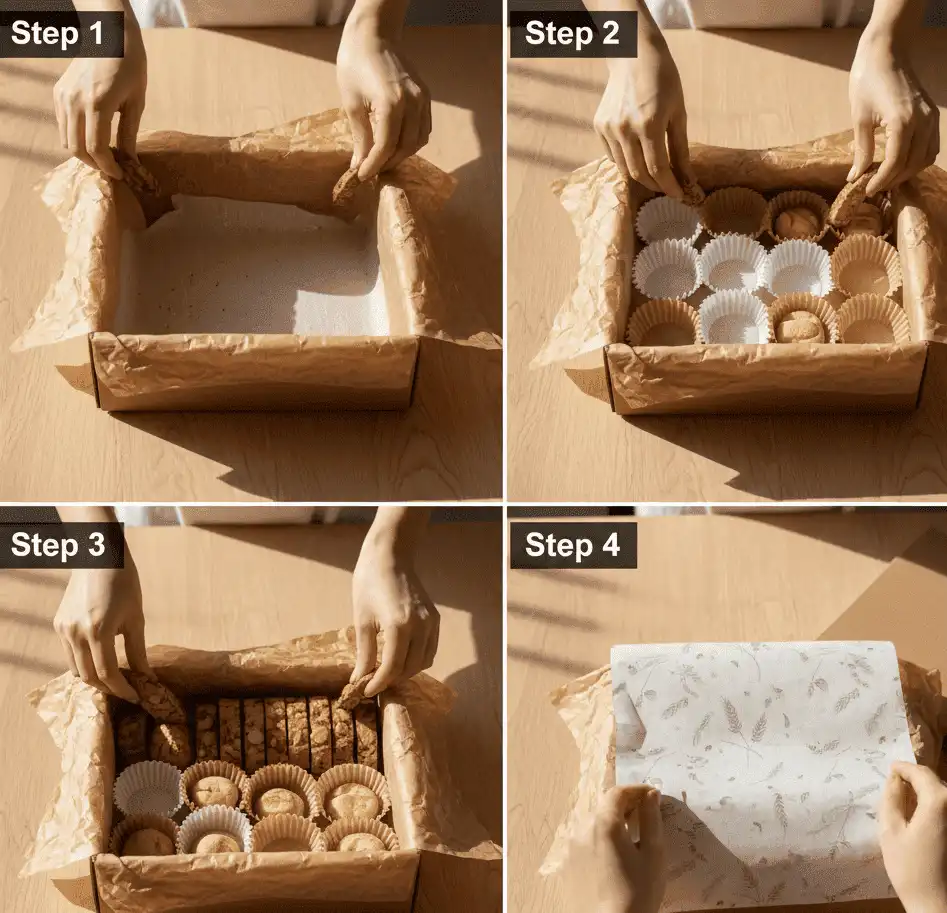
Step 1: Prepare the Structural Outer Shell
Choose a rigid, food-safe container. Windowed bakery boxes (8x8x2.5 inches or 10x10x3 inches), natural kraft paperboard boxes, or holiday metal tins work best.
If using raw cardboard or wood, always install a greaseproof barrier. Line the bottom and sides with overlapping sheets of food-safe glassine or unbleached parchment paper, leaving enough overhang to fold over the top before closing.
Step 2: Install Compartments and Internal Dividers
Dividers prevent cookies from shifting and crashing into one another during transit. Use interlocking corrugated food-grade cardboard inserts, or build organic compartments using fluted greaseproof muffin cups and tulip liners.
Using varying heights of paper liners creates depth and allows smaller cookies (like truffles or snowballs) to sit at the same visual plane as tall biscotti.
Step 3: Pack from Heaviest to Most Delicate
Place large, sturdy items (biscotti, gingerbread tiles, thick shortbread) along the edges and bottom corners to anchor the box’s center of gravity.
Stack cookies in uniform rows or shingled fans. Never place heavy items on top of delicate linzers, piped meringues, or detailed royal-iced cookies.
Step 4: Fill Voids and Immobilize the Contents
Movement is the primary cause of cookie breakage. Gently fill empty pockets between cookie stacks using wrapped chocolate truffles, wrapped caramels, candied pecans, or accordion-folded glassine strips.
The box should feel solid. When you close the lid and lightly tilt the box, you should not feel or hear items shifting inside.
Step 5: Top Barrier and Sealing
Place a final sheet of pre-cut glassine or food-safe cushion paper over the cookies. This prevents the box lid or clear window from scraping powdered sugar and royal icing.
Close the lid, secure it with a food-safe custom sticker or paper sleeve, and finish with a tied grosgrain or velvet ribbon. Include a printed menu card listing cookie varieties, potential allergens, and storage recommendations.
Cookie Comparison: Shelf Life, Moisture, and Placement
Use this reference table to plan your layout and prevent moisture cross-contamination.
| Cookie Variety | Moisture Level | Shelf Life (Room Temp) | Fragility | Optimal Box Placement |
|---|---|---|---|---|
| Scottish Shortbread | Very Low | 14–21 Days | Low (Sturdy) | Base layers, perimeter rows, corner stacks |
| Linzer Cookies (with Jam) | Moderate-High | 4–5 Days | High (Delicate) | Center showcase, isolated in fluted cups |
| Almond/Pistachio Biscotti | Extremely Low | 21–30 Days | Very Low | Side walls, vertical structural borders |
| Pecan Snowballs / Meltaways | Low | 10–14 Days | Moderate | Deep paper cups to contain loose sugar |
| Soft Molasses / Gingerbread | High | 5–7 Days | Low | Must be wrapped in glassine sleeves |
| Royal Icing Sugar Cookies | Low-Moderate | 7–10 Days | High (Surface) | Top display layer; protect with cushion pad |
| Chocolate Peppermint Bark | Very Low | 21+ Days | Low | Sealed cellophane bags to isolate mint oils |
Shipping and Transport: The Zero-Breakage Method
Shipping baked goods through courier networks during peak December carrier volume requires reliable structural packaging. Follow the professional double-boxing method.
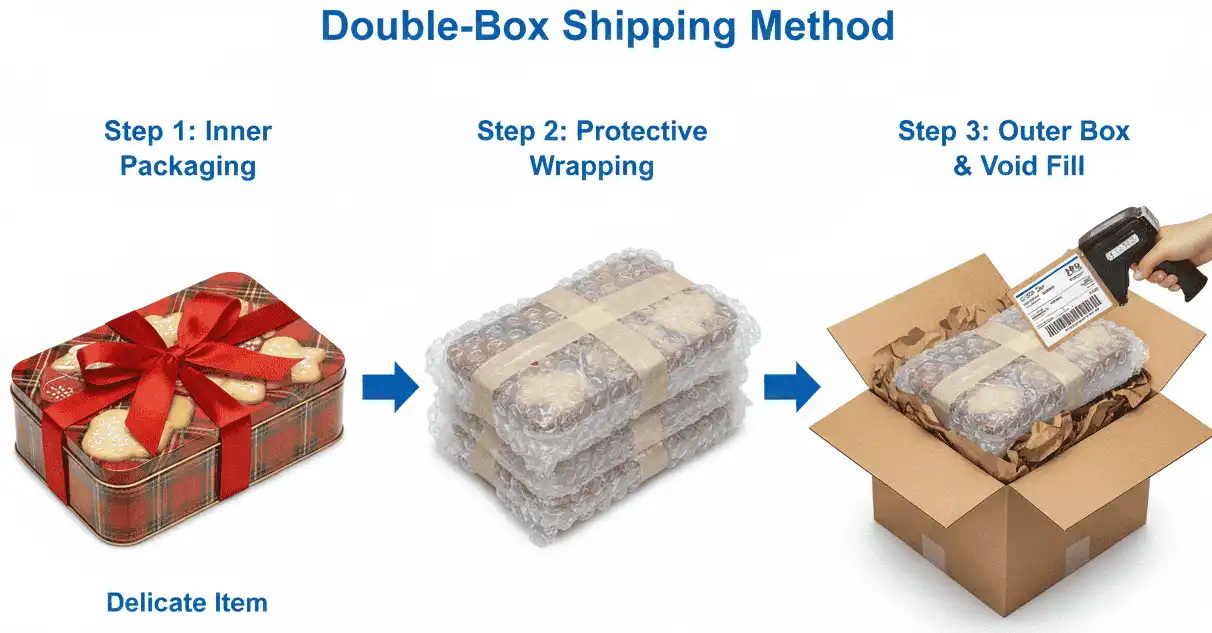
The Double-Box Technique
Never apply a shipping label directly to your decorative cookie tin or bakery box. The decorative box acts as your primary presentation layer; a heavy corrugated shipping box (minimum 200 lb test or 32 ECT rating) must protect it.
- Pack the inner decorative box tightly so internal contents cannot move.
- Wrap the decorative box in two layers of small-cell bubble wrap, sealing the edges with packing tape.
- Line the shipping box with 2 inches of dense packaging material (kraft paper, crinkle paper, or packing peanuts).
- Center the wrapped cookie box inside the shipping carton and firmly pack all four sides and top.
The Pre-Shipment Shake Test
Close the outer carton and seal the center seam with heavy-duty acrylic packing tape. Pick up the box and shake it gently in all directions.
If you feel any shifting weight or internal sliding, open the carton and pack additional void fill. A properly packed parcel feels like a single solid unit.
Carrier Selection and Timing
Ship via Priority Mail Express, UPS 2nd Day Air, or FedEx 2-Day during the holiday rush. Never select ground shipping for assortments containing fresh linzers or soft-baked cookies after December 10th.
Ship parcels on Mondays or Tuesdays. This prevents your baked goods from spending Sunday sitting in an unconditioned distribution hub.
Professional Baker Tips and Edge Cases
Refining minor technical details elevates home-baked boxes to professional bakery standards.
Managing High Ambient Humidity
If baking in humid climates, delicate crisp cookies like meringues and spritz absorb atmospheric moisture within hours. Let baked sheets cool in a turned-off, closed oven with the light left on to cure in a dry environment.
Tuck small, food-safe silica gel packets beneath the bottom glassine liner of each box to absorb residual ambient humidity without touching food directly.
Handling Chocolate Bloom and Temperature Fluctuations
Avoid using untempered melted chocolate chips for dipping or drizzling. Compound coatings or improperly tempered chocolate quickly develop fat bloom (streaky white patterns) when exposed to temperature changes during shipping.
Always temper pure couverture chocolate using the seeding method, or use high-grade confectionery coating wafers formulated with palm kernel oils for durable room-temperature stability.
Separate Boxes for Special Dietary Accommodations
Do not mix gluten-free, vegan, or nut-free cookies into the same box as conventional baked goods. Gluten-free cookies easily pick up wheat flour dust from neighboring cookies, posing cross-contact risks for celiac recipients.
Similarly, tree nut oils readily transfer across porous cookies. Assemble dedicated, clearly labeled specialty boxes using fresh parchment liners and clean utensils.
Common Mistakes and How to Avoid Them
Learn how to troubleshoot the most frequent cookie box assembly issues before they ruin your holiday bakes.
Mistake 1: Packaging Warm Cookies
Placing cookies into boxes before they reach complete room temperature traps residual steam inside the container. This condensation softens crisp glazes, makes royal icing bleed, and creates ideal conditions for mold growth.
Correction: Allow all baked goods to rest on open cooling wire racks for a minimum of 4 full hours. For iced cookies, allow 12 to 24 hours for icing to cure before boxing.
Mistake 2: Storing Soft Cookies with Crisp Cookies
Storing soft drop cookies directly alongside crisp sablés or biscotti ruins the texture of both items within a day.
Correction: Always place individual soft-baked items into sealed glassine envelopes or greaseproof baking cups to form a moisture barrier.
Mistake 3: Overlooking Peppermint and Spice Contamination
Peppermint extracts and strong ground spices release volatile aromatics that quickly taint subtle, butter-forward shortbreads and sugar cookies.
Correction: Wrap peppermint bark and spiced items in airtight cellophane treat bags before nesting them into box compartments.
Mistake 4: Using Flimsy Single-Wall Bakery Boxes for Shipping
Thin paperboard bakery boxes crush easily when stacked under heavy parcels in courier trucks.
Correction: Use rigid tin containers or heavy book-style chipboard boxes, and always double-box inside a rated corrugated outer carton with ample void fill.
Recommended Tools and Packaging Supplies
Stocking the right tools streamlines your batch production and yields clean, consistent results.
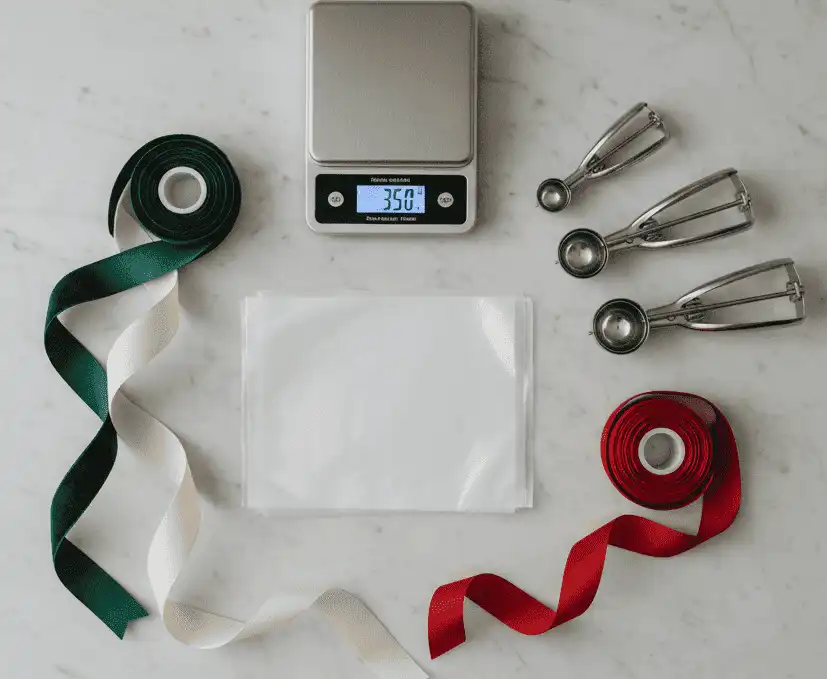
Baking and Prep Essentials
- Digital Kitchen Scale: Ensures uniform dough weights and accurate flour ratios down to the single gram.
- Graduated Mechanical Portion Scoops: Sizes #40 (medium drop cookies), #60 (small sandwich fills), and #100 (truffles/meltaways).
- Heavy-Gauge Half Sheet Pans: Commercial 18-gauge aluminum sheet pans prevent scorching on cookie bottoms.
- Adjustable Rolling Pin with Guide Rings: Produces uniform dough thickness (1/4″ or 1/8″) across rolled sugar cookies and shortbreads.
Packaging and Assembly Supplies
- Glassine Sheets and Bags: Semi-translucent, grease-resistant, and non-stick food-safe paper liners.
- Swedish Fluted Baking Cups: Heavyweight greaseproof baking cups that hold structural form without spreading flat.
- Interlocking Chipboard Dividers: Pre-cut partition grids designed for 8×8 and 10×10 bakery boxes.
- Food-Grade Desiccant Packs: Non-toxic moisture-absorbing silica packets for humid storage environments.
Related Baking and Gifting Guides
Explore our detailed guides to master individual recipes, decorating skills, and holiday entertaining:
- Classic Scottish Shortbread Recipe: Traditional ratios and temperature guides.
- Royal Icing Masterclass: Consistency, flooding, and drying techniques for detailed designs.
- How to Freeze Cookie Dough: Storage methods for drop cookies, cutouts, and logs.
- Authentic Austrian Linzer Cookies: Nut dough tips and fruit filling ideas.
- DIY Holiday Food Gifts: Truffles, hot chocolate mixes, and artisan toffees.
Authoritative Food Safety and Logistics References
For more technical details on baking science and postal regulations, consult these industry resources:
- USDA Food Safety and Inspection Service: Guidelines on shelf stability and safe ambient storage for baked goods.
- United States Postal Service (USPS): Official domestic holiday shipping deadlines and perishable mailing regulations.
- King Arthur Baking Reference Guides: Comprehensive ingredient weight charts and water activity research in home baking.
- Curate, Don’t Crowd: Limit boxes to 5–7 contrasting varieties with distinct flavors, shapes, and textures.
- Isolate High-Moisture and Peppermint: Wrap soft bakes and mint candies in glassine or cellophane to avoid flavor bleed and sogginess.
- Work in Stages: Prep and freeze doughs 3–4 weeks ahead; preserve the final 48 hours for baking, icing, and packaging.
- Immobilize for Shipping: Fill voids with candies, use the double-box method, and run a shake test before mailing.
Conclusion
Assembling a beautiful holiday cookie box blends thoughtful baking, careful food science, and creative presentation. By selecting balanced flavors, respecting moisture differences, and organizing your production schedule, you can create memorable gifts without holiday stress.
Choose your 5 core recipes, gather your packaging supplies early, and enjoy sharing your homemade holiday treats.
Frequently Asked Questions
You can prepare and freeze cookie doughs up to 4 weeks in advance. Bake your cookies within 2 to 3 days of gifting, apply glazes 24 hours in advance, and assemble your final boxes within 24 hours of delivery to ensure optimal crispness and flavor.
The ideal Christmas cookie box contains 5 to 7 distinct varieties. This provides enough visual, flavor, and textural contrast without overwhelming the baker. Aim for 3 to 4 pieces of each variety per box, totaling 18 to 28 cookies depending on box size.
Prevent moisture transfer by physically separating soft, high-moisture cookies (like soft gingerbread or fresh linzers) from dry, crisp cookies (like shortbread). Wrap soft items in glassine paper, use greaseproof fluted cups, or include small food-safe silica gel packets under the lining.
Food-grade tin boxes, windowed paperboard bakery boxes, and rigid kraft presentation boxes work best. Tins provide the tightest moisture seal for shipping, while windowed boxes offer an attractive presentation for local hand delivery. Always line raw containers with greaseproof parchment.
Avoid fresh dairy fillings, unbaked custards, or fresh cut fruit in room-temperature cookie boxes. These require refrigeration and spoil within 24 to 48 hours. Instead, use high-sugar cooked fruit jams, confectioners’ glazes, royal icing, or chocolate ganache made with heated cream.
Pack the inner tin or box tightly using candies and glassine paper to fill all voids, ensuring cookies cannot slide. Bubble wrap the inner container with 2 layers of wrap, place it inside a heavy corrugated shipping box with 2 inches of surrounding padding, and use 2-day priority shipping.