
Perfect chocolate chip cookies come from balancing butter, sugar, flour, eggs, and chocolate with the right mixing and baking technique. This guide gives you a reliable cookie recipe chocolate chip lovers can use for soft centers, crisp edges, and rich flavor, plus variations for mini chips and a chocolate chip cookie recipe without brown sugar. You will also learn how to handle chocolate cookie dough, choose tools, test doneness, and store cookies so they stay fresh.
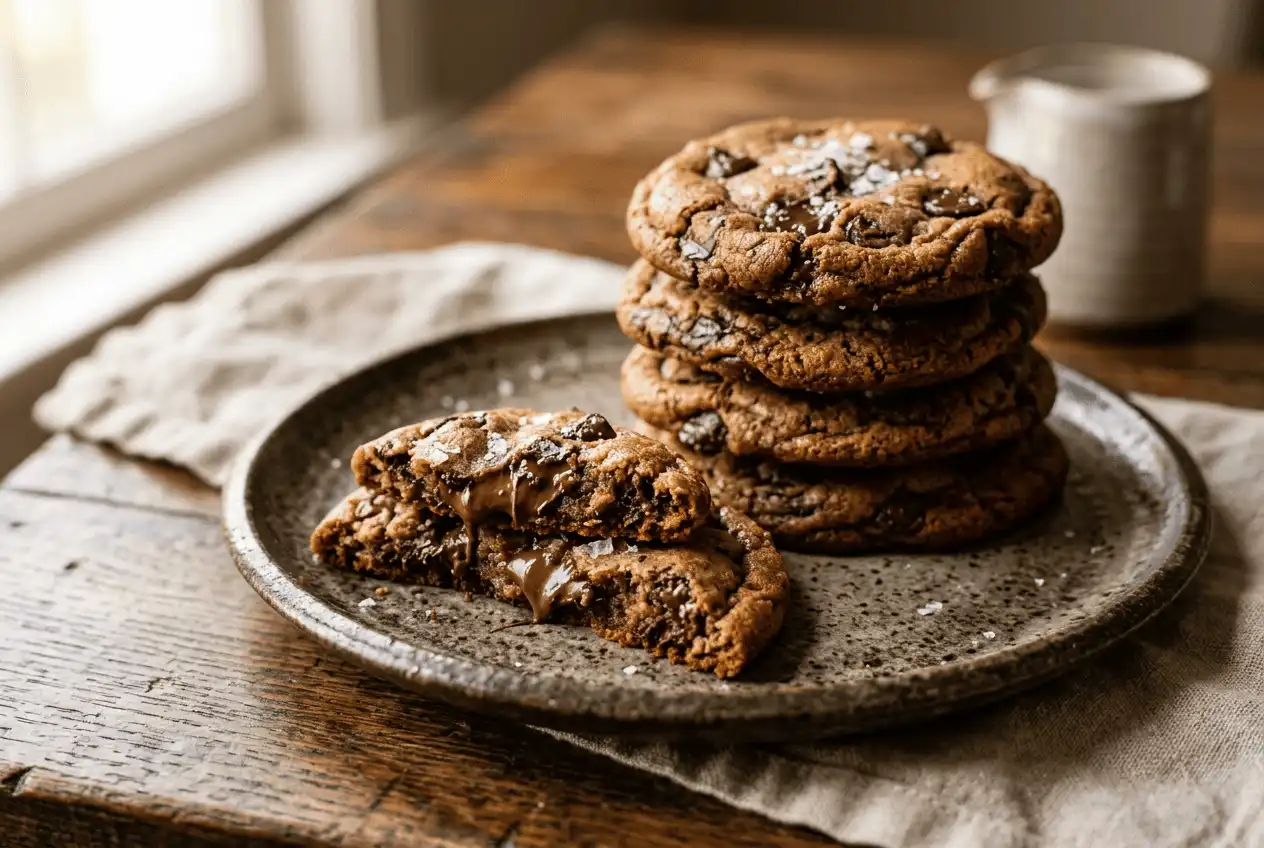
What makes chocolate chip cookies soft, chewy, or crisp?
Texture depends on moisture, fat, sugar, flour, and bake time. More moisture and slightly underbaking create chewy chocolate cookies with soft centers, while longer baking and more white sugar create thinner, crisper edges. Chilling the dough also matters because it slows spreading and gives the flour time to hydrate.
A classic chocolate chip cookie recipe usually uses both brown sugar and granulated sugar. Brown sugar adds moisture and a caramel-like depth, while granulated sugar encourages spread and light crispness. Butter gives flavor and tenderness, eggs bind the dough, and flour provides structure.
The chocolate is not just a mix-in. It shapes the entire eating experience. Standard chips hold their shape, chopped chocolate melts into pockets, and mini chocolate chips distribute chocolate through every bite. If you want a chocolate chip cookie recipe with mini chocolate chips, this base recipe works beautifully with a simple swap.
Ingredients
Use a kitchen scale if you have one. Cups work, but grams are more accurate and help prevent dry or cakey cookies. You will also need baking sheets, parchment paper, a mixing bowl, a silicone spatula, a whisk or electric mixer, a cookie scoop, and a cooling rack.
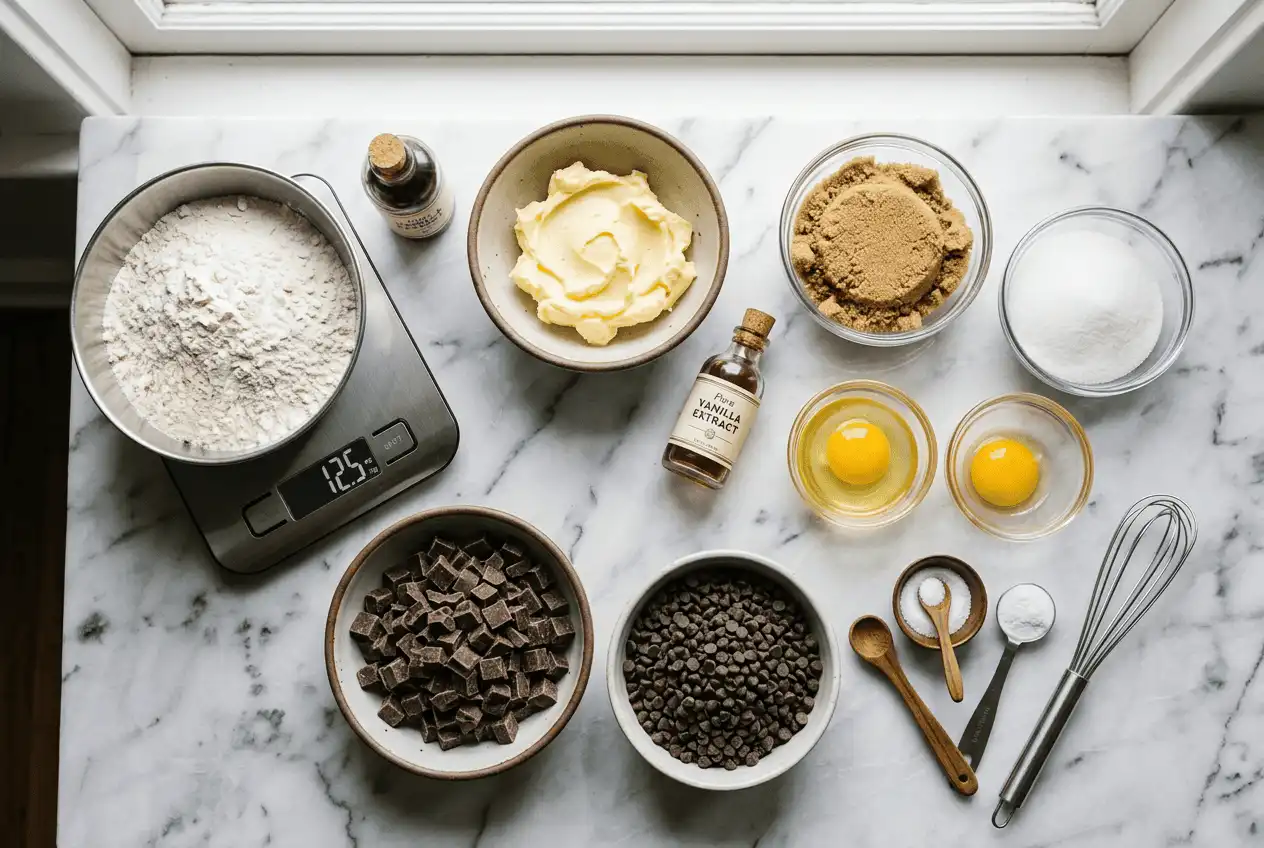
Classic chewy chocolate chip cookies
- Unsalted butter, softened: 170 g / 3/4 cup
- Light brown sugar, packed: 150 g / 3/4 cup
- Granulated sugar: 100 g / 1/2 cup
- Large egg: 1 egg / about 50 g without shell
- Large egg yolk: 1 yolk / about 18 g
- Vanilla extract: 10 ml / 2 teaspoons
- All-purpose flour: 250 g / 2 cups, spooned and leveled
- Cornstarch: 8 g / 1 tablespoon
- Baking soda: 5 g / 1 teaspoon
- Fine sea salt: 4 g / 3/4 teaspoon
- Semi-sweet chocolate chips: 225 g / 1 1/3 cups
- Optional flaky salt for topping: 1 to 2 g / 1/4 teaspoon
Mini chocolate chip variation
For a chocolate chip cookie recipe with mini chocolate chips, replace the semi-sweet chocolate chips with:
- Mini semi-sweet chocolate chips: 200 g / 1 1/4 cups
Mini chips spread more evenly through the dough, so you can use slightly less by weight and still get chocolate in nearly every bite.
Chocolate chip cookie recipe without brown sugar
If you do not have brown sugar, use this adjusted sugar mix:
- Granulated sugar: 175 g / 7/8 cup
- Honey or maple syrup: 15 g / 1 tablespoon
This version will be a little lighter in flavor and slightly crisper at the edges. The syrup adds back some moisture that brown sugar would normally provide.
Step-by-step baking guide
Follow these steps from start to finish for dependable results. The dough is simple, but small details make a big difference when baking chocolate cookies.
- Prepare your tools and pans. Line two baking sheets with parchment paper. Avoid greasing the pans, which can cause extra spreading. If you only have cake pans, use them only for a cookie cake or thick cookie bars, not for standard drop cookies.
- Soften the butter correctly. The butter should feel cool and pliable, not melted or greasy. Press it lightly with a finger; it should leave an indent. If the butter is too warm, the cookies may spread too much.
- Cream the butter and sugars. In a large bowl, beat the softened butter, brown sugar, and granulated sugar for 2 to 3 minutes with an electric mixer. The mixture should look lighter and slightly fluffy. You can also mix by hand with a sturdy silicone spatula, but it will take more effort.
- Add the egg, yolk, and vanilla. Mix in the egg, egg yolk, and vanilla until smooth. Scrape the sides and bottom of the bowl so the fat and liquid combine evenly.
- Combine the dry ingredients. In a separate bowl, whisk together the flour, cornstarch, baking soda, and salt. This helps distribute the leavening evenly and prevents salty or bitter pockets.
- Make the chocolate cookie dough. Add the dry ingredients to the butter mixture. Mix on low speed just until no dry streaks remain. Do not overmix, or the cookies can become tough.
- Fold in the chocolate chips. Use a silicone spatula to fold in the chocolate chips or mini chocolate chips. Save a small handful to press on top of the dough balls before baking if you want a bakery-style look.
- Chill the dough. Cover the bowl and chill the dough for at least 45 minutes. For deeper flavor and thicker cookies, chill it for 2 to 24 hours. If the dough becomes very firm, let it sit at room temperature for 10 minutes before scooping.
- Preheat the oven. Heat the oven to 350°F / 175°C. Give it enough time to fully preheat. An oven thermometer is helpful because many home ovens run hotter or cooler than the display says.
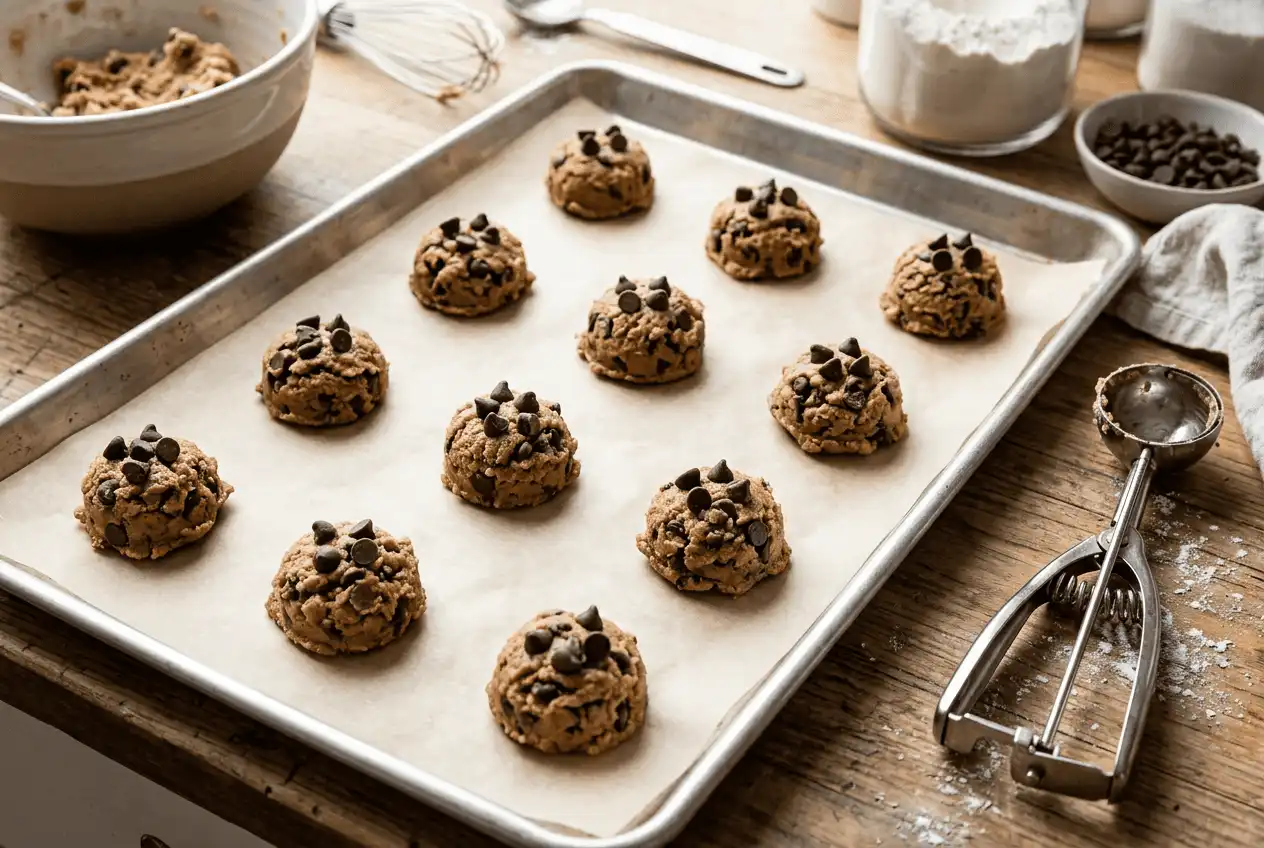
- Scoop and space the dough. Scoop dough into balls of about 40 g each, or roughly 2 tablespoons. Place them 2 inches apart on the lined baking sheets. For neat, even portions, a cookie scoop is better than guessing by hand.
- Bake until the edges are set. Bake for 10 to 12 minutes. The edges should look lightly golden and set, while the centers should still look soft and slightly underdone.
- Shape the cookies if needed. Right after baking, you can use a round cookie cutter or the rim of a glass to gently scoot each cookie into a round shape. Work carefully while the cookies are still hot and flexible.
- Cool before serving. Let the cookies rest on the baking sheet for 5 minutes. Transfer them to a cooling rack and let them cool for at least 10 more minutes. They will continue to set as they cool.
How do you choose the right chocolate?
Choose chocolate based on the texture and flavor you want. Semi-sweet chips give the familiar flavor many people expect from a classic chocolate chip cookie recipe, while chopped chocolate creates melted pools and a more bakery-style finish. Mini chocolate chips give a consistent chocolate bite throughout the cookie.
If you love the style of a Nestle chocolate chip cookie recipe, semi-sweet morsels are the familiar choice. They hold their shape well and create a balanced sweetness. For a richer cookie, combine chips with chopped dark chocolate.
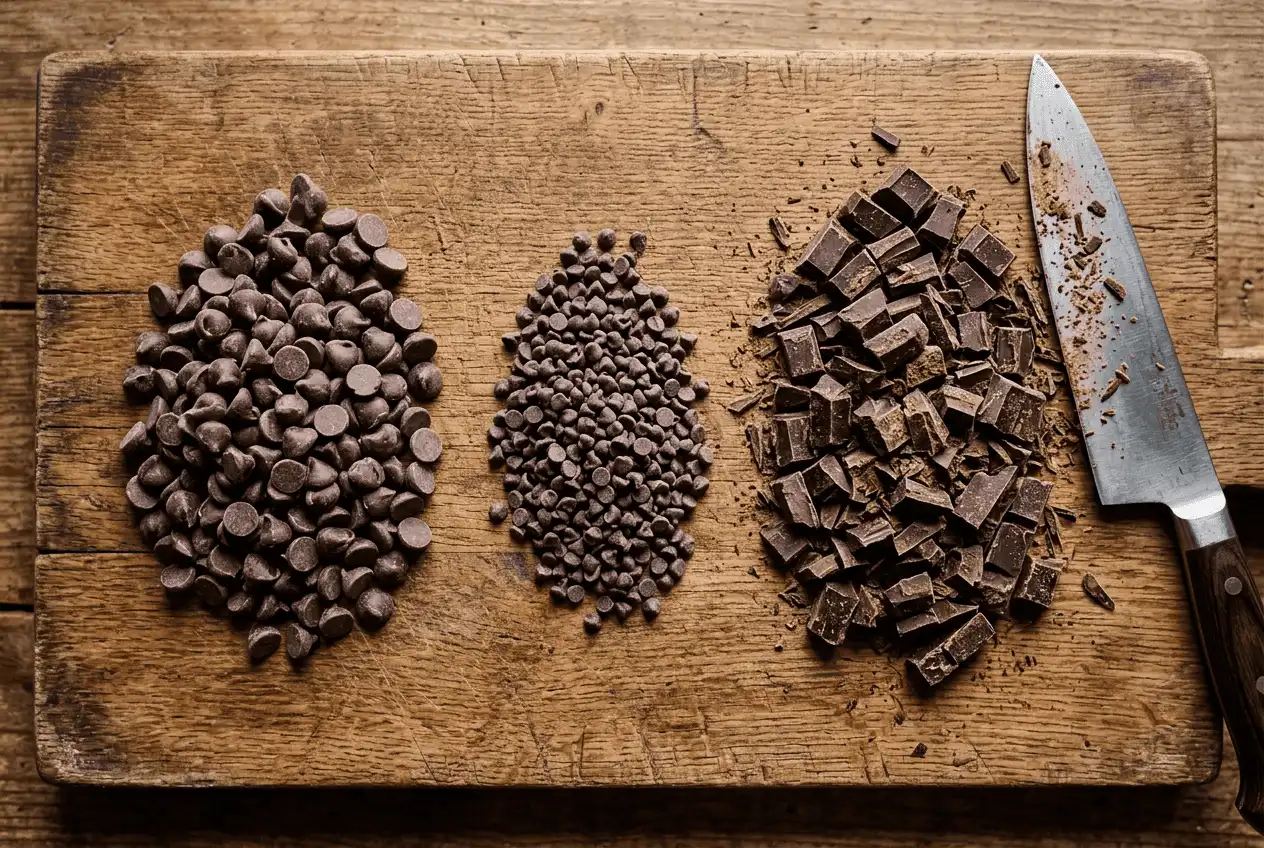
Here is a simple guide:
- Semi-sweet chips: Classic, balanced, easy to measure.
- Mini chips: Best for smaller cookies, lunchbox cookies, and even chocolate distribution.
- Chopped chocolate: Best for gooey pockets and a more rustic look.
- Dark chocolate: Less sweet and more intense.
- Milk chocolate: Creamier and sweeter, but it can make the cookie taste softer and richer.
For the best result, avoid using only tiny shavings or very fine chocolate. They can disappear into the dough and make the cookies look muddy instead of chip-filled.
Dough temperature and chilling shape the final cookie
Chocolate cookie dough changes as it rests. The flour absorbs moisture, the butter firms up, and the sugars begin to dissolve. This improves flavor and reduces excessive spreading.
If you bake the dough immediately, the cookies may spread more and taste a little less developed. They can still be good, especially if you want a thinner cookie with crisp edges. For thick, chewy chocolate cookies, chilling is the safer choice.
A short chill of 45 minutes is enough for everyday baking. An overnight chill gives a deeper flavor and a more controlled spread. If chilling overnight, cover the bowl tightly so the dough does not dry out or absorb refrigerator odors.
Quick dough troubleshooting
- Dough feels sticky: Chill it longer before scooping.
- Dough feels crumbly: Let it sit for 5 to 10 minutes, then press it together gently.
- Dough is too hard after chilling: Rest it at room temperature before scooping.
- Cookies spread too much: Check butter temperature, flour measurement, and oven heat.
- Cookies are too thick: Flatten the dough balls slightly before baking.
Baking Tips & Tricks
Small adjustments can turn a good batch into a great one. Use these professional-style tips to improve consistency, doneness, and storage.
Oven temperature
Bake at 350°F / 175°C for the best balance of spread, browning, and chew. If your cookies are pale after 12 minutes, your oven may be running cool. If they brown too fast, your oven may be too hot or the pan may be too dark.
For very thick cookies, you can bake at 325°F / 165°C for a few extra minutes. For slightly crisper edges, bake at 375°F / 190°C and watch closely. Always test with one or two cookies first if you change the temperature.
Doneness checking
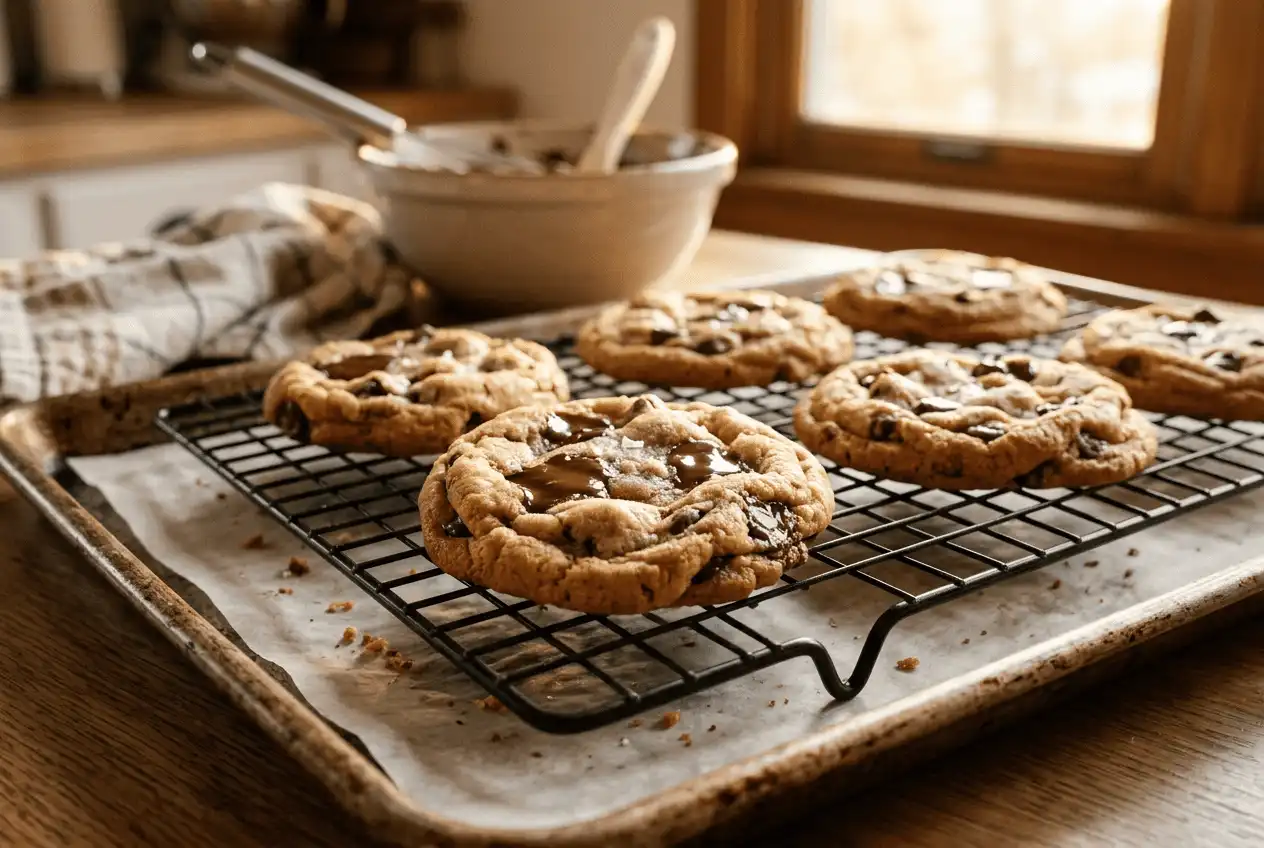
Cookies are done when the edges look set and lightly golden but the centers still look soft. Do not wait until the centers look fully firm in the oven. They will finish setting on the hot pan.
A cake doneness test, like inserting a toothpick into the center, is not useful for standard cookies. Instead, check the surface, edge color, and structure. The cookie should look puffed, soft, and slightly glossy in the center when you pull it out.
Storage recommendations
Store cooled cookies in an airtight container at room temperature for 3 to 4 days. Add a small piece of plain sandwich bread to the container if you want to help keep them soft. The cookies will absorb a little moisture from the bread.
For longer storage, freeze baked cookies in a sealed freezer bag or container for up to 2 months. You can also freeze portioned dough balls. Bake frozen dough directly from the freezer, adding 1 to 3 minutes to the bake time.
Common mistakes and how to fix them
Even a simple cookie recipe can go wrong if the dough is too warm, the flour is mismeasured, or the cookies bake too long. Most problems are easy to correct once you know what caused them.
| Problem | Likely cause | Easy fix |
|---|---|---|
| Cookies spread too much | Butter too warm or dough not chilled | Chill dough and use cool baking sheets |
| Cookies are dry | Too much flour or overbaking | Weigh flour and pull cookies earlier |
| Cookies are cakey | Too much flour or too much egg | Use exact measurements and one yolk, not another whole egg |
| Cookies are pale | Oven too cool or underbaked | Check oven temperature and bake 1 minute longer |
| Cookies are hard | Baked too long or stored uncovered | Bake until just set and store airtight |
If your first tray is not perfect, adjust the second tray. That is one advantage of baking in batches. You can chill the remaining dough longer, lower the oven, or flatten the dough balls slightly before they go in.
Flavor variations that still keep the recipe reliable
Once you understand the base recipe, you can adjust it without ruining the structure. Keep the total mix-ins close to the original amount so the dough still holds together.
Try these options:
- Salted chocolate chip cookies: Sprinkle flaky salt on top right after baking.
- Double chocolate chip cookies: Replace 25 g / 1/4 cup flour with 20 g / 1/4 cup cocoa powder.
- Nutty cookies: Add 75 g / 3/4 cup chopped walnuts or pecans.
- Espresso chocolate cookies: Add 2 g / 1 teaspoon instant espresso powder to the dry ingredients.
- Mini cookie bites: Use 20 g dough balls and bake for 7 to 9 minutes.
You can also pipe very soft cookie dough for decorative shapes using piping bags, but this recipe is designed as a scoopable dough. If you want piped cookies, use a softer butter cookie dough instead.
Final checklist for perfect cookies
Before baking, run through this quick checklist:
- Measure flour carefully, preferably with a kitchen scale.
- Use softened butter, not melted butter.
- Cream butter and sugar until lighter and fluffy.
- Mix flour only until combined.
- Chill the dough before baking.
- Use parchment-lined baking sheets.
- Bake until the edges are set and the centers look soft.
- Cool on the pan before moving to a rack.
Perfect cookies are not about complicated technique. They come from controlling the small details: butter temperature, flour measurement, dough rest, oven heat, and bake time. Once you master those basics, this chocolate chip cookie recipe becomes a flexible foundation for classic chips, mini chips, chopped chocolate, or a no-brown-sugar batch when the pantry is running low.