
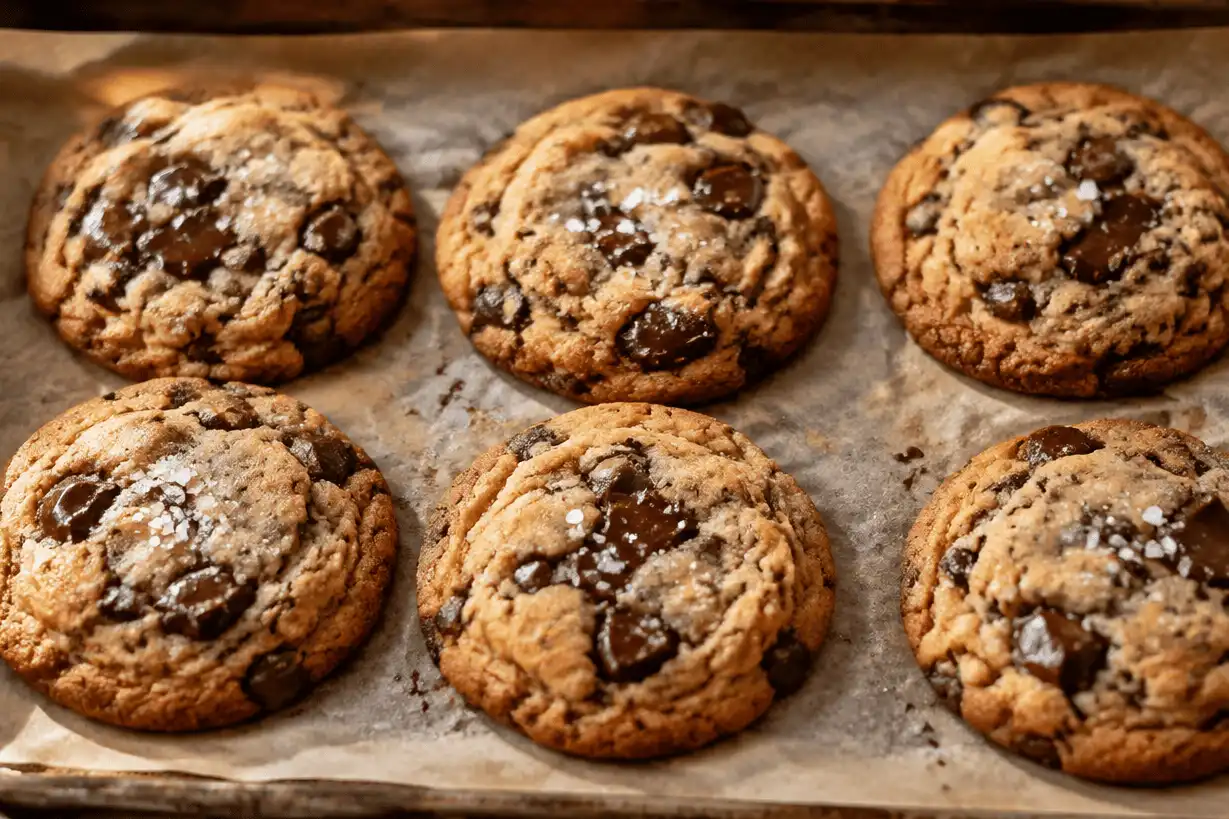
Small batch chocolate chip cookies give you everything people love about a full tray of fresh baked cookies without leaving dozens on the counter. This guide walks through a reliable, scaled-down recipe for six rich, chewy cookies, plus practical tips for texture, flavor, storage, and simple variations. It is designed for cookie lovers who want warm chocolate chip treats with a homemade, almost gourmet cookies feel.
What makes small batch chocolate chip cookies different?
Small batch chocolate chip cookies are made with the same core ingredients as classic cookies, but the quantities are reduced and the method becomes more exact. Because the batch is small, every tablespoon of flour, sugar, butter, and egg matters more. A little too much flour can make the cookies cakey, while too little can make them spread thin.
The benefit is control. You can bake only what you want, enjoy fresh baked cookies the same day, and experiment with artisanal cookies-style flavor upgrades without committing to a large recipe. Small batch baking is also ideal for weeknights, date nights, solo baking, or testing a new flour, chocolate, or mix-in.
For best results, use a kitchen scale if you have one. Cup measurements work, but grams help keep the dough consistent. A silicone spatula, small cookie scoop, parchment paper, and sturdy baking sheet will also make the process easier.
Ingredients for six chewy cookies
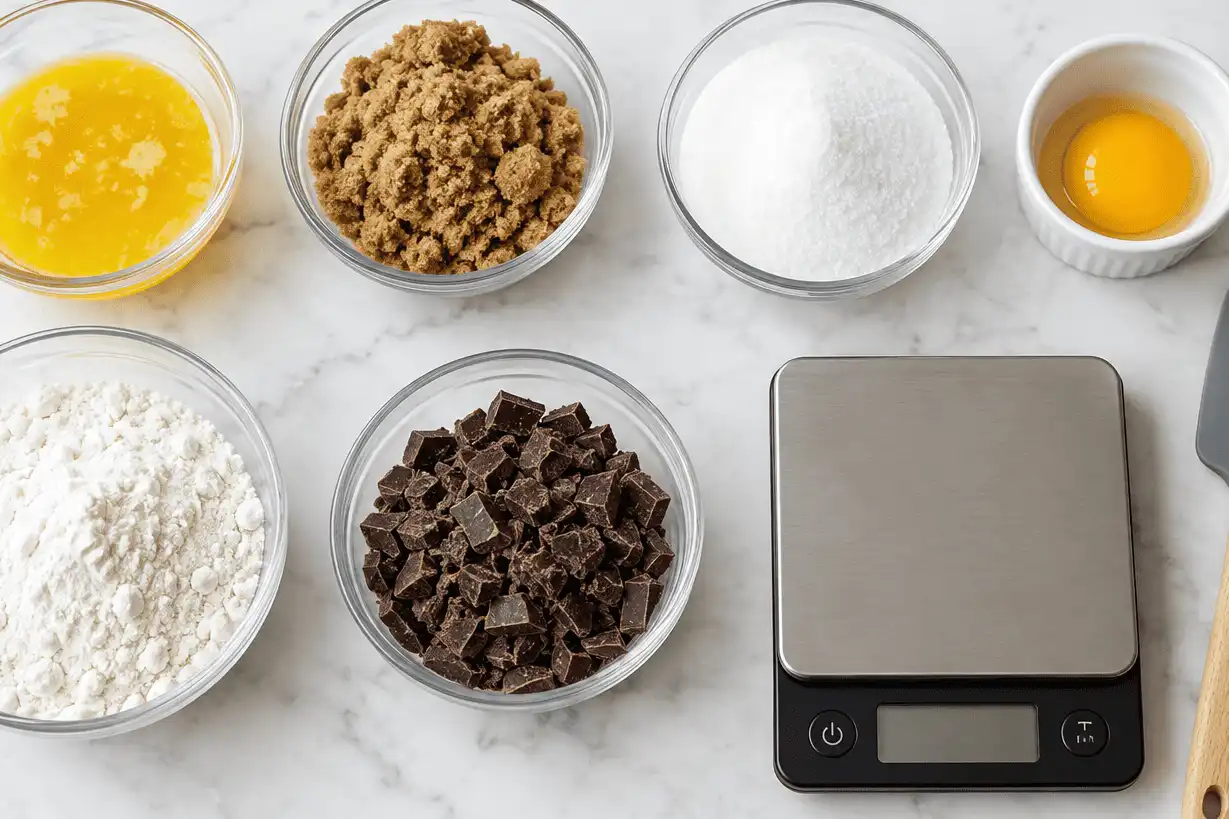
This ingredient list makes about 6 medium small batch chewy chocolate chip cookies. Measure carefully, especially the flour and egg yolk.
Base cookie dough
- Unsalted butter: 56 g / 4 tablespoons, melted and slightly cooled
- Light brown sugar: 55 g / 1/4 cup packed
- Granulated sugar: 25 g / 2 tablespoons
- Large egg yolk: 1 yolk, room temperature if possible
- Vanilla extract: 1 teaspoon
- All-purpose flour: 95 g / 3/4 cup, spooned and leveled
- Baking soda: 1/4 teaspoon
- Fine sea salt: 1/4 teaspoon
- Chocolate chips or chopped chocolate: 85 g / 1/2 cup
- Flaky salt: optional, for finishing
Recommended tools
- Kitchen scale for precise measurements
- Medium mixing bowl
- Whisk or electric mixer on low speed
- Silicone spatula for folding the dough
- Baking sheet lined with parchment paper
- Cookie scoop or tablespoon
- Cooling rack
- Optional cake pan if turning the dough into a small skillet-style cookie cake
- Optional piping bag only if portioning very soft dough neatly into a cake pan or dessert cups
Step-by-step baking instructions
Follow the steps in order. Small batch cookie dough comes together quickly, so prepare your tools before you start.
- Preheat the oven. Set the oven to 350°F / 175°C. Line a baking sheet with parchment paper. If your oven runs hot, place an oven thermometer inside so the temperature is accurate.
- Melt the butter. Melt the butter in a microwave-safe bowl or small saucepan. Let it cool for 5 minutes. It should be liquid but not hot, because hot butter can scramble the egg yolk or make the dough greasy.
- Mix the sugars and butter. Add the brown sugar and granulated sugar to the melted butter. Whisk for 30 to 45 seconds, until glossy and slightly thickened. This helps dissolve some of the sugar and supports chewy centers.
- Add the egg yolk and vanilla. Whisk in the egg yolk and vanilla until smooth. Use only the yolk, not the whole egg. A full egg adds too much moisture for this small batch of chocolate chip cookies.
- Combine the dry ingredients. In a separate bowl, stir together the flour, baking soda, and fine sea salt. This keeps the baking soda evenly distributed, so one cookie does not rise more than another.
- Make the dough. Add the dry ingredients to the wet ingredients. Fold with a silicone spatula until only a few dry streaks remain. Avoid overmixing, which can make the cookies tough.
- Add the chocolate. Fold in the chocolate chips or chopped chocolate. Save a few pieces to press on top before baking if you want a bakery-style look.
- Rest the dough. Let the dough sit at room temperature for 10 minutes. If it feels very soft, chill it for 15 to 20 minutes. Resting gives the flour time to hydrate and helps control spread.
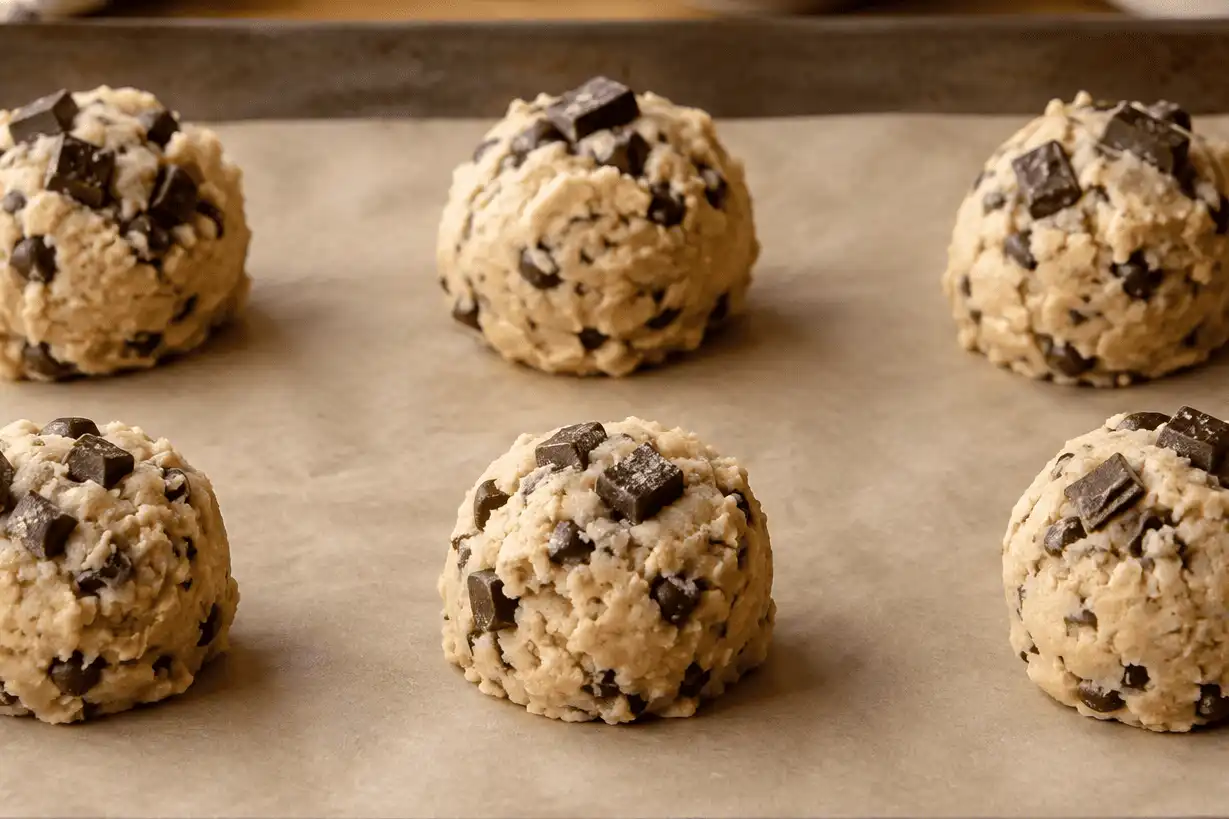
- Portion the cookies. Scoop the dough into 6 equal portions, about 45 to 50 g each. Place them at least 2 inches apart on the baking sheet. For thicker cookies, shape the dough balls taller rather than wider.
- Bake. Bake for 9 to 11 minutes, until the edges are set and lightly golden. The centers should still look soft. They will continue to firm up as they cool.
- Finish and cool. Sprinkle with flaky salt if desired. Let the cookies cool on the baking sheet for 5 minutes, then move them to a cooling rack. This short rest protects the chewy center.
The texture guide for better cookies
A good small batch cookie has crisp edges, a soft middle, and enough chocolate in every bite. Texture depends on ingredient balance, dough temperature, and bake time.
For chewy centers
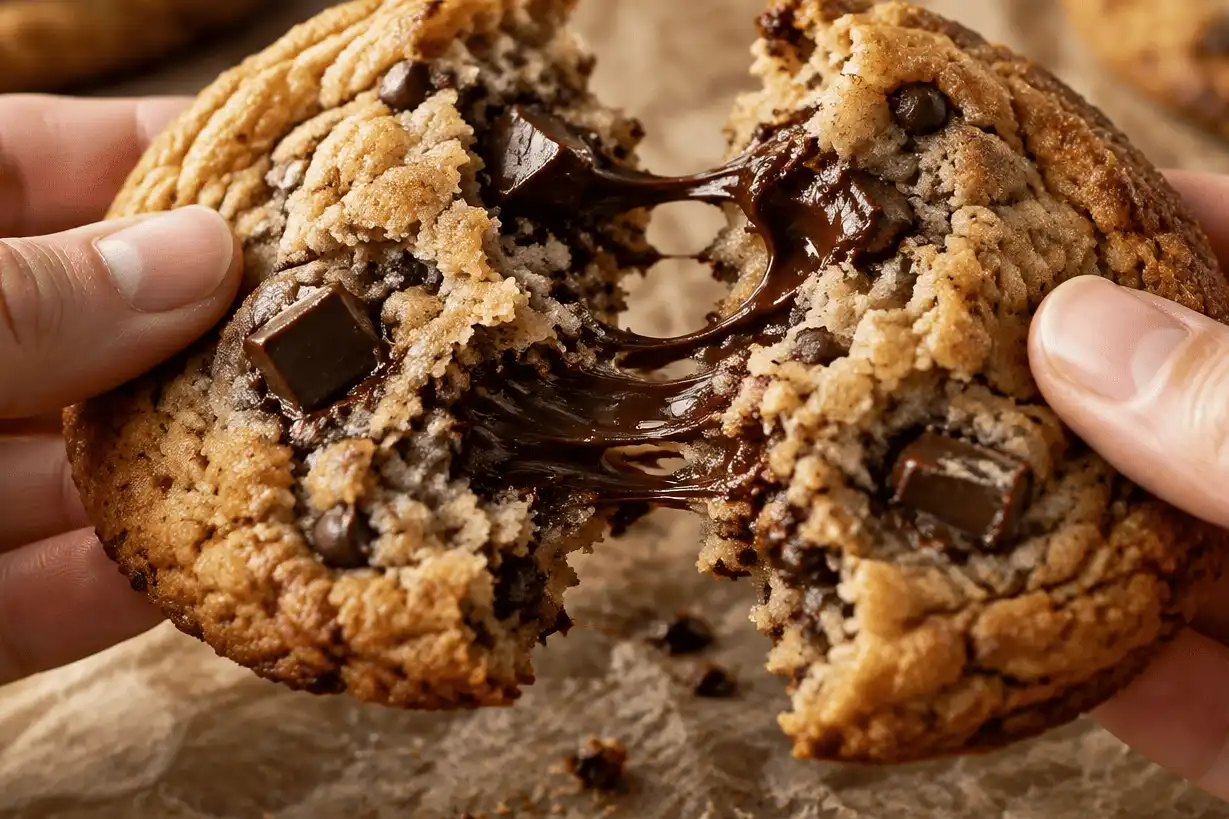
Use more brown sugar than white sugar, as this recipe does. Brown sugar adds moisture and a deeper flavor. The single egg yolk also adds richness without making the dough loose.
Do not bake until the entire cookie looks firm. Pull the cookies when the edges are set but the centers still look slightly underdone. That soft center is the key to small batch chewy chocolate chip cookies.
For thicker cookies
Chill the dough briefly before baking. Even 15 minutes helps the butter firm up. You can also shape the dough into tall mounds, which encourages the cookies to bake upward before they spread.
If your cookies spread too much, add 1 extra tablespoon / about 8 g of flour next time. If they do not spread enough, flatten each dough ball slightly before baking.
For richer flavor
Use chopped chocolate instead of standard chips. Chopped chocolate melts into uneven pockets, which gives the cookies a more artisanal cookies texture. A pinch of flaky salt on top balances the sweetness and makes the chocolate taste fuller.
How do you adapt this recipe for oatmeal, double chocolate, or gluten-free cookies?
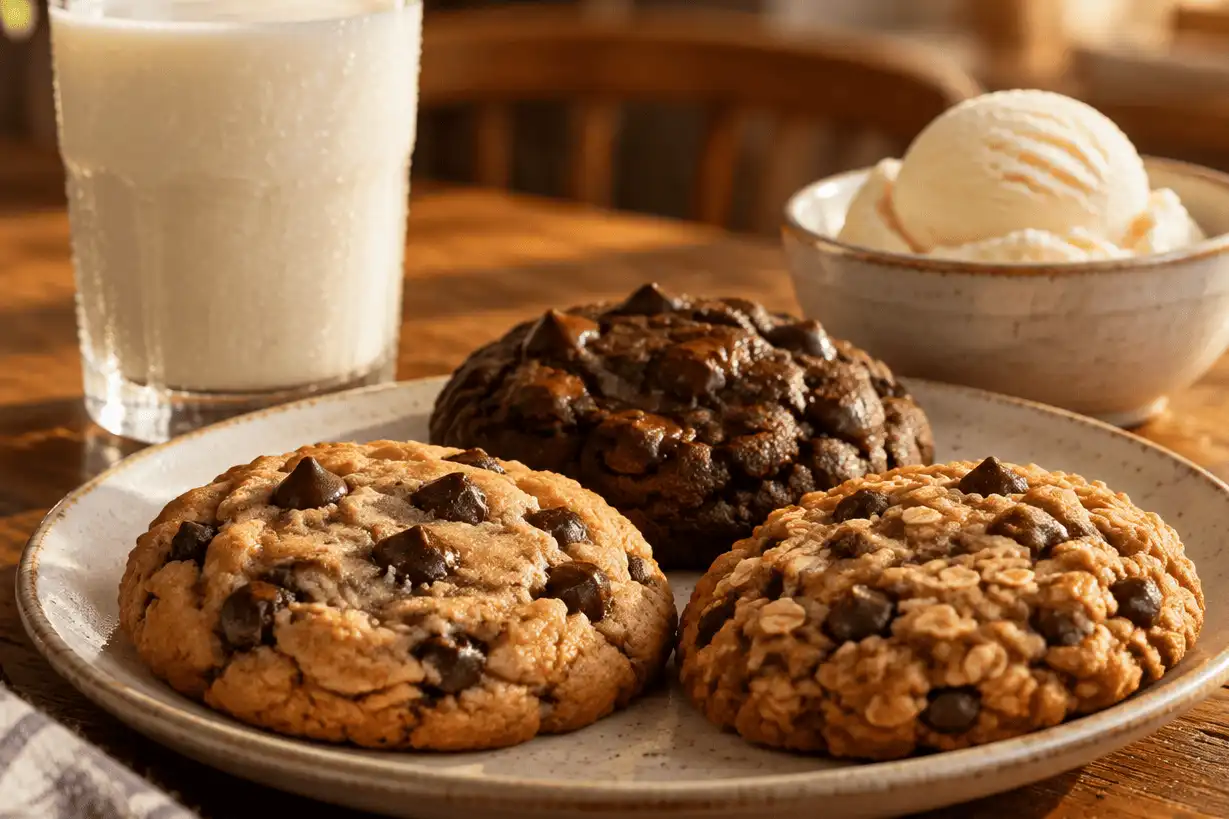
You can adapt this dough into a small batch of oatmeal chocolate chip cookies, small batch double chocolate chip cookies, or small batch gluten free chocolate chip cookies by changing a few measured ingredients. Keep the butter, sugars, egg yolk, vanilla, baking soda, and salt the same unless noted. Small changes are enough because the recipe is intentionally compact.
Small batch oatmeal chocolate chip cookies
For a heartier cookie, reduce the all-purpose flour to 75 g / 1/2 cup plus 1 tablespoon and add 25 g / 1/4 cup old-fashioned rolled oats. Do not use instant oats if you want a chewy texture. The oats absorb moisture, so let the dough rest for 15 minutes before scooping.
This version is slightly more rustic. It pairs well with chopped dark chocolate, cinnamon, or toasted nuts. If adding cinnamon, use 1/4 teaspoon so it supports the chocolate rather than overpowering it.
Small batch double chocolate chip cookies
For a cocoa-rich dough, use 80 g / 2/3 cup all-purpose flour and add 12 g / 2 tablespoons unsweetened cocoa powder. Increase the chocolate chips to 95 g / generous 1/2 cup if you want extra chocolate pockets.
Because cocoa powder absorbs moisture, watch the bake time closely. These cookies may look darker before they are done, so rely on the edges and surface instead of color. The tops should look set, but the centers should still feel soft.
Small batch gluten free chocolate chip cookies
Use 95 g / about 3/4 cup gluten-free 1:1 baking flour in place of all-purpose flour. Choose a blend designed as a direct wheat flour replacement. If the blend does not contain xanthan gum, the cookies may be more delicate.
Let the gluten-free dough rest for 20 minutes before baking. This helps reduce grittiness and allows the flour blend to hydrate. Cool the cookies fully before moving them if they seem fragile.
Professional baking tips and tricks
Small batch baking rewards attention to detail. These tips help you avoid common problems and make the cookies taste fresh longer.
Oven temperature
Bake at 350°F / 175°C for balanced spread, browning, and chew. If your oven has hot spots, rotate the baking sheet halfway through baking. Avoid placing cookies on a hot baking sheet for the next round, because the butter will melt before the dough sets.
If you prefer thicker, paler cookies, chill the dough and bake on the middle rack. If you like crispier edges, bake for the full 11 minutes and let the cookies cool completely on the sheet.
Doneness checks
Chocolate chip cookies are done when the edges look set and lightly golden, while the centers still look soft. Do not wait for the centers to look dry. Overbaking is the fastest way to lose chewiness.
If you use a small cake pan to make a cookie cake with this dough, bake until the edges are set and a toothpick inserted near the center comes out with moist crumbs, not wet batter. This is the cookie version of checking whether a cake is done.
Storage methods
Store cooled cookies in an airtight container at room temperature for up to 3 days. For a just-baked texture, warm one cookie in the microwave for 8 to 10 seconds. You can also freeze baked cookies in a sealed freezer bag for later chocolate chip treats.
To freeze dough, portion it into balls first. Freeze on a tray until firm, then transfer to a bag or container. Bake from frozen at 350°F / 175°C, adding 1 to 2 minutes to the bake time.
Common mistakes and easy fixes
Even simple cookies can behave differently from kitchen to kitchen. Butter temperature, flour measurement, and baking time make the biggest difference.
- Cookies spread too much: The butter was too warm, the dough needed chilling, or the flour was under-measured. Chill the dough and use a kitchen scale next time.
- Cookies are dry: Too much flour or too much baking time is likely. Spoon and level flour carefully, or weigh it.
- Cookies are cakey: Too much egg can cause this. Use only one egg yolk.
- Cookies lack flavor: Add enough salt, use vanilla, and consider chopped chocolate. A tiny sprinkle of flaky salt also helps.
- Cookies baked unevenly: Use a light-colored baking sheet and rotate it halfway through baking.
Small batch serving ideas
These cookies are best slightly warm, when the chocolate is soft and the edges still have a gentle crispness. Serve them with coffee, milk, hot chocolate, or vanilla ice cream. For a simple dessert board, pair them with berries, toasted nuts, and a few squares of dark chocolate.
You can also turn the dough into a shareable mini dessert. Press it into a small greased cake pan or oven-safe skillet and bake until the center is just set. Slice it like a cookie cake and serve warm with ice cream.
For a polished finish, reserve a few chocolate pieces before baking and press them onto the tops as soon as the cookies come out of the oven. This gives the cookies the generous look of gourmet cookies without changing the recipe.
Final checklist before baking
Use this quick check before the tray goes into the oven.
- Butter is melted but not hot.
- Egg yolk is used, not a whole egg.
- Flour is weighed or spooned and leveled.
- Dough is soft but scoopable.
- Cookies are spaced at least 2 inches apart.
- Oven is fully preheated to 350°F / 175°C.
- Cookies will be pulled when the edges are set, not when the centers look dry.
A small batch of chocolate chip cookies should feel easy, flexible, and rewarding. With careful measurements, a short rest, and the right bake time, you can make warm, chewy cookies whenever the craving hits. Keep the base recipe close, then use the variations to make it your own.