
Soft centers, lightly crisp edges, and a mellow green tea aroma are the signs of truly excellent matcha cookies. The challenge is balance: matcha has an earthy, slightly grassy bitterness that can taste flat if the dough is too sweet, too dry, or overbaked. When the ingredients and technique are right, the result is a cookie that feels bakery-worthy without being complicated.
This guide walks through the full process, from choosing the right powder to shaping, baking, storing, and customizing your dough. You’ll also find ideas for strawberry, Oreo, gluten-free, brown butter, black sesame, and crinkle-style variations, so you can turn one reliable matcha cookie recipe into a whole collection of matcha cookies.
What Makes Matcha Cookies Different?
Matcha is finely ground green tea powder, which means it does more than add color. It contributes flavor, tannins, aroma, and a little natural bitterness. In cookie dough, that bitterness can be beautiful because it cuts through butter and sugar, creating a more sophisticated dessert.
A great matcha cookie should have:
- A clear matcha flavor without tasting harsh or dusty
- A tender, chewy texture that stays soft after cooling
- Enough sweetness to balance the tea notes
- A bright green color that does not turn dull brown
- A buttery base that supports the earthy flavor
The key is to treat matcha like a delicate ingredient. Too much heat, too much flour, or old powder can quickly mute its best qualities.
Choosing the Best Matcha for Cookies
You do not need the most expensive ceremonial-grade matcha for baking, but quality still matters. A good culinary-grade matcha is usually the best choice for cookies because it has strong flavor, good color, and is designed to stand up to other ingredients.
Look for matcha that is:
- Vivid green, not yellow, gray, or brown
- Fine and powdery, not clumpy or gritty
- Fresh-smelling, with grassy, sweet, or vegetal notes
- Stored in an airtight container, away from light and heat
Avoid using matcha that has been sitting open in the pantry for months. Stale matcha can make even a well-tested matcha cookie recipe taste bitter or muddy.
Essential Ingredients and Why They Matter
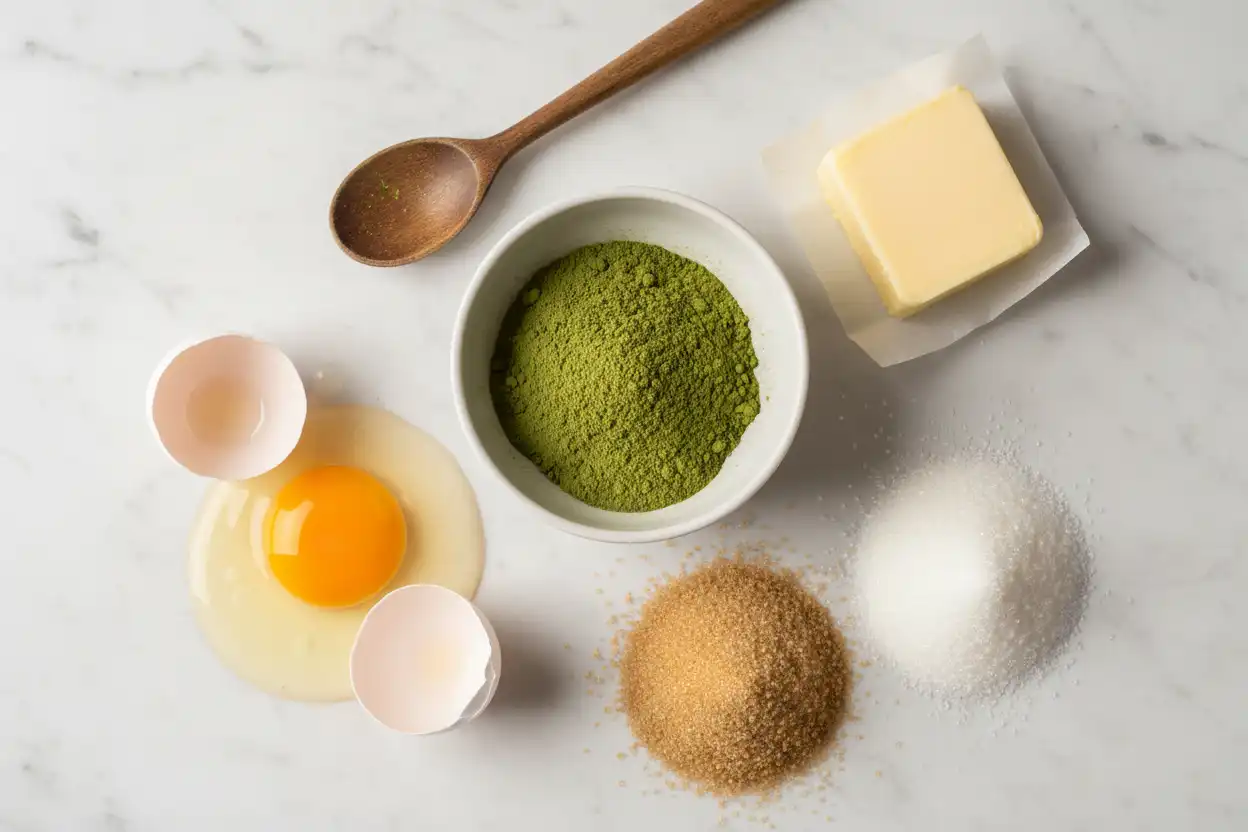
Before you bake, it helps to understand what each ingredient does. Cookies are simple, but small changes can completely alter the texture.
Butter
Butter gives matcha cookies richness and helps carry the tea flavor. Softened butter creates a classic chewy cookie. Melted or brown butter creates a denser, deeper flavor. If you want brown butter matcha cookies, cool the browned butter before mixing so it does not melt the sugar too aggressively.
Sugar
A combination of brown sugar and granulated sugar works best. Brown sugar adds moisture and chewiness, while granulated sugar helps the edges set. Matcha needs sweetness, but too much sugar can bury its flavor.
Egg
One large egg binds the dough and adds structure. For thicker cookies, use a cold egg. For a slightly softer dough, use a room-temperature egg.
Flour
All-purpose flour gives reliable results. Too much flour makes cookies cakey and dry, so measure carefully. If you do not use a scale, spoon flour into the measuring cup and level it off instead of scooping directly from the bag.
Matcha Powder
Matcha should be sifted with the dry ingredients to avoid green specks or bitter clumps. This step is especially important for matcha crinkle cookies and other styles where appearance matters.
Baking Soda or Baking Powder
For chewy cookies, baking soda helps the dough spread and brown gently. Baking powder gives a puffier, softer result. Some recipes use both, but this version keeps things simple.
A Reliable Base Recipe
Use this as your core dough for classic matcha cookies or as the foundation for the variations below.
Ingredients
- 1/2 cup unsalted butter, softened
- 2/3 cup light brown sugar, packed
- 1/4 cup granulated sugar
- 1 large egg
- 1 teaspoon vanilla extract
- 1 1/2 cups all-purpose flour
- 1 1/2 tablespoons matcha powder, sifted
- 1/2 teaspoon baking soda
- 1/2 teaspoon fine sea salt
- 3/4 cup white chocolate chips, dark chocolate chunks, or chopped nuts, optional
Instructions
- Cream the butter and sugars. In a large bowl, beat softened butter, brown sugar, and granulated sugar until the mixture looks creamy and slightly lighter. This usually takes 2 to 3 minutes by hand mixer.
- Add egg and vanilla. Mix in the egg until fully combined, then add vanilla. Scrape down the bowl so no streaks of butter remain.
- Combine dry ingredients. In a separate bowl, whisk flour, sifted matcha, baking soda, and salt. Whisking distributes the matcha evenly and helps prevent bitter pockets.
- Make the dough. Add the dry ingredients to the wet ingredients and mix just until no dry flour remains. Do not overmix, or the cookies may become tough.
- Fold in extras. Stir in white chocolate chips, dark chocolate chunks, macadamia nuts, or another add-in if using.
- Chill the dough. Cover and refrigerate for at least 30 minutes. For deeper flavor and thicker cookies, chill for 2 hours.
- Shape the cookies. Scoop dough into 1 1/2-tablespoon portions. Roll lightly into balls and place on a parchment-lined baking sheet with room to spread.
- Bake. Bake at 350°F until the edges look set but the centers still appear slightly soft, usually 9 to 11 minutes depending on size.
- Cool properly. Let the cookies rest on the baking sheet for 5 minutes, then transfer to a wire rack. They will continue to set as they cool.
The Secret to Bright Green Color
Matcha color is affected by ingredient quality, baking time, and oven temperature. Overbaking is one of the main reasons matcha cookies turn dull.
For the best color:
- Use fresh, vivid green matcha
- Sift matcha before adding it to the dough
- Bake just until the edges are set
- Avoid very dark baking sheets, which can overbrown the bottoms
- Do not raise the oven temperature to speed things up
If you want a stronger green color, add a little more matcha rather than food coloring. However, increase gradually. Too much matcha can make the cookies bitter and dry.
Texture Tips for Soft, Chewy Cookies
The most common mistake is baking until the centers look fully done. Cookies continue cooking from residual heat after they leave the oven. Pulling them out while the centers look slightly underbaked is what creates that soft, chewy middle.
For thicker cookies, chill the dough longer and bake from cold. For thinner cookies, shorten the chilling time or gently press the dough balls before baking. If your cookies spread too much, the butter may have been too warm or the dough may need more time in the refrigerator.
Another helpful trick is to shape the cookies as soon as they come out of the oven. Place a round cookie cutter or glass slightly larger than the cookie over each one and gently swirl it in a circular motion. This creates neat, round edges without changing the flavor.
Flavor Pairings That Work Beautifully
Matcha pairs well with creamy, nutty, fruity, and chocolatey flavors. Once you have a dependable base dough, small additions can create completely different cookies.
Great mix-ins include:
- White chocolate chips for sweetness and creaminess
- Dark chocolate chunks for a more intense flavor
- Macadamia nuts for buttery crunch
- Freeze-dried strawberries for tart fruitiness
- Black sesame seeds for nutty depth
- Crushed sandwich cookies for a playful cookies-and-cream version
- Toasted coconut for a tropical note
When adding dry mix-ins, keep the total amount around 3/4 to 1 cup. Too many additions can prevent the dough from holding together.
Strawberry Matcha Cookies
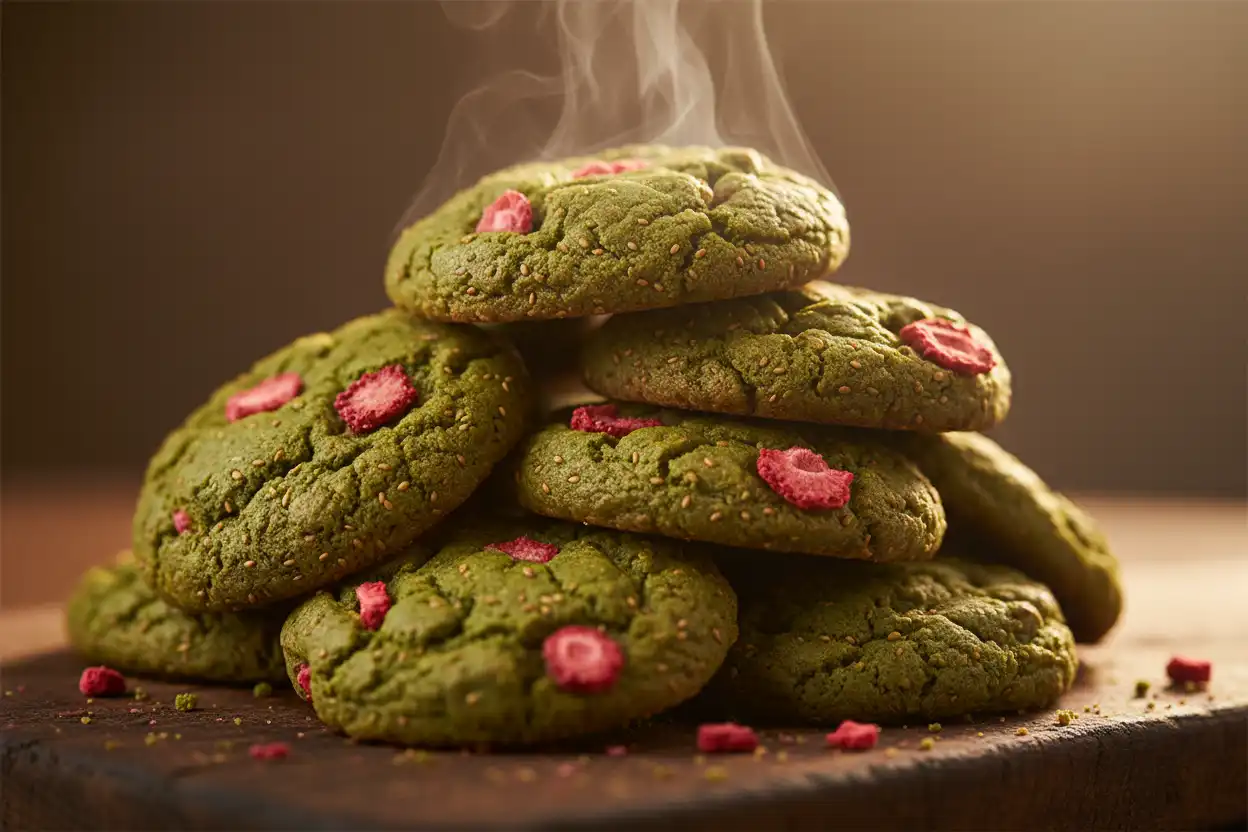
A strawberry matcha cookies recipe works especially well because the berry flavor brightens the earthy tea notes. The easiest method is to fold chopped freeze-dried strawberries into the base dough. Fresh strawberries are not ideal because they release too much moisture and can make the cookies soggy.
For a stronger strawberry flavor, crush a few freeze-dried strawberries into powder and mix them with granulated sugar. Roll each dough ball in the strawberry sugar before baking. The result is colorful, fragrant, and slightly tart.
White chocolate is a natural addition here. It softens the matcha and makes the strawberry flavor taste more dessert-like.
Oreo Matcha Cookies
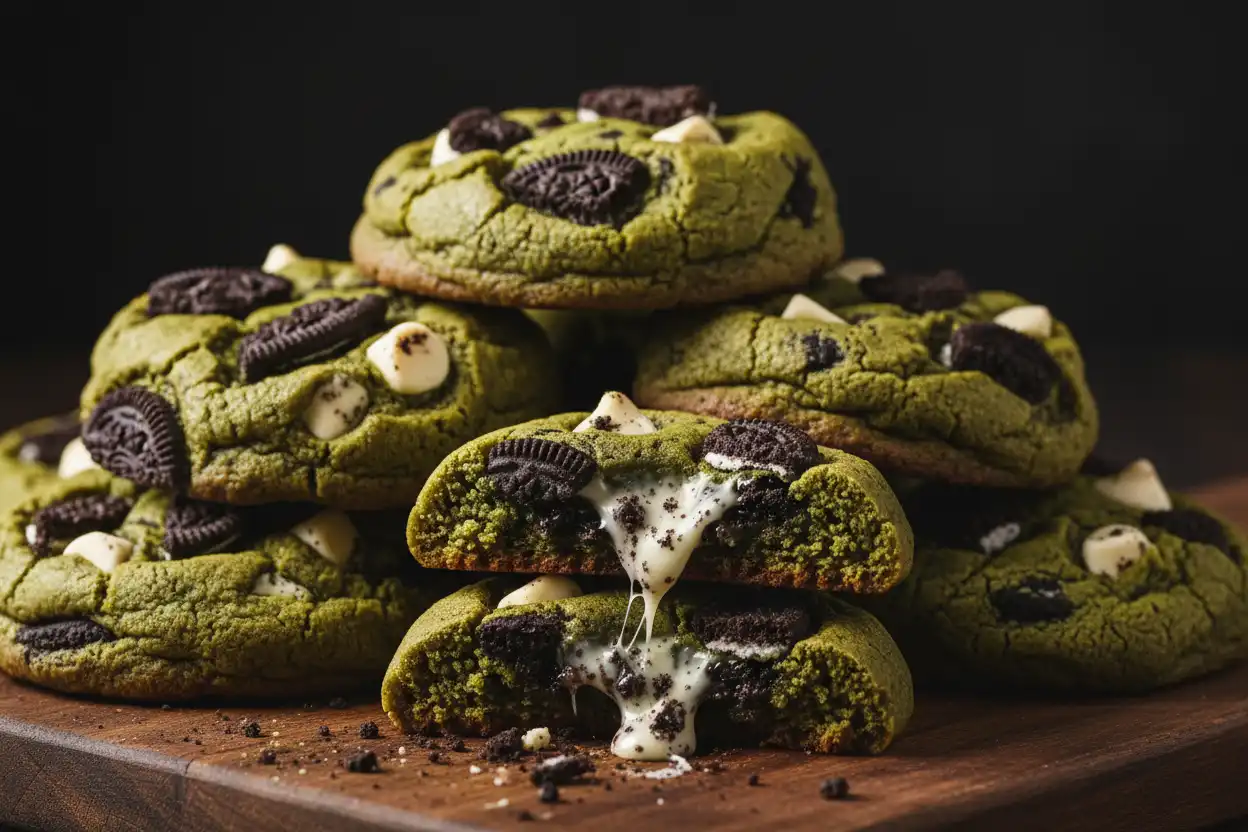
Oreo matcha cookies are rich, fun, and easy to make. Crush chocolate sandwich cookies into chunky pieces, then fold them into the dough with white chocolate chips or dark chocolate chunks.
For best texture, do not crush the cookies into fine crumbs. Larger pieces create contrast, while tiny crumbs can turn the dough gray-green. Add the cookie pieces at the end and mix gently so they stay visible.
This variation is great for people who are new to matcha because the chocolate cookie flavor makes the green tea notes feel more familiar.
Gluten-Free Matcha Cookies
To make gluten-free matcha cookies, use a cup-for-cup gluten-free flour blend designed for baking. Choose one that contains a binder such as xanthan gum, or add a small amount according to the blend’s guidance.
Because gluten-free flours can absorb moisture differently, chill the dough for at least 45 minutes before baking. If the dough feels crumbly after chilling, let it sit at room temperature for a few minutes and gently press it together before scooping.
Gluten-free matcha cookies are especially good with white chocolate, almonds, or coconut. These add-ins help create richness and texture.
Brown Butter Matcha Cookies
Brown butter adds toasted, nutty depth and makes the cookies taste more complex. To make brown butter matcha cookies, cook the butter in a light-colored pan over medium heat until it foams and the milk solids turn golden brown. Remove it from the heat immediately and pour it into a bowl to cool.
Because browning butter removes some water, the dough can be slightly drier. A simple fix is to add 1 to 2 teaspoons of milk if the dough feels crumbly. Chill the dough before baking so the cookies do not spread too much.
This variation pairs beautifully with dark chocolate, toasted pecans, or black sesame.
Black Sesame Matcha Cookies
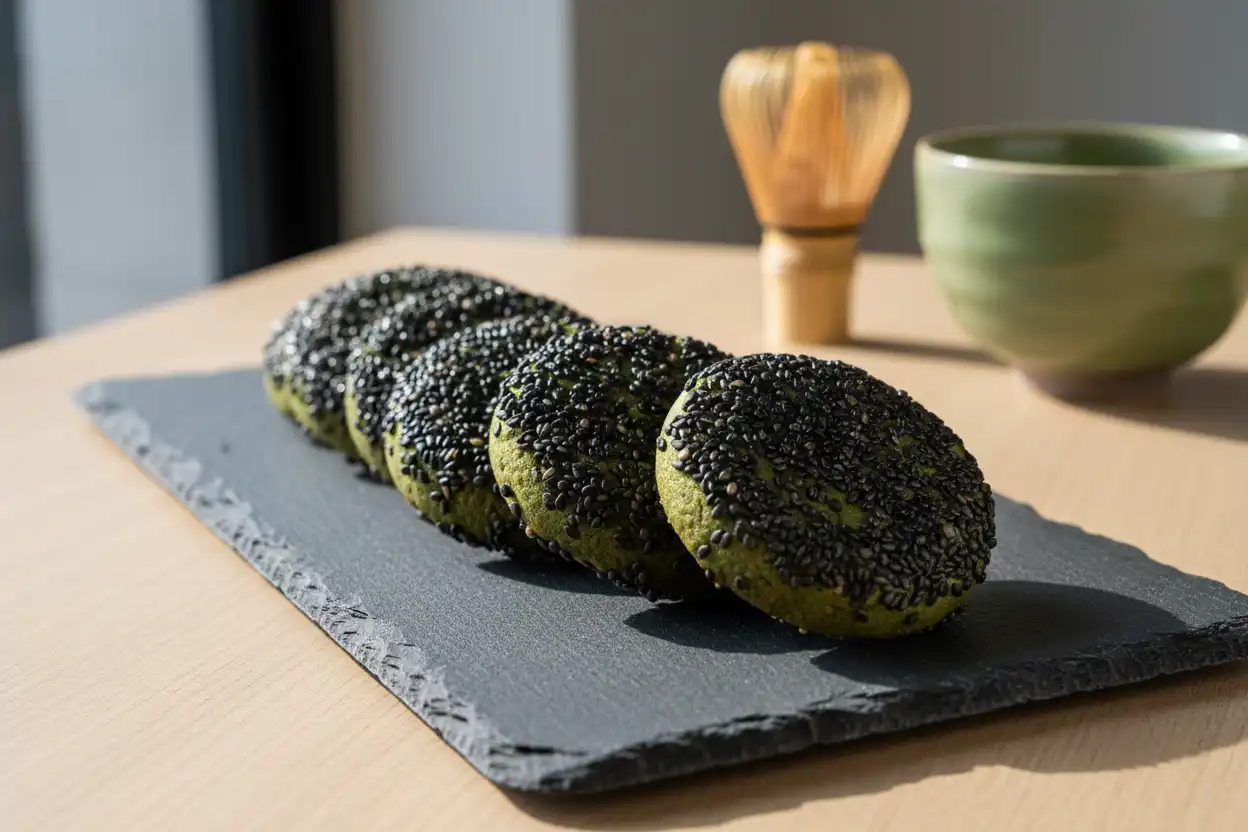
Black sesame matcha cookies have a nutty, slightly savory flavor that feels elegant and not overly sweet. Add 2 to 3 tablespoons of toasted black sesame seeds to the base dough. For a deeper flavor, replace a small portion of the butter with black sesame paste, but keep the amount modest so it does not overwhelm the matcha.
A sprinkle of sesame seeds on top before baking makes the cookies look polished and adds light crunch. This version is excellent with dark chocolate or a pinch of flaky salt.
Matcha Crinkle Cookies
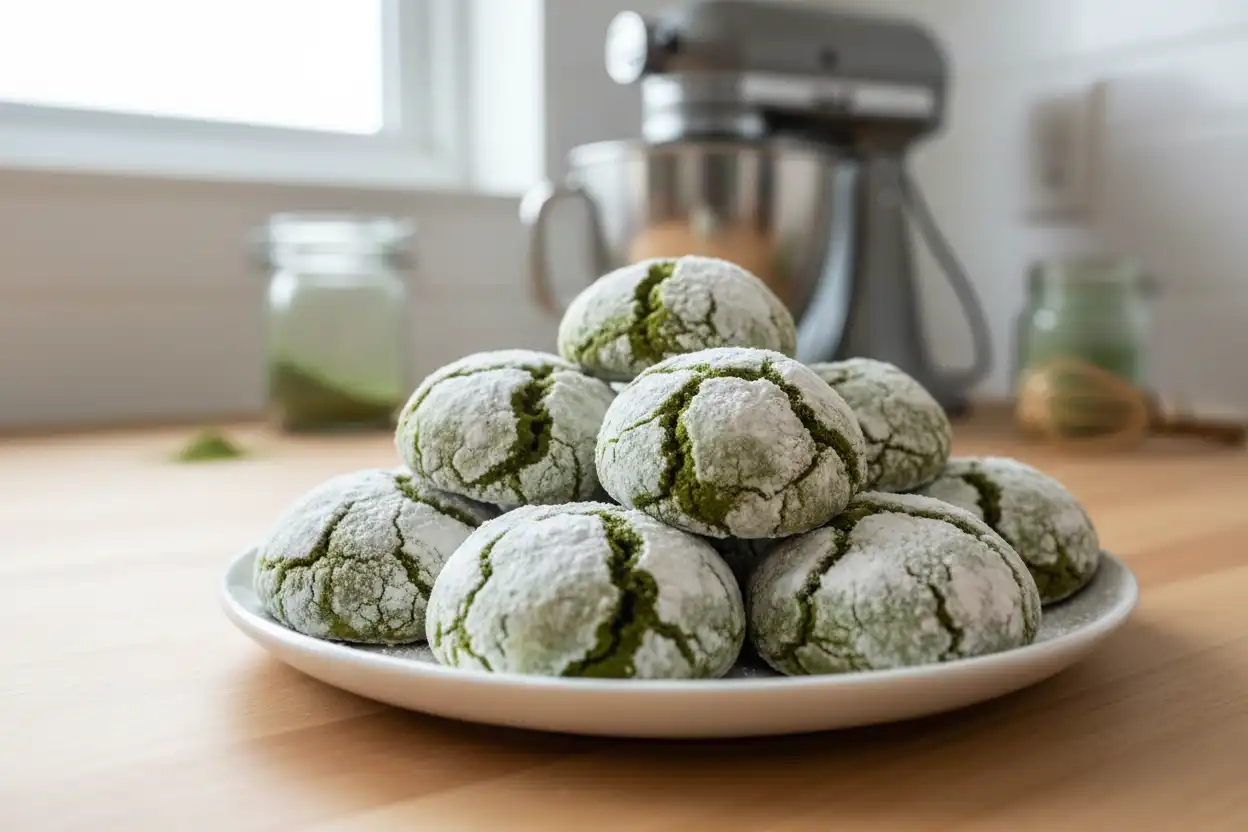
Matcha crinkle cookies are soft, powdered sugar-coated cookies with a crackled top. To adapt the base recipe, make the dough slightly softer by using 1 1/4 cups flour instead of 1 1/2 cups. Chill until firm, then roll dough balls first in granulated sugar and then generously in powdered sugar.
The first sugar layer helps the powdered sugar stay white and distinct. Bake until the cookies puff and crack but still look soft in the center. Avoid overbaking, or the crinkles may become dry.
For a holiday-style version, add a little almond extract or fold in finely chopped white chocolate.
Can Matcha Cookies Be Healthier?
Cookies are still cookies, but you can make small changes if you want healthy matcha treats that feel a bit lighter. Try reducing the sugar slightly, using dark chocolate instead of white chocolate, or adding nuts and seeds for more texture. You can also make smaller cookies so each portion feels satisfying without being oversized.
Whole wheat pastry flour can replace part of the all-purpose flour, though it will make the cookies a little heartier. Coconut sugar can also be used, but it will darken the color and add a caramel-like flavor.
The best approach is not to remove all richness. Matcha tastes best when it has enough fat and sweetness to balance it.
Troubleshooting Common Problems
The cookies taste bitter
The matcha may be stale, low quality, or used in too large a quantity. Try using less matcha or pairing it with white chocolate, vanilla, or a touch more salt.
The cookies turned brown
They were likely overbaked, baked on a dark pan, or made with dull matcha. Remove them from the oven when the centers still look soft.
The dough is too sticky
Chill it longer. Matcha dough often firms up beautifully after 30 to 60 minutes in the refrigerator.
The cookies did not spread
The dough may be too cold or contain too much flour. Let the dough rest at room temperature for 10 minutes before baking, or gently flatten each dough ball.
The cookies spread too much
The butter was probably too warm or the dough was not chilled enough. Refrigerate the next batch before baking.
Storage and Freezing Tips
Store baked matcha cookies in an airtight container at room temperature for several days. To keep them soft, add a small piece of bread to the container. The cookies will absorb a little moisture from the bread without becoming wet.
For longer storage, freeze the dough balls instead of the baked cookies. Scoop the dough, freeze on a tray until firm, then transfer to a freezer-safe bag or container. Bake from frozen, adding 1 to 2 extra minutes as needed.
You can also freeze baked cookies, but their color and texture are best when the dough is baked fresh.
Final Tips for Better Results Every Time
Perfect matcha cookies come down to freshness, balance, and restraint. Use good matcha, measure flour carefully, chill the dough, and pull the cookies from the oven before they look completely baked. Once you master the base dough, you can adapt it into strawberry matcha cookies, Oreo matcha cookies, gluten-free matcha cookies, brown butter matcha cookies, black sesame matcha cookies, or matcha crinkle cookies with only a few thoughtful changes.
The best version is the one that lets matcha shine: buttery, fragrant, gently sweet, and just a little earthy in every bite.