
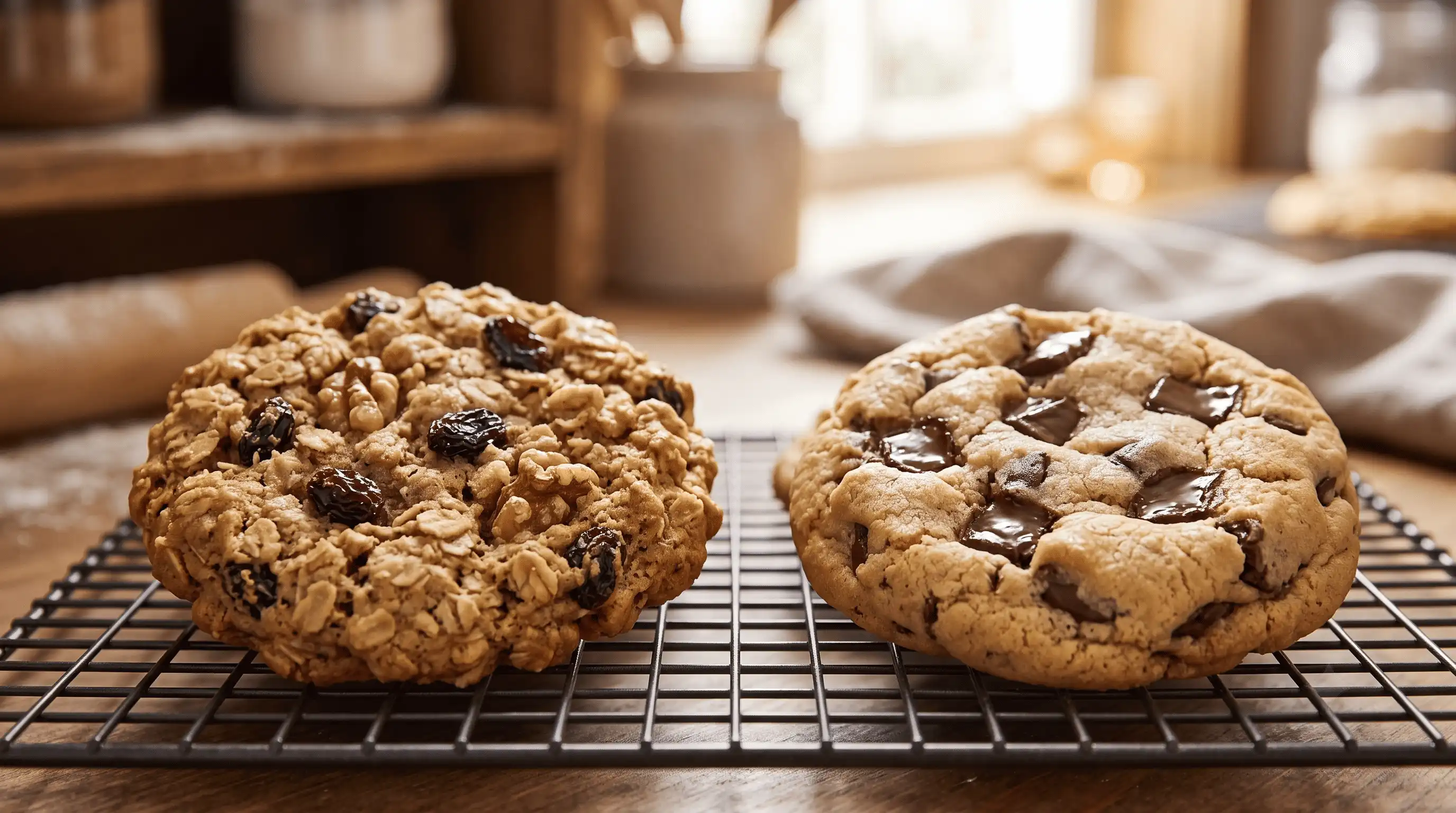
If you love thick cookies with crisp golden edges, gooey centers, and that unmistakable bakery-style heft, this guide walks you through how to make Levain-inspired cookies at home. This is not the official bakery formula, but it is designed to help you recreate the oversized, rich texture people associate with Levain cookies: tall, chunky, slightly underbaked in the center, and loaded with mix-ins.
Below, you’ll find a detailed levain cookie recipe, step-by-step mixing and baking instructions, troubleshooting tips, and simple variations for chocolate chip walnut and oatmeal raisin cookies.
What Makes Levain-Style Cookies Different?
Levain-style cookies are not thin, delicate cookies. They are big, bold, and intentionally dramatic. The goal is a cookie that feels closer to a bakery treat than a lunchbox snack.
The signature traits are:
- Very thick shape: The dough is portioned into large mounds rather than flattened discs.
- Crisp exterior: A hot oven helps the outside set quickly.
- Soft, chewy center: The inside stays rich, tender, and slightly gooey.
- Plenty of mix-ins: Chocolate chip, walnuts, raisins, and oats create texture in every bite.
- Minimal spreading: Cold dough, enough flour, and large portions help the cookies stay tall.
If you have been searching for a levain chocolate chip cookie recipe or a levain chocolate chip walnut cookie recipe, the method matters just as much as the ingredients.
Ingredients You’ll Need
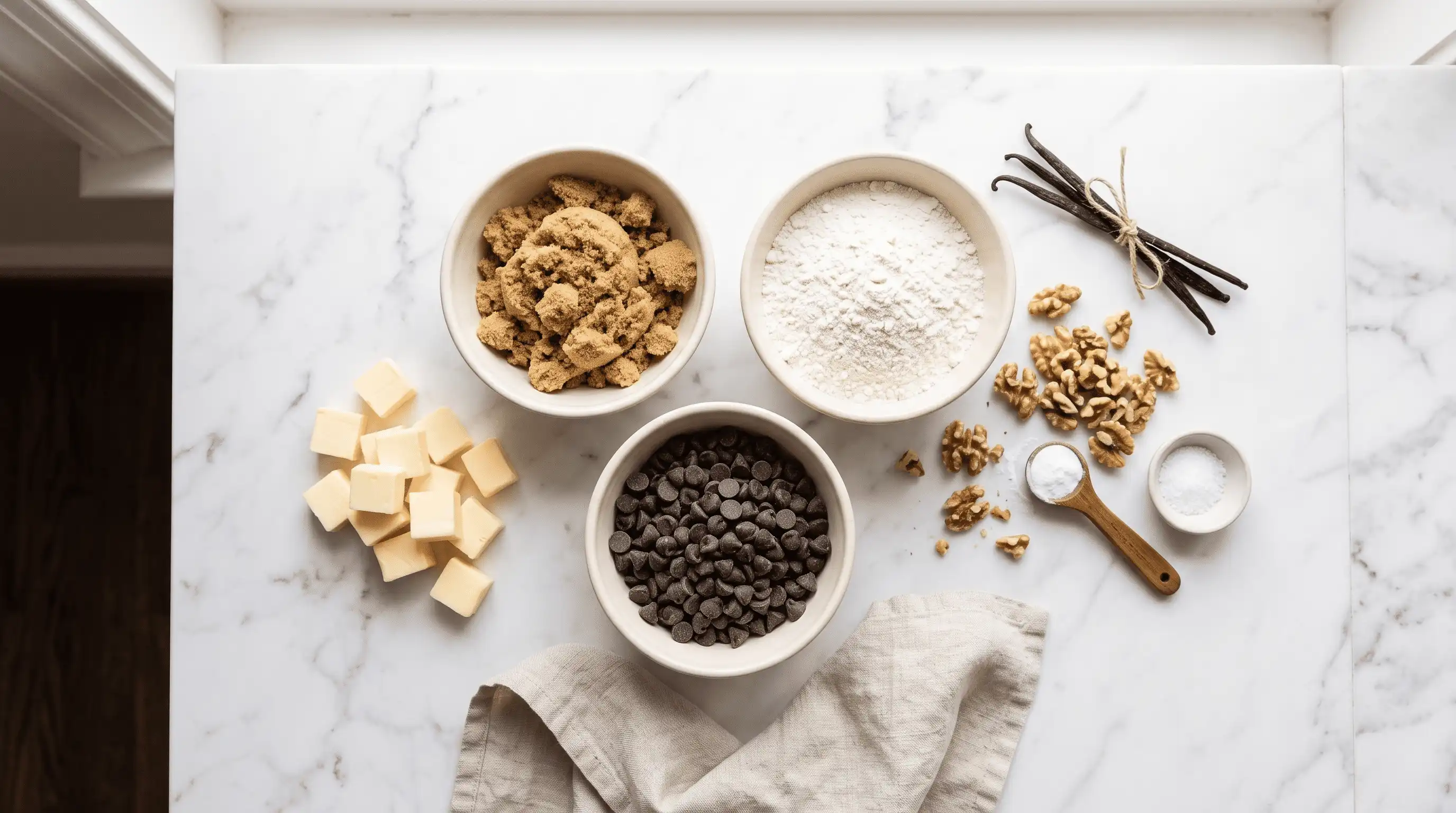
For the classic chocolate chip walnut version, gather the following:
- 1 cup cold unsalted butter, cut into small cubes
- 1 cup light brown sugar, packed
- 1/2 cup granulated sugar
- 2 large eggs, cold
- 3 cups all-purpose flour
- 1 tablespoon cornstarch
- 1 teaspoon baking soda
- 1 teaspoon baking powder
- 1 teaspoon fine sea salt
- 2 cups semisweet or dark chocolate chips, chunks, or a mix of both
- 1 1/2 cups roughly chopped walnuts
This base creates a sturdy, rich dough that bakes into bakery-style cookies with height and chew. For the best texture, use a mix of chocolate sizes. Chips hold their shape, while chopped chocolate melts into puddles.
Equipment That Helps
You do not need professional bakery equipment, but a few tools make the process easier:
- Stand mixer or sturdy hand mixer
- Large mixing bowl
- Rubber spatula
- Kitchen scale, if available
- Baking sheets
- Parchment paper
- Cooling rack
- Large cookie scoop or your hands for shaping
A kitchen scale is especially helpful because Levain-style cookies are large. Even portions help the cookies bake evenly.
Step 1: Start With Cold Butter
Unlike many cookie recipes that call for softened butter, this cookie recipe starts with cold butter. Cold butter helps keep the dough firm and reduces spreading in the oven.
Place the cubed butter, brown sugar, and granulated sugar in the bowl of a stand mixer. Beat on medium speed until the mixture looks slightly creamy but still thick. This usually takes a few minutes.
Do not overmix until the butter becomes warm and fluffy. The goal is to combine the butter and sugar while keeping the dough cool and dense.
Step 2: Add the Eggs One at a Time
Add the eggs one at a time, mixing briefly after each addition. Scrape down the sides of the bowl so everything blends evenly.
At this stage, the mixture may look slightly uneven or chunky because the butter is cold. That is okay. Once the dry ingredients are added, the dough will come together.
Step 3: Mix the Dry Ingredients Separately
In a separate bowl, whisk together:
- All-purpose flour
- Cornstarch
- Baking soda
- Baking powder
- Salt
Cornstarch helps create a soft, tender bite. Baking soda and baking powder work together to give the cookies lift while helping them brown. Salt balances the sweetness and makes the chocolate flavor stand out.
Step 4: Combine Wet and Dry Ingredients
Add the dry ingredients to the butter mixture in two or three additions. Mix on low speed just until the flour disappears.
Avoid overmixing. Too much mixing can develop gluten, which may make the cookies tough instead of soft and chewy. The dough should be thick, heavy, and slightly crumbly at first, then hold together when pressed.
If your mixer struggles, finish mixing with a spatula or clean hands.
Step 5: Fold in Chocolate and Walnuts
Add the chocolate chip pieces and chopped walnuts. Fold them in until evenly distributed.
This is where the cookie gets its signature texture. The walnuts add crunch and a slightly toasted flavor, while the chocolate creates rich pockets throughout the dough.
For a more dramatic bakery look, reserve a handful of chocolate pieces and press them onto the outside of each dough mound before baking.
Step 6: Shape the Dough Into Tall Mounds
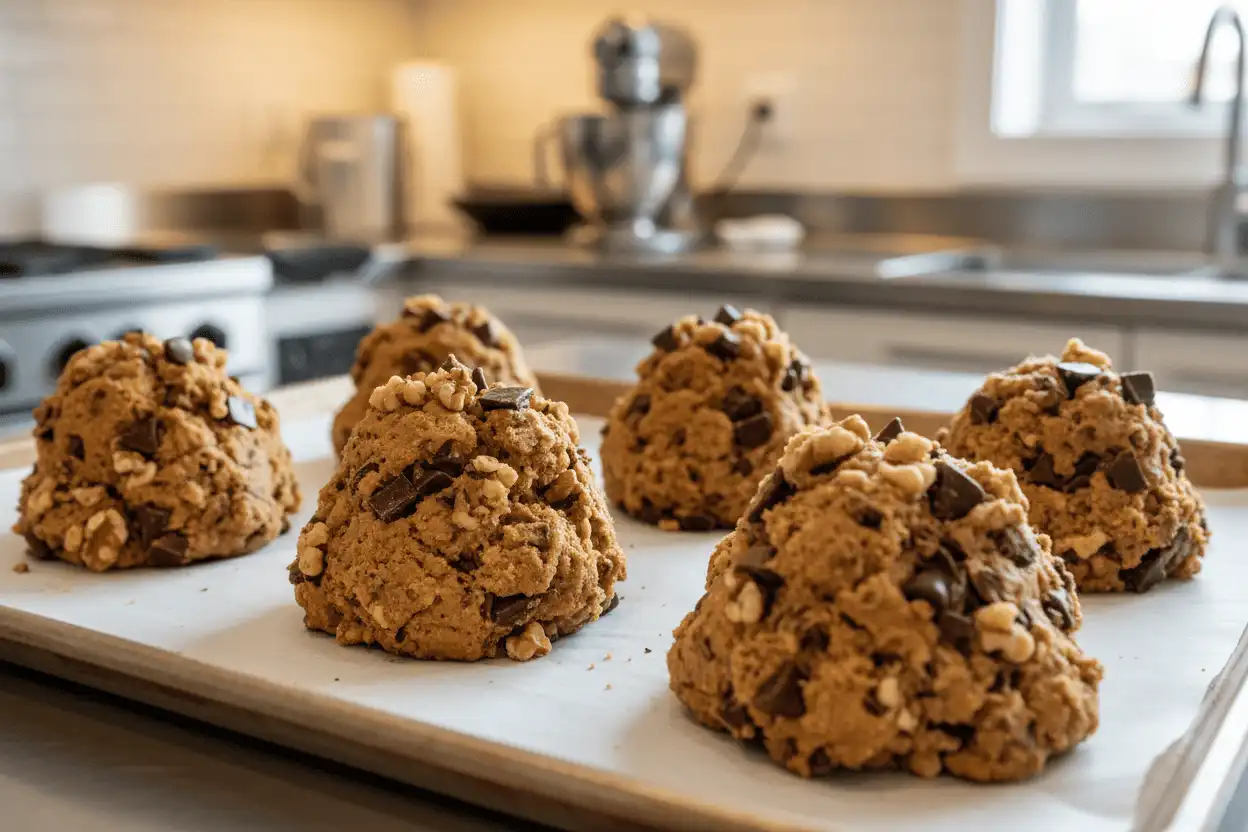
For true Levain-style results, make the cookies large. Portion the dough into mounds that are about 5 to 6 ounces each. If you do not have a scale, aim for a portion that is larger than a standard cookie scoop and roughly the size of a small fist.
Shape each portion into a rough, tall mound. Do not roll it into a smooth ball, and do not flatten it. A craggy surface creates those beautiful ridges and crisp edges.
Place the dough mounds on a parchment-lined baking sheet with plenty of space between them. These cookies do not spread as much as thinner cookies, but they still need room.
Step 7: Chill the Dough
Chilling is one of the most important steps for thick cookies. Refrigerate the shaped dough for at least 30 minutes. For even better flavor and structure, chill for several hours or overnight.
Chilling helps:
- Firm the butter
- Hydrate the flour
- Reduce spreading
- Deepen the flavor
- Create a thicker, chewier center
If you are short on time, even a brief chill is better than skipping it entirely.
Step 8: Bake at High Heat
Preheat your oven to 400°F. Line a baking sheet with parchment paper and place chilled dough mounds several inches apart.
Bake for about 10 to 13 minutes, depending on your oven and dough size. The cookies are ready when the outside is golden and set, but the center still looks slightly soft.
Do not wait for the entire cookie to look fully baked. The centers will continue to firm up as the cookies rest on the baking sheet. Overbaking is one of the most common reasons homemade Levain-style cookies lose their gooey texture.
Step 9: Let the Cookies Rest
After baking, leave the cookies on the hot baking sheet for 10 to 15 minutes. This resting time allows the centers to finish setting without becoming dry.
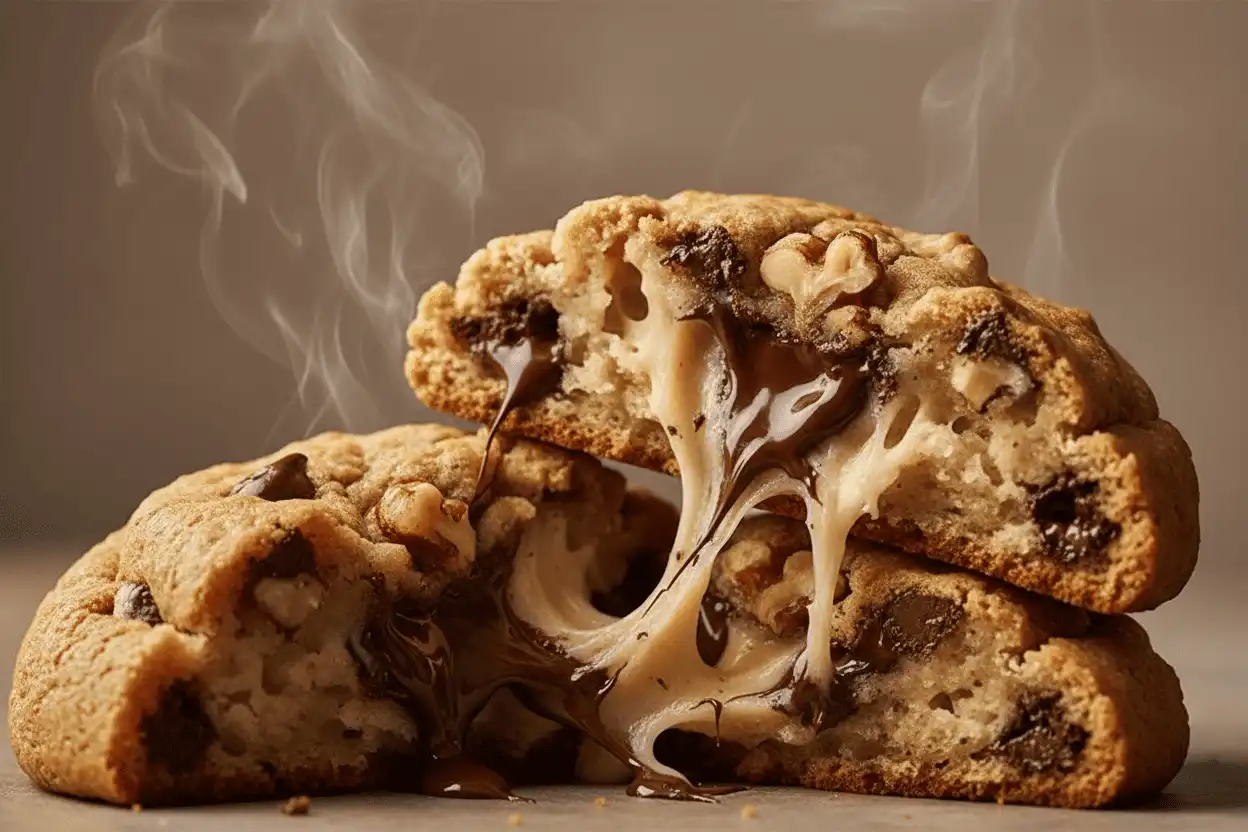
Then transfer them carefully to a cooling rack. These cookies are delicate when hot because the inside is soft and loaded with melted chocolate.
For the best experience, enjoy them warm, when the chocolate is still melty and the center is at its chewiest.
How to Make an Oatmeal Raisin Version
If you are looking for a levain bakery oatmeal raisin cookie recipe style variation, you can adapt the same method with a few changes.
Use the same base dough, but adjust the mix-ins:
- Replace chocolate chips and walnuts with 2 cups old-fashioned rolled oats
- Add 1 1/2 cups raisins
- Add 1 teaspoon ground cinnamon
- Optional: add 1 cup chopped walnuts for extra crunch
Because oats absorb moisture, the dough may feel even thicker. That is normal. Chill the shaped dough before baking, and keep the mounds tall. The result should be hearty, chewy, and warmly spiced.
For softer raisins, soak them in warm water for 10 minutes, then drain and pat dry before adding them to the dough. This helps prevent dry, tough raisins in the finished cookies.
Tips for the Best Texture
Use these practical tips to get closer to that bakery-style result:
Keep the Dough Cold
Warm dough spreads faster. If your kitchen is hot or the dough feels soft, chill it longer before baking.
Make Large Portions
Small cookies bake too quickly to create the same contrast between crisp outside and gooey center. Larger portions are key to this style.
Don’t Flatten the Dough
The oven will shape the cookies naturally. Flattening the dough makes them wider and thinner.
Use Enough Mix-Ins
Levain-style cookies should feel packed with chocolate, nuts, oats, or raisins. Mix-ins help create structure and prevent the cookies from spreading too much.
Watch the Bake Time Closely
A minute or two can make a big difference. Pull the cookies when the edges are golden and the centers still look slightly underdone.
Troubleshooting Common Problems
My Cookies Spread Too Much
The dough may have been too warm, or the butter may have softened too much during mixing. Chill the shaped dough longer before baking. Also make sure you measured the flour accurately.
My Cookies Are Dry
They may be overbaked or portioned too small. Bake just until the outside sets, and let the cookies finish on the baking sheet.
My Cookies Didn’t Brown
Your oven may be running cool, or the cookies may need another minute or two. An oven thermometer can help you check accuracy.
My Dough Is Crumbly
This dough is supposed to be thick, but it should hold together when pressed. If it is extremely dry, mix a little longer or press the dough together by hand before shaping.
My Centers Are Too Raw
Let the cookies rest longer after baking. If they are still too soft after cooling, add a minute or two to the next batch.
Storage and Freezing Instructions
Store cooled cookies in an airtight container at room temperature for up to a few days. To refresh them, warm briefly in the microwave or a low oven until the chocolate softens.
To freeze unbaked dough, shape the dough into mounds and freeze them on a baking sheet until solid. Transfer to a freezer-safe bag or container. Bake from frozen, adding a few extra minutes as needed.
To freeze baked cookies, let them cool completely first. Wrap individually or store in an airtight freezer-safe container. Reheat gently before serving for the best texture.
Flavor Variations to Try
Once you understand the basic method, you can customize this levain cookie recipe in many ways.
Try these ideas:
- Double chocolate: Replace part of the flour with cocoa powder and use chocolate chunks.
- Peanut butter chocolate chip: Add peanut butter chips with the chocolate.
- Dark chocolate pecan: Swap walnuts for toasted pecans and use dark chocolate chunks.
- White chocolate macadamia: Use white chocolate chips and chopped macadamia nuts.
- Cinnamon oatmeal walnut: Use oats, cinnamon, raisins, and walnuts for a cozy variation.
The key is to keep the dough thick and fully loaded so the cookies stay tall.
Final Baking Checklist
Before your cookies go into the oven, make sure you have followed these steps:
- Use cold butter.
- Mix only until the dough comes together.
- Add plenty of chocolate, walnuts, oats, or raisins.
- Shape the dough into large, tall mounds.
- Chill before baking.
- Bake at high heat.
- Pull the cookies while the centers are still soft.
- Rest them on the baking sheet before serving.
This method gives you rich, oversized, chewy cookies with crisp edges and soft centers. Whether you make the classic levain chocolate chip walnut cookie recipe, a simple chocolate chip version, or an oatmeal raisin batch, the secret is the same: cold dough, large portions, high heat, and careful baking.
Once you master the process, these homemade levain cookies can become your go-to dessert for holidays, gatherings, gifting, or anytime you want an impressive batch of warm, bakery-style cookies from your own kitchen.