
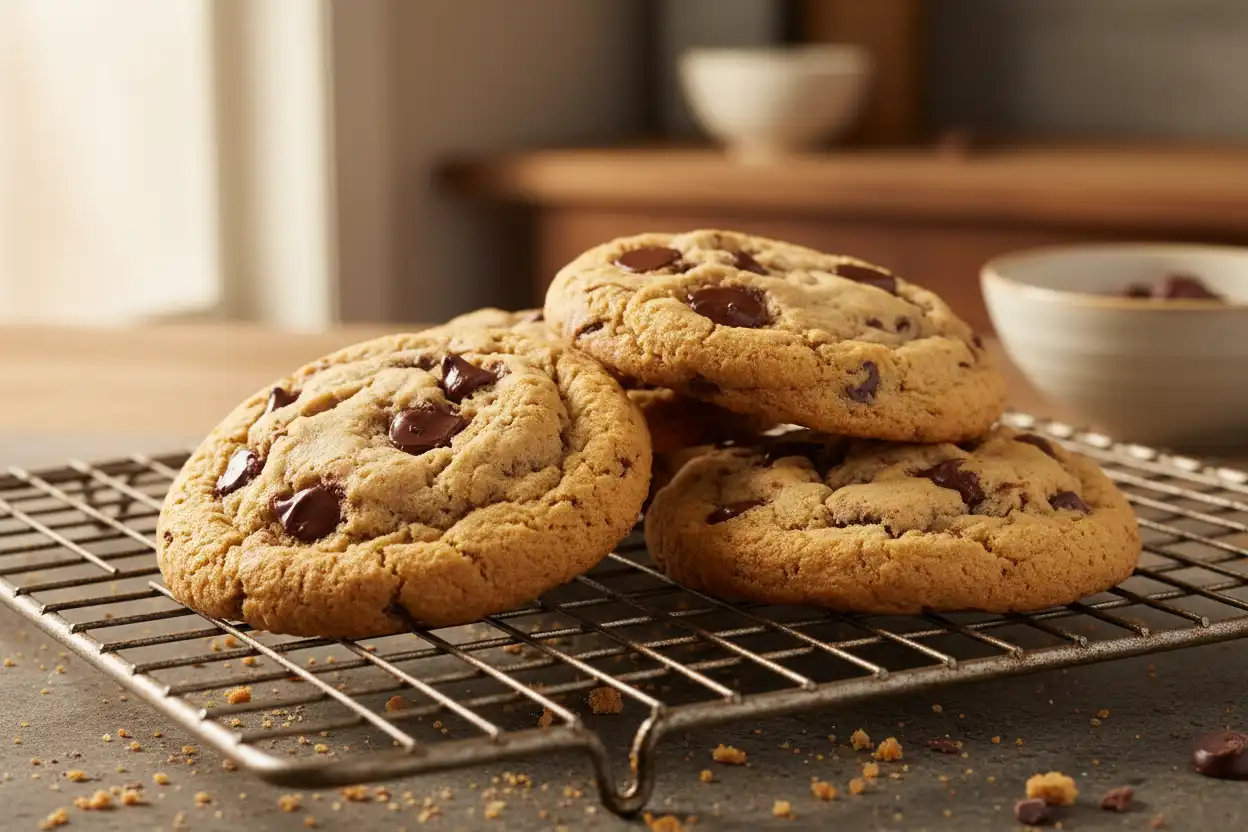
Featured Snippet: How to Make High-Protein Chocolate Chip Cookies
The secret to soft, non-rubbery protein chocolate chip cookies lies in using a 50/50 blend of whey and casein protein paired with a moisture lock like Greek yogurt or almond butter. Pure whey isolate dries out and turns tough when baked, while casein holds moisture to yield a traditional chewy texture.
A standard batch combines oat flour, a whey-casein blend, nut butter, melted coconut oil, zero-calorie sweetener or brown sugar, and dark chocolate chips. Bake at 350°F (175°C) for exactly 7 to 9 minutes. Pull them when the centers still look slightly underdone.
- Protein content: 10–14 grams per cookie
- Best protein type: Whey/Casein blend or Pea/Brown Rice blend
- Key moisture trick: Greek yogurt or pureed pumpkin prevents dry texture
Why Protein Cookies Matter
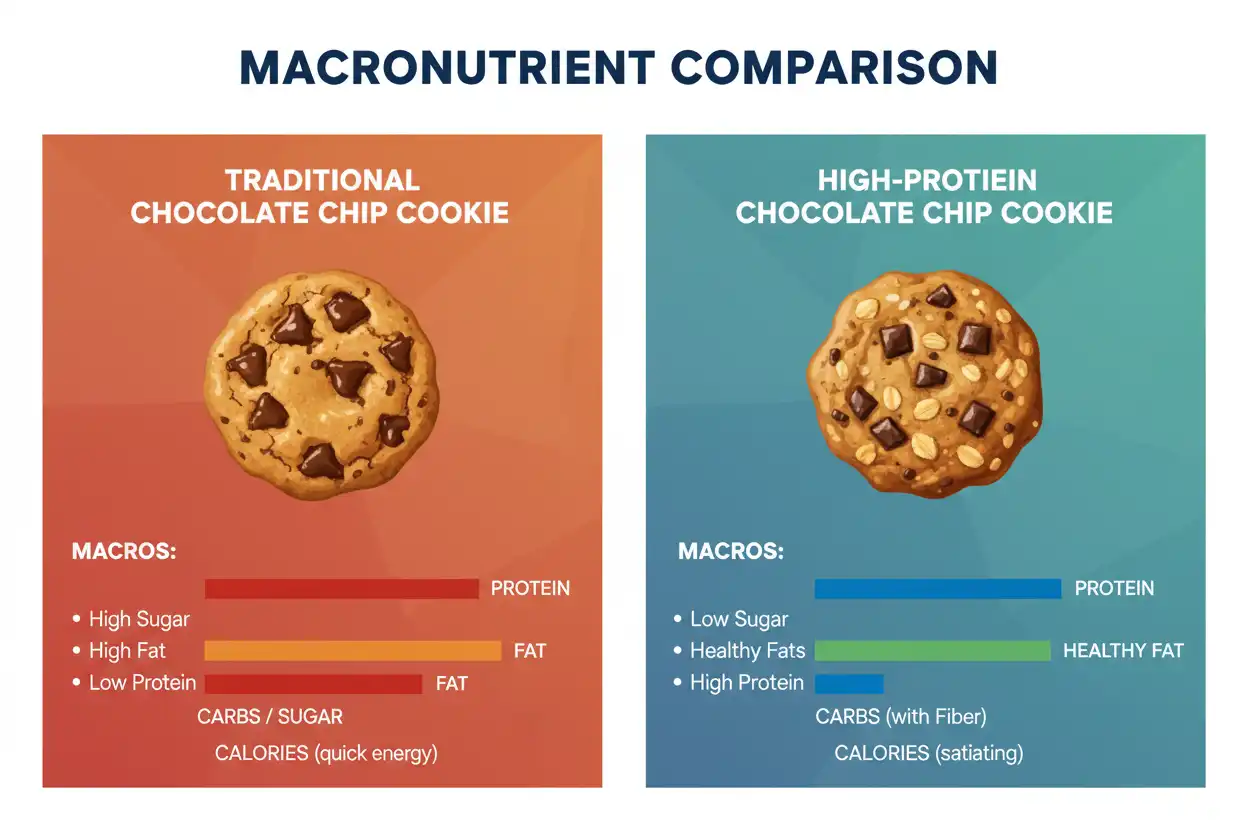
Traditional chocolate chip cookies deliver dense calories, refined sugars, and saturated fats with minimal satiety. While delicious, they digest quickly and often lead to energy crashes shortly after eating.
Protein chocolate chip cookies solve this issue by altering the macronutrient profile. Replacing refined flour and excessive sugar with quality protein powders and dietary fiber transforms a dessert into an effective post-workout snack or meal supplement.
This guide breaks down every step required to achieve a bakery-quality texture without sacrificing nutrition. You will learn the exact chemistry of protein baking, how to select ingredients, and how to tailor recipes to your macro goals.
The Science of Protein Baking
Baking with protein powder changes structural chemistry. Wheat flour contains gluten, which forms elastic networks that trap air and create structure. Protein powders behave differently under heat.
Whey protein isolate denatures quickly when exposed to high heat. It releases trapped moisture and turns rubbery or dry if used as a sole flour substitute. Understanding protein powder behavior prevents dense, unpalatable results.
Whey Protein vs. Casein Protein
Whey digests rapidly and works well in shakes, but it expands and dries out rapidly during baking. Casein absorbs significantly more liquid and forms a thick gel when mixed with wet ingredients.
Combining whey and casein in a 50/50 ratio mimics all-purpose flour better than either powder alone. Casein retains moisture during baking, preserving chewiness, while whey prevents the cookie from becoming overly dense.
Plant-Based Proteins
Pea and brown rice protein blends excel in baked goods because they absorb liquid effectively. Plant proteins yield a denser, cake-like crumb compared to dairy proteins, requiring slightly higher fat or moisture content in the dough.
Avoid using soy protein isolate in high quantities. Soy tends to impart a distinct bean flavor and yields a dry crumb unless paired with high-moisture ingredients like applesauce or mashed banana.
The Ultimate High-Protein Chocolate Chip Cookie Recipe
This master recipe balances macronutrients and classic cookie texture. It provides 12 grams of quality protein per cookie while maintaining a soft, chewy center.
Prep Time and Yield
- Prep time: 10 minutes
- Bake time: 8 minutes
- Yield: 10 cookies
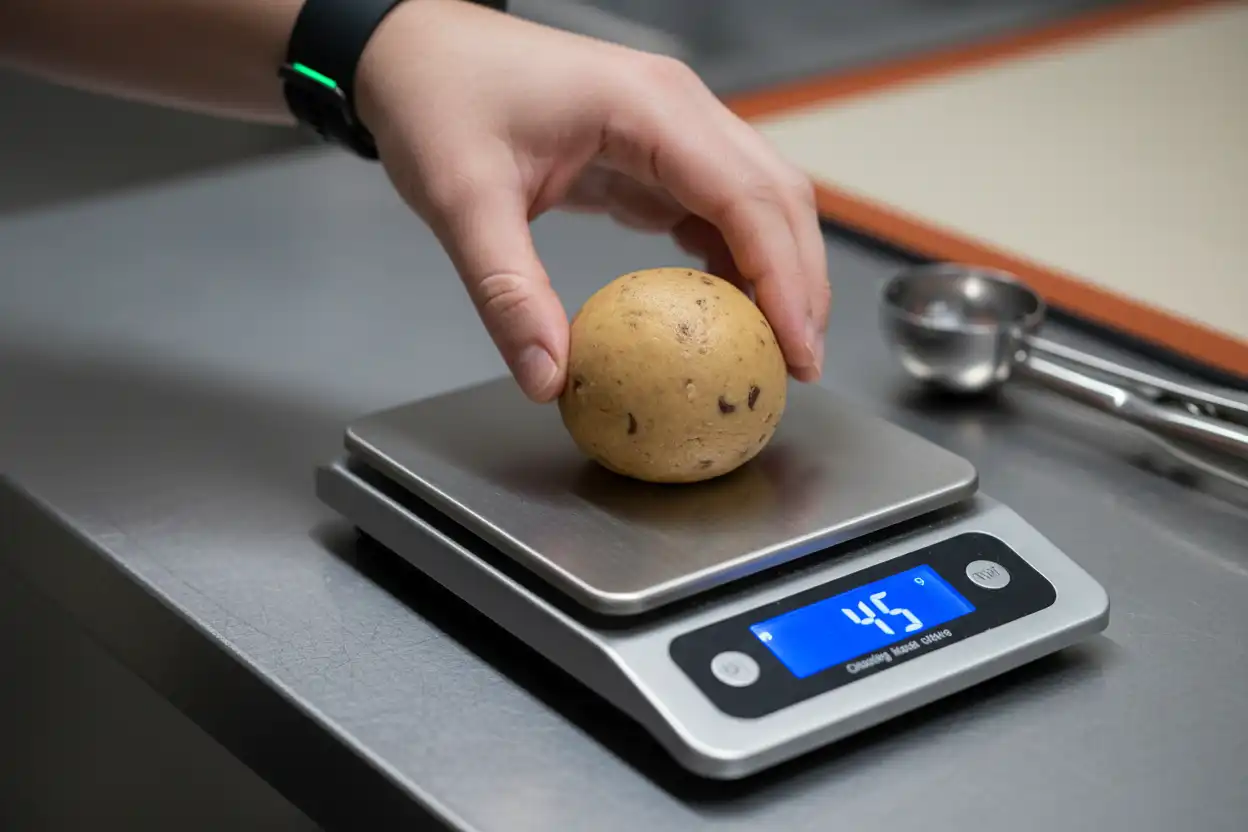
- Serving size: 1 cookie ( approx. 45g)
Ingredients Required
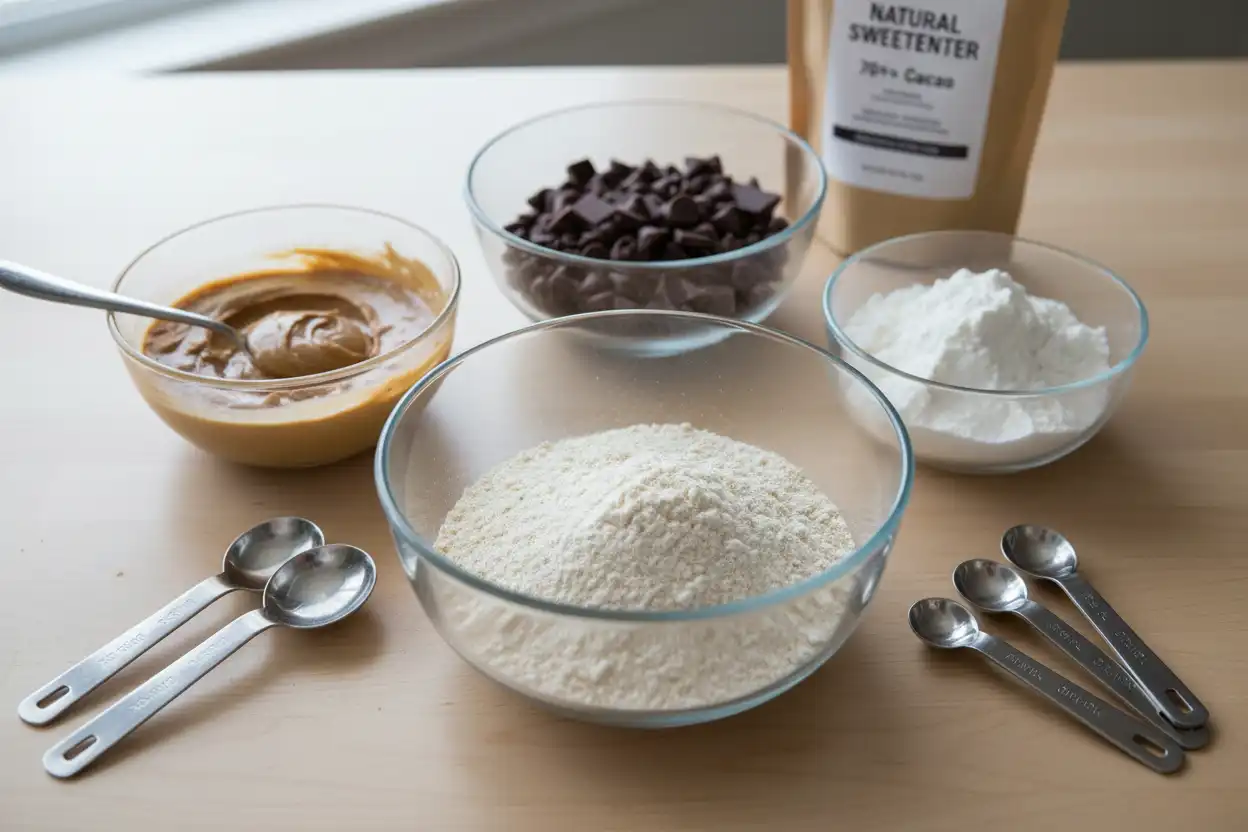
- Oat flour: 1 cup (100g), finely ground
- Whey/Casein blend protein powder (Vanilla or Chocolate): 2 scoops (60g)
- Almond butter or Peanut butter: 1/3 cup (85g), smooth and natural
- Plain non-fat Greek yogurt: 1/4 cup (60g)
- Melted coconut oil or unsalted butter: 2 tablespoons (28g)
- Granulated sweetener (Allulose or Erythritol): 1/3 cup (65g)
- Large egg: 1 room temperature egg
- Vanilla extract: 1 teaspoon
- Baking soda: 1/2 teaspoon
- Sea salt: 1/4 teaspoon
- Dark chocolate chips (70%+ or sugar-free): 1/2 cup (80g)
Step-by-Step Instructions
- Preheat and prepare: Set your oven to 350°F (175°C). Line a large baking sheet with parchment paper or a silicone baking mat.
- Combine dry ingredients: Whisk together the oat flour, protein powder, baking soda, and sea salt in a medium bowl until thoroughly blended.
- Mix wet ingredients: In a separate large bowl, combine the nut butter, melted coconut oil, granulated sweetener, Greek yogurt, egg, and vanilla extract. Whisk until smooth and fully emulsified.
- Form the dough: Gently fold the dry ingredients into the wet mixture using a spatula. Mix until just combined. Do not overmix. Fold in the dark chocolate chips.
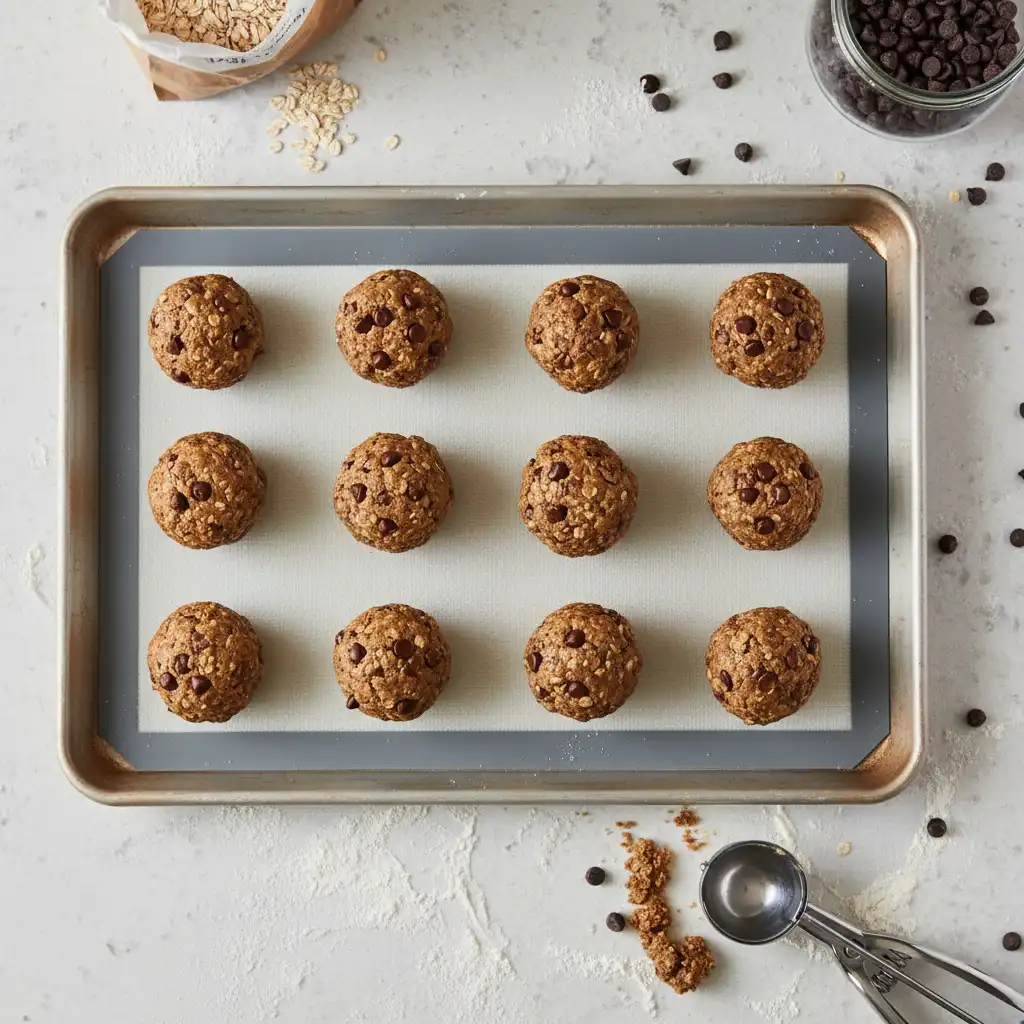
- Portion the cookies: Use a cookie scoop to divide the dough into 10 equal balls. Place them on the prepared baking sheet, leaving 2 inches between each ball.
- Press slightly: Protein cookie dough does not spread as much as traditional butter-heavy dough. Gently press each ball down with your palm or a fork to form a disc shape.
- Bake: Bake at 350°F (175°C) for 7 to 9 minutes. The edges should be set, but the centers should still look slightly soft.
- Cool and set: Remove from the oven and let cookies rest on the hot baking sheet for 5 minutes. Transfer to a wire rack to cool completely. They will firm up as they cool.
- if you remove them early, the residual heat will finish cooking the centers without drying out the protein matrix.
Ingredient Selection & Substitution Guide
Every ingredient in a protein cookie plays a structural or functional role. Knowing how to substitute components keeps the recipe adaptable without ruining texture.
Flour Alternatives
Oat Flour: Provides high fiber, complex carbohydrates, and a natural sweetness. It absorbs moisture evenly and keeps cookies soft.
Almond Flour: Increases healthy fat content and creates an ultra-chewy texture. Reduce added fats slightly when using almond flour because of its natural oil content.
Coconut Flour: Highly absorbent. If replacing oat flour with coconut flour, use only 1/3 of the amount called for and double the wet ingredients or eggs.
Sweetener Selection
Granulated sugar substitutes like Allulose provide liquid retention similar to real sugar, keeping baked goods soft for days. Erythritol bakes crispier and may crystallize when cooled.
If using liquid sweeteners like pure maple syrup or honey, reduce added liquids (like Greek yogurt) by 2 tablespoons to maintain proper dough consistency.
Moisture Locks and Fats
Dietary fats coat protein particles, preventing them from forming tough bonds. Replacing all fat with applesauce or pumpkin puree leads to a spongy, bread-like texture.
A combination of healthy fats (nut butter or coconut oil) and lean moisture locks (Greek yogurt, cottage cheese, or unsweetened applesauce) produces the ideal balance between low calorie count and high chewiness.
Flour and Protein Combination Matrix
Choosing the right combination of protein powder and flour dictates final texture. Use this table to plan your custom recipe tweaks.
| Protein Type | Flour Base | Resulting Texture | Moisture Requirement | Best Use Case |
|---|---|---|---|---|
| Whey / Casein Blend | Oat Flour | Chewy, traditional center | Moderate | Everyday macro balance |
| 100% Whey Isolate | Almond Flour | Crisp edges, dense center | High (needs extra fat) | Low-carb / Keto diets |
| Pea & Rice Blend | Oat + Coconut Flour | Thick, soft-baked, cake-like | Very High | Vegan & Dairy-Free diets |
| Micellar Casein | All-Purpose Flour | Fudge-like, heavy chew | Moderate to High | Bulking / High-protein treats |
Expert Techniques for Perfect Texture
Baking high-protein snacks requires refined technique compared to standard pastry baking. Implementing these expert strategies elevates flavor and structure.
Chilling the Dough
Chilling dough in the refrigerator for at least 30 minutes allows the flour and protein powder to fully hydrate. Hydration prevents a gritty mouthfeel and controls spread during baking.
Cold dough holds its structure longer in the oven. This allows the outer crust to set while keeping the interior moist and soft.
Oven Temperature Precision
Bake protein cookies at 350°F (175°C) or slightly lower. High temperatures cook the outer layer too quickly, drying out whey proteins before the core cooks through.
Use an independent oven thermometer to verify calibration. A discrepancy of just 15 degrees can turn chewy dough into dry, hard pucks.
Common Pitfalls and Solutions
Avoiding standard baking errors saves ingredients and guarantees better nutrition profiles.
1. Over-Baking
Over-baking destroys moisture. Protein cookies continue to cook internally on the baking tray after removal from the oven. Pull them out when they still look undercooked in the middle.
2. Over-Mixing
Excessive stirring introduces air and overworks the protein powders, leading to a tough, rubbery texture. Stir wet and dry ingredients together until just combined.
3. Using Pure Whey Isolate Without Added Fat
Whey isolate lacks fat and casein proteins. Combining pure whey with non-fat yogurt and zero-fat flour creates a rubbery texture. Always include a source of healthy fat, such as almond butter, egg yolk, or coconut oil.
Dietary Variations (Keto, Vegan, Mass Gainer)
Adapt the core formula to fit specific nutritional regimens without losing structural integrity.
Keto & Low-Carb Variation
Swap oat flour for 1.25 cups of blanched almond flour. Use a zero-calorie sweetener like erythritol or monk fruit and select sugar-free dark chocolate chips sweetened with stevia or erythritol.
Vegan & Dairy-Free Variation
Replace whey/casein blend with a plant-based pea and rice protein powder. Substitute the egg with a flax egg (1 tablespoon ground flaxseed mixed with 2.5 tablespoons water) and use dairy-free dark chocolate chips.
High-Calorie Mass Gainer Variation
Add 2 tablespoons of hemp seeds and 1/4 cup of chopped walnuts. Use full-fat peanut butter and pure maple syrup to naturally dense up calories for athletic recovery.
Storage, Freezing, and Meal Prep
Proper storage maintains moisture levels and keeps protein cookies fresh throughout the week.
Room Temperature Storage
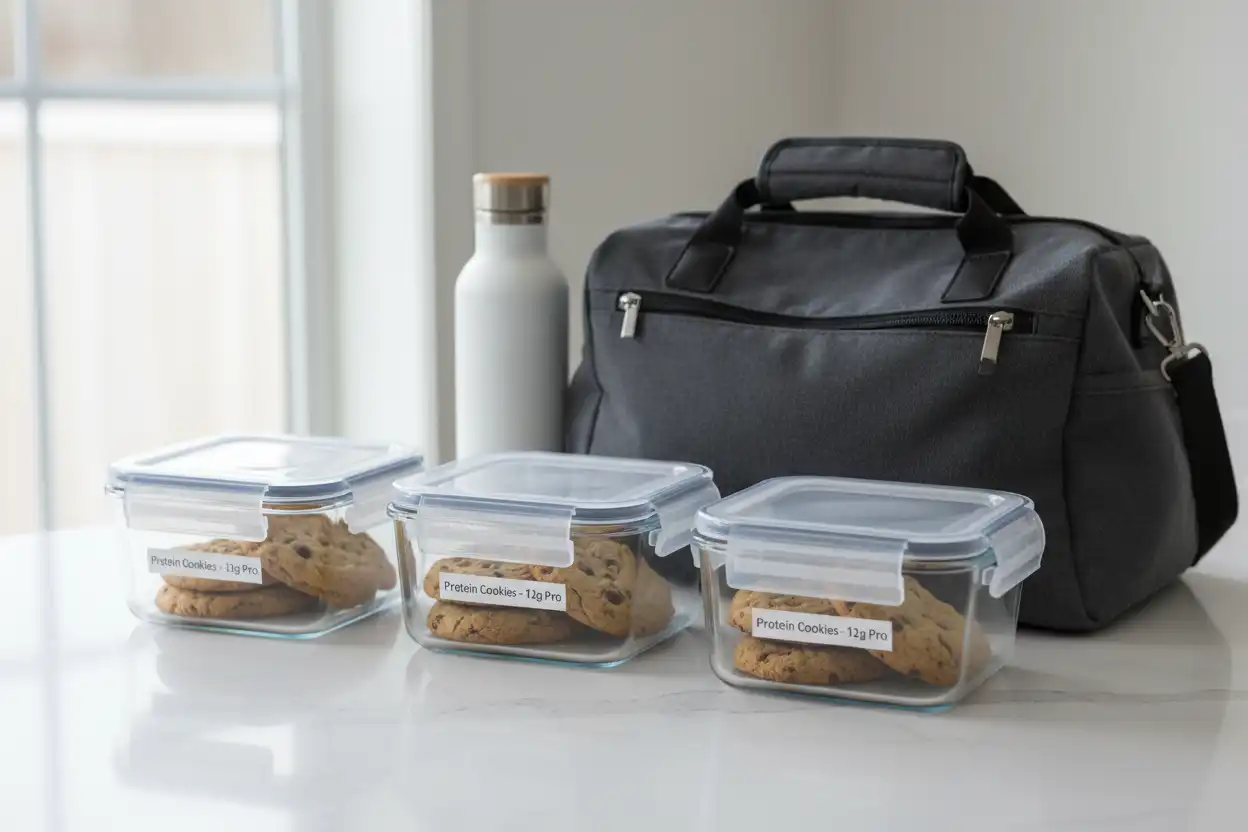
Store cooled cookies in an airtight container lined with a paper towel. Add a small piece of bread to the container; the cookies will absorb moisture from the bread and stay soft for up to 4 days.
Refrigeration and Freezing
Refrigerate in a sealed container for up to 10 days. For long-term storage, freeze individual cookies on a tray for 1 hour, then transfer them to a freezer-safe bag for up to 3 months.
To serve from frozen, thaw at room temperature for 20 minutes, or microwave for 10 to 12 seconds to restore warm, melted chocolate centers.
Recommended Baking Tools
Having the right tools ensures consistent macro tracking and bake quality every time.
- Digital Kitchen Scale: Essential for precise ingredient measurement in grams. Volume cups vary significantly with protein powders.
- Silicone Baking Mats: Prevents bottom scorching and eliminates the need for excess non-stick cooking sprays.
- Spring-Loaded Cookie Scoop: Guarantees uniform cookie sizing for accurate macronutrient calculation per serving.
- Wire Cooling Rack: Prevents steam build-up on the bottom of hot cookies during cooling.
Related Recipes and Guides
Explore more high-protein recipes and nutrition strategies to hit your daily health targets:
- Fudge High-Protein Brownies Recipe
- How to Bake with Whey vs. Casein Protein
- Easy No-Bake Energy Protein Balls
- Post-Workout Macronutrient Timing Guide
- Fluffy Keto Protein Pancake Recipe
Authority Nutrition Resources
Consult these trusted resources for research on protein synthesis, nutrient timing, and health:
- USDA FoodData Central: Official nutritional profile database for raw and baked food items.
- Academy of Nutrition and Dietetics: Professional insights on athletic protein requirements and digestive health.
- International Society of Sports Nutrition (ISSN): Peer-reviewed position stands on protein intake and muscle recovery.
Summary Checklist for Success
- Use a protein powder blend (Whey + Casein) instead of 100% whey isolate.
- Combine lean moisture (Greek yogurt) with healthy fats (nut butter or oil) for chewiness.
- Do not overmix dough once the protein powder is added.
- Flatten dough balls slightly before baking, as protein dough spreads minimally.
- Slightly under-bake (7–9 minutes) and let cool on the pan to retain internal moisture.
Final Thoughts
Making delicious protein chocolate chip cookies comes down to respecting ingredient chemistry. By balancing protein powders with hydration and fat, you can enjoy freshly baked cookies that align with your fitness goals.
Bake a batch today, adjust the macros to your needs, and enjoy a functional treat that fuels your lifestyle.
Frequently Asked Questions
Why are my protein cookies rubbery?
Cookies turn rubbery when overmixed or when made exclusively with whey protein isolate without sufficient dietary fat. Overmixing develops dense protein structures, while whey isolate loses liquid quickly under heat. Use a whey-casein blend and fold ingredients gently.
Can I substitute flour completely with protein powder?
No, replacing flour entirely with protein powder results in dense, dry, or rubbery cookies. Protein powder lacks the starch structure of flour. Keep at least 50% of the dry base as real flour, such as oat, almond, or wheat flour.
What type of protein powder works best for baking cookies?
A whey and casein protein blend works best. Casein absorbs liquid and retains moisture during baking, while whey prevents excessive density. Plant-based protein powders like pea and rice blends also perform very well in baked recipes.
How do I stop protein cookies from drying out?
Prevent dryness by adding moisture-retaining ingredients like Greek yogurt, nut butter, or pureed pumpkin. Under-bake the cookies slightly, pulling them out when centers look soft, and store them in an airtight container with a paper towel.
How much protein is in a homemade protein cookie?
Depending on the recipe and portion size, a standard homemade protein chocolate chip cookie contains between 10 and 15 grams of protein. This provides 3 to 4 times the protein of a traditional butter-based cookie.
Can I freeze protein cookie dough?
Yes, scoop the dough into individual balls and freeze them on a baking tray for one hour. Transfer frozen balls into an airtight freezer bag. Bake directly from frozen at 350°F (175°C) for 10 to 11 minutes.
Are protein chocolate chip cookies good for weight loss?
Yes, when integrated into a controlled diet. The elevated protein and fiber content increase satiety compared to normal sugary treats, helping control appetite while satisfying sweet cravings.
Do protein cookies need to be refrigerated?
If made with perishable ingredients like Greek yogurt or eggs, store them in the refrigerator after 2 days at room temperature. Refrigeration keeps them fresh for up to 10 days without preservatives.